
Lixudebart Deal Could Be A Game Changer For CSL (ASX:CSL)
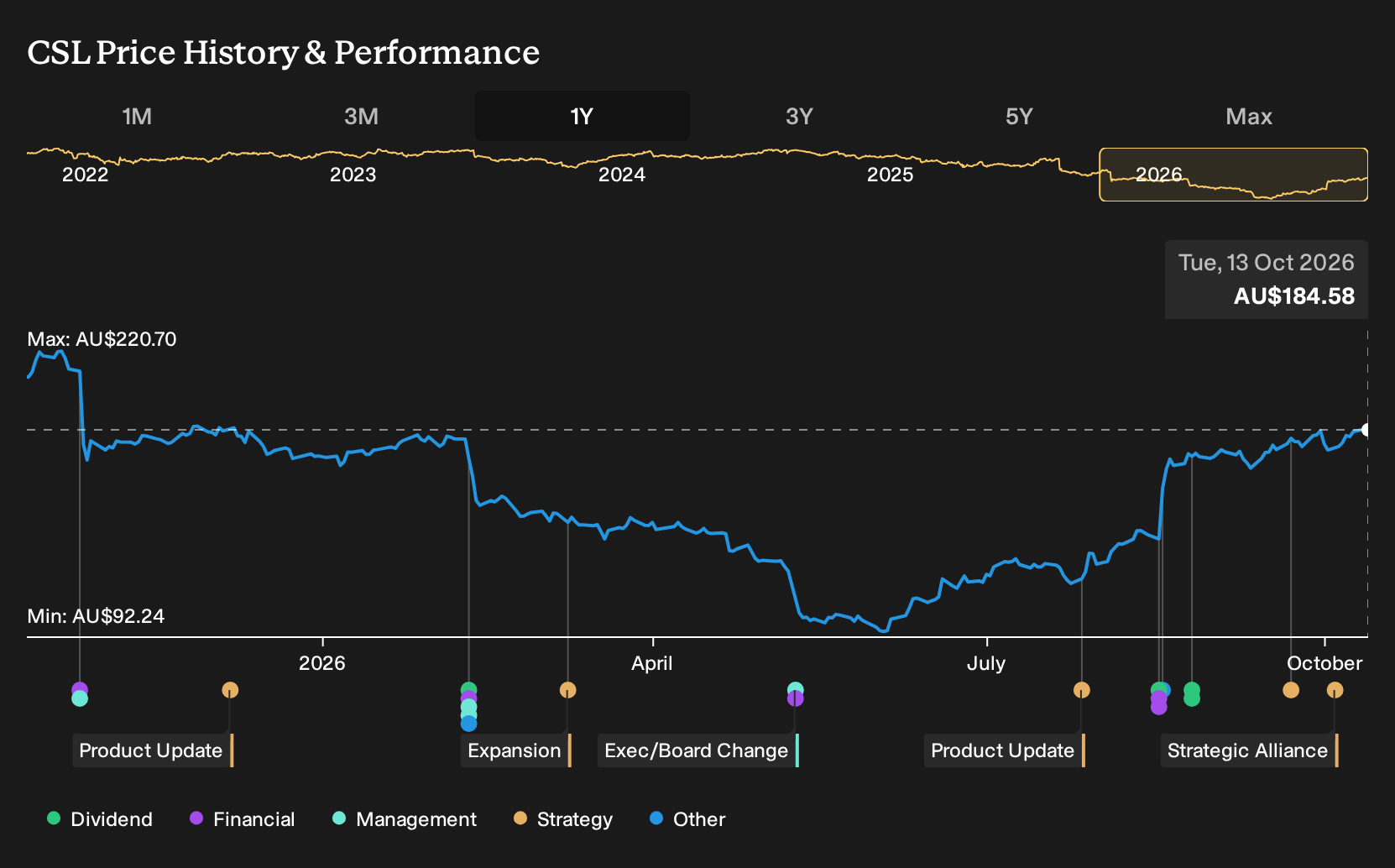
- CSL and Alentis Therapeutics previously announced an exclusive global collaboration to co-develop and co-promote lixudebart, with US$355 million upfront, up to US$1.2b in commercial milestones, CSL-funded Phase 2 and Phase 3 programs, and a 55% to 45% global profit split in favour of CSL once commercialised.
- The alliance gives CSL broader exposure to claudin-1 targeting therapies in rare kidney and liver diseases while outsourcing part of early scientific risk to Alentis. This aligns with CSL's focus on higher value specialty treatments and leverages its existing nephrology infrastructure.
- We will now explore how CSL's lixudebart profit sharing and fully funded trials could influence the broader investment narrative around its pipeline.
Scan beyond CSL and this claudin-1 story by lining up other rare disease and healthcare specialists through our hand picked 8 healthcare AI stocks.
CSL Investment Narrative Recap
To own CSL, you need to believe its plasma, vaccines and nephrology franchises can turn a current loss of $2.6b on $15.8b of revenue into sustainable profits, while managing a high debt load and restructuring. The key near term swing factor remains execution on cost savings and margin repair rather than any single pipeline asset.
The Alentis lixudebart deal does not change that core near term catalyst, but it adds another late stage lever tied to rare kidney and liver diseases. The biggest immediate risk still sits with pricing pressure, plasma collection costs and any hiccups in the Seqirus demerger and broader reorganisation.
The lixudebart collaboration itself is the most relevant fresh announcement here. CSL is committing US$355 million upfront, up to US$1.2b in milestones, and full funding of multiple Phase 2 and Phase 3 programs, in exchange for a 55% share of global profits if commercialisation occurs. For investors, this functions as an R&D heavy extension of the renal and liver portfolio.
Analyst expectations for earnings are already reflected in current models and consensus forecasts, so the focus is on whether reported results ultimately align with those projections. Execution on lixudebart development and commercial roll out now sits alongside ANDEMBRY, HEMGENIX and cost savings as practical tests of whether any anticipated improvement actually shows up in reported numbers.
What The CSL Consensus Is Really Pricing In
CSL's narrative projects $17.0 billion revenue and $3.4 billion earnings by 2029. This assumes 2.6% yearly revenue growth and a swing in earnings of about $6.0 billion, from a current loss of $2.6 billion to forecast profit of $3.4 billion.
Uncover why CSL's fair value is consistent with its current price.
Exploring Other Perspectives
You might see this CSL news through a different lens if you focus on the pessimistic revenue track. The lowest analysts were only factoring in 1.0% yearly top line growth to about $16.3b and earnings of roughly $3.4b by 2029. That view is cautious. It assumes progress but questions how much new science really moves the dial. Those estimates came before this lixudebart collaboration. Fresh data or clinical milestones could shift that story. You do not need to pick one camp. Use these contrasting assumptions as anchors, and then stress test your own expectations across several scenarios.
Explore 7 other CSL fair value estimates, including one that suggests there could be as much as 25% downside from the current price!
Form Your Own Verdict
Don't just follow the ticker. Dig into the data and build a conviction that's truly your own.
- A great starting point for your CSL research is our analysis highlighting 3 key rewards and 1 important warning sign that could impact your investment decision.
- See our latest analysis for CSL. The report includes a comprehensive fundamental analysis summarized in a single visual, the Snowflake, making it easy to evaluate CSL's overall financial health at a glance.
Looking For More CSL Investment Ideas?
If this CSL story has you thinking about position sizing and diversification, it can help to line up a few shortlists that match your own risk and income preferences using the Simply Wall St Screener.
- If you want a shot at higher upside while still filtering for financial strength, start with a focused set of 20 elite penny stocks with strong financials and see which smaller companies meet your quality bar.
- If value is your priority and you prefer cash generative businesses on solid footing, scan through a hand picked 4 high quality undervalued stocks that already combine quality metrics with discounted prices.
- If capital preservation matters most and you lean toward steadier profiles, narrow your watchlist to a 7 resilient stocks with low risk scores and use it to pressure test how much volatility you really want to take on.
This article by Simply Wall St is general in nature. We provide commentary based on historical data and analyst forecasts only using an unbiased methodology and our articles are not intended to be financial advice. It does not constitute a recommendation to buy or sell any stock, and does not take account of your objectives, or your financial situation. We aim to bring you long-term focused analysis driven by fundamental data. Note that our analysis may not factor in the latest price-sensitive company announcements or qualitative material. Simply Wall St has no position in any stocks mentioned.
Have feedback on this article? Concerned about the content? Get in touch with us directly. Alternatively, email editorial-team@simplywallst.com