
Barclays Stock And UK Banks That Could Benefit If Rates Reach 4%
Interest rates in the UK are back in the spotlight, with the Bank of England hinting that 3.75% might not be enough to cool inflation, and that talk of 4% could soon move from theory to reality. That kind of shift can quietly reshape which companies thrive and which feel the squeeze. This piece walks through three UK Domestic Banks and Financials Benefiting from Rising Interest Rates screener stocks that appear closely tied to this story and explains how the latest policy signals could matter for your portfolio decisions.
The three stocks below are a small sample of this theme, and the full screen surfaced 10 more UK focused banks and financial firms with equally compelling rate driven narratives that are not covered in this article.
If you want to identify your own highest conviction ideas in this corner of the market, head straight to the UK Domestic Banks and Financials Benefiting from Rising Interest Rates screener to filter and analyze the full list on your terms.
Barclays (LSE:BARC)
Barclays is one of the clearest plays on this rising rate theme because its UK retail and commercial banking engine directly converts higher Bank of England rates into net interest income, backed by sizeable fee and markets activity that can smooth the cycle.
Barclays is a diversified financial group spanning UK retail banking, corporate lending, wealth and a sizeable investment bank. Barclays UK generates about £8.5b of revenue alongside £13.4b from the investment bank and meaningful contributions from US cards and wealth, supporting a business valued at roughly £58.4b in market cap.
"The first concern is Barclays' significant exposure to investment banking and trading income. These businesses are inherently cyclical, and profits can fluctuate considerably depending on market conditions."
What really matters for Barclays now is how one unresolved pressure on its interest margins plays out if UK rates do push higher again.
If that margin puzzle matters to you, read the full narrative for Barclays to see how rate sensitivity, fee income and risk could be quietly reshaping Barclays' trajectory.

Arbuthnot Banking Group (AIM:ARBB)
Arbuthnot Banking Group is a UK private and commercial bank whose profits are closely tied to Bank of England base rates through its lending and deposit franchise. Most income comes from Banking excluding Wealth Management at about £100 million, with smaller streams from wealth, asset finance and commercial vehicle funding. The group has a market cap of roughly £130 million.
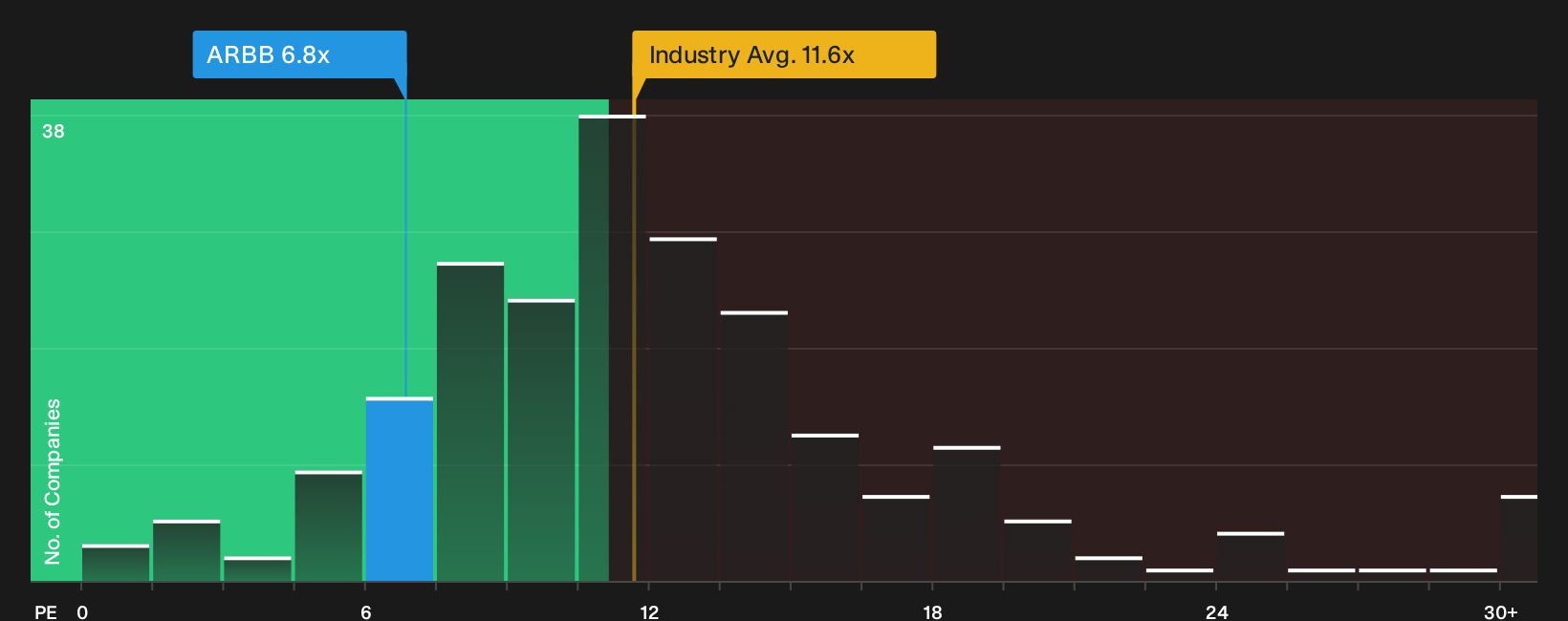
Arbuthnot Banking Group appears in this screener as an example of a bank whose earnings and net interest margin are closely linked to UK policy rates. Its P/E of 6.8x compares with higher averages often seen across the wider European banking sector. Investors focused on how tighter money filters into loan pricing and credit costs may consider how changes in one pressure point can influence overall profitability.
That trade off is exactly what the 3 key rewards and 3 important warning signs could help you unpack before the next rate move resets the risk reward balance.
S&U (LSE:SUS)
S&U is a UK lender focused on motor finance and property bridging, both closely tied to domestic interest rate spreads, with about £79.7 million from Motor Finance, £15.9 million from Property Bridging and a market value around £231 million.
S&U is connected to the rising rate story through its UK lending book. However, the real interest for investors comes from how its growth plans and funding choices may reshape returns over the next few years.
"Plans to broaden Advantage’s distribution into additional broker, dealer and aggregator channels could raise acquisition and commission costs faster than anticipated, especially if higher commissions are required to secure better quality or higher advance customers, which would constrain group net margins."
The key question now is what happens to S&U’s earnings power if one quiet pressure on its funding costs and pricing assumptions shifts direction.
If that inflection point has your attention, read the full narrative for S&U to see whether funding costs are masking a stronger earnings engine or quietly capping S&U’s potential.

Seeking Alternatives Before The Crowd?
Fresh themes often move first. Breakout momentum can fly under the radar at the start and then attract attention once headlines appear. Scan these ideas while it matters and consider them before they become widely followed.
- Consider reliable cash generators and stress test your income plan against a curated 1 dividend fortresses designed to help keep payouts flowing even when sentiment weakens.
- Monitor the infrastructure behind AI momentum by reviewing 92 AI infrastructure stocks where demand for chips, data centers and power remains central to the long term story.
- Explore the picks and shovels of the energy transition with 16 top copper producer stocks ahead of potential changes in demand for wiring, grids and electrification that could affect supply and producer valuations.
This article by Simply Wall St is general in nature. We provide commentary based on historical data and analyst forecasts only using an unbiased methodology and our articles are not intended to be financial advice. It does not constitute a recommendation to buy or sell any stock, and does not take account of your objectives, or your financial situation. We aim to bring you long-term focused analysis driven by fundamental data. Note that our analysis may not factor in the latest price-sensitive company announcements or qualitative material. Simply Wall St has no position in any stocks mentioned.
Have feedback on this article? Concerned about the content? Get in touch with us directly. Alternatively, email editorial-team@simplywallst.com