
How Investors Are Reacting To CommBank (ASX:CBA) Slower Wage Growth
- Commonwealth Bank of Australia recently reported that its proprietary Wage and Labour Insights showed a clear easing in monthly wage growth for September, while annual wage growth held at 3.3% and unemployment edged up to 4.6% as labour supply outpaced new hiring.
- The combination of softer monthly pay gains and a higher jobless rate points to less immediate wage pressure on Commonwealth Bank of Australia’s cost base and potentially cooler demand conditions across its retail and business customer segments.
- We will now look at how Commonwealth Bank of Australia’s investment narrative could be influenced by this easing in monthly wage growth.
Scan how wage sensitive banks like Commonwealth Bank of Australia compare with other financially robust plays using our hand picked list of solid balance sheet and fundamentals (12 results) for this phase of the labour market cycle.
Commonwealth Bank of Australia Investment Narrative Recap
To own Commonwealth Bank of Australia, you need to be comfortable with a large, mature lender that leans heavily on Australian mortgages, deposit funding and ongoing investment in technology. The key near term swing factor is still net interest margin pressure as deposit pricing and competition bite. The latest wage data looks more like background noise for now than a direct hit to operations.
The clearest current risk is that earnings growth remains modest while the stock trades on a premium P/E multiple, leaving little room for disappointment if margins or volumes soften. Slightly higher unemployment and cooler wage growth could nudge credit quality and loan demand, but the impact from this specific data point alone does not appear material.
With no fresh company announcements tied directly to the wage insights release, the most relevant context is still Commonwealth Bank of Australia’s ongoing technology and AI investment program. Management has been lifting spend above inflation, which pushes costs higher in the near term and keeps the market focused on whether productivity benefits show up quickly enough in future results.
For you as a shareholder, that spend connects directly to the main catalysts and risks. If digital tooling keeps customer retention high, supports fee income in a more cashless economy and contains operating costs, it can help offset pressure on margins from competition and rates. If progress is slower, elevated investment and a premium valuation could amplify any disappointment when growth is only mid single digit.
Commonwealth Bank of Australia Analyst Expectations In Context
Consensus forecasts for Commonwealth Bank of Australia sketch out a bank that is still expected to grow, but with tighter profitability over time as competition and tech spending bite. Analysts are building in 4.4% yearly revenue growth over the next few years, alongside a slip in profit margins from 37.2% today to 34.6% by year three. This lines up with the story of higher costs and keener pricing across mortgages and deposits.
On the earnings line, the group is projected to move from A$10.9b in profit today to A$11.6b by around 2029, with consensus earnings per share at A$6.95. That is not a dramatic jump in the context of the current size of Commonwealth Bank of Australia, and there is a wide spread between the more optimistic and more cautious analysts, with the low end of forecasts down at A$9.8b in profit.
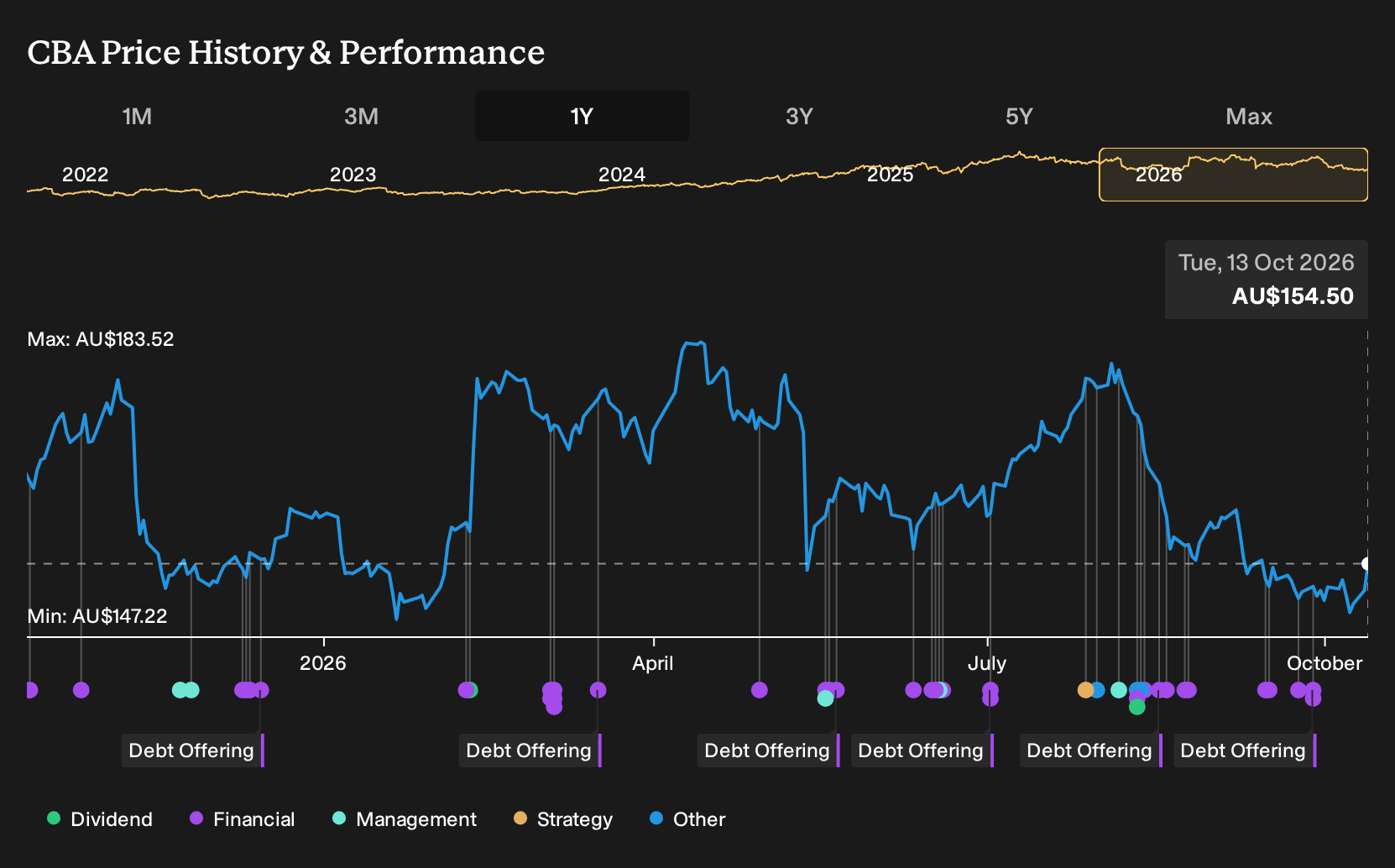
The valuation overlay matters for anyone already holding the stock. To match the analyst price targets, the shares would need to trade on a P/E of 22.7x those 2029 earnings, compared with 24.9x today and above the current 17.1x P/E level for the broader Australian banks sector. At a spot share price of A$162.63 against a consensus target of A$125.21, analysts see current expectations as rich even though their models factor in higher revenue and earnings over time.
Commonwealth Bank of Australia's narrative projects A$33.4b revenue and A$11.6b earnings by 2029. This assumes 4.4% yearly revenue growth and an earnings increase of about A$0.7b from A$10.9b today.
Uncover why Commonwealth Bank of Australia's fair value indicates a 19% potential downside to its current price, which leaves little room for error.
Exploring Other Perspectives
One contrasting angle is wage risk. The most bearish analysts were already worried that pay demands, compliance and tech spending could squeeze Commonwealth Bank of Australia, even while pencilling in A$32.4b revenue and A$11.6b earnings by 2029. With monthly wage growth now easing, those pre news fears might soften, or they might simply shift focus. You are seeing how far views can stretch, so it can help to compare a few different takes before deciding what this new wage data means for you.
Explore 5 other Commonwealth Bank of Australia fair value estimates, including one that suggests as much as 37% downside from the current price.
Reach Your Own Conclusion
Disagree with existing narratives? Extraordinary investment returns rarely come from following the herd, so go with your instincts.
- A great starting point for your Commonwealth Bank of Australia research is our analysis highlighting 1 key reward and 3 important warning signs that could impact your investment decision.
- See our latest analysis for Commonwealth Bank of Australia. The report includes a comprehensive fundamental analysis summarized in a single visual, the Snowflake, making it easy to evaluate Commonwealth Bank of Australia's overall financial health at a glance.
Looking For More Investment Ideas Beyond Commonwealth Bank of Australia?
If this Commonwealth Bank of Australia review has sharpened your thinking, the next move is to widen the field and compare it with other businesses that match your risk tolerance and return goals. The Simply Wall St Screener lets you zero in on different types of opportunities quickly, so you can build a shortlist that genuinely fits how you like to invest.
- Prefer stability and resilience through the cycle? Start with companies that show strong fundamentals and balance sheets using the list of solid balance sheet and fundamentals (12 results).
- Hunting for mispriced quality that might be trading below intrinsic value? Filter for potential bargains through the 4 high quality undervalued stocks.
- Looking for dependable income ideas alongside your Commonwealth Bank of Australia holding? Focus on higher yielding opportunities with the 5 dividend fortresses.
This article by Simply Wall St is general in nature. We provide commentary based on historical data and analyst forecasts only using an unbiased methodology and our articles are not intended to be financial advice. It does not constitute a recommendation to buy or sell any stock, and does not take account of your objectives, or your financial situation. We aim to bring you long-term focused analysis driven by fundamental data. Note that our analysis may not factor in the latest price-sensitive company announcements or qualitative material. Simply Wall St has no position in any stocks mentioned.
Have feedback on this article? Concerned about the content? Get in touch with us directly. Alternatively, email editorial-team@simplywallst.com