
3 Compliance Tech Stocks In Focus After Bank Of America AML Fine
When the U.S. Treasury hits Bank of America with more than $1.21b in AML and sanctions penalties, it does more than bruise one bank. It sends a message that compliance failures can be extremely costly, and that money will often flow toward whoever helps reduce that risk. Investors paying attention to this shift may find both potential winners and risks. This article walks through three stocks exposed to that regulatory shock and explains why they might deserve a closer look now.
The stocks highlighted below are just a first snapshot of U.S. financial regulation and compliance technology providers. The full screen surfaced 6 more companies with equally interesting compliance stories that are not covered in this article. To identify and analyze those additional opportunities with the highest conviction tilt, head straight to the U.S. Financial Regulation & Compliance Technology Providers screener.
Jack Henry & Associates (JKHY)
Overview: Jack Henry & Associates provides core banking, payments, and compliance-focused software that helps U.S. financial institutions run their systems and manage regulatory obligations.
Operations: Jack Henry & Associates generates about US$768 million from Core, US$936 million from Payments, US$752 million from Complementary, and US$88 million from Corporate Services, almost entirely in the United States.
Market Cap: US$10.5b
Jack Henry & Associates matters in this screener because its core and digital banking platforms bake regulatory reporting, fraud controls, and AML tools directly into how many U.S. banks operate every day.
"The Banno outside-the-base strategy was the May call's single most forward-looking commitment. Adelson described it as "a meaningful inflection point," invoked the payments playbook as the model ("where we have successfully sold outside the base for many years"), and said explicitly that Banno was ready to expand beyond the existing core base."
What happens to Jack Henry & Associates if one unseen pressure quietly shifts how quickly banks modernize their compliance technology stack?
If that pressure is accelerating beneath the surface, read the full narrative for Jack Henry & Associates to see how Jack Henry & Associates’ compliance story could be masking bigger shifts.

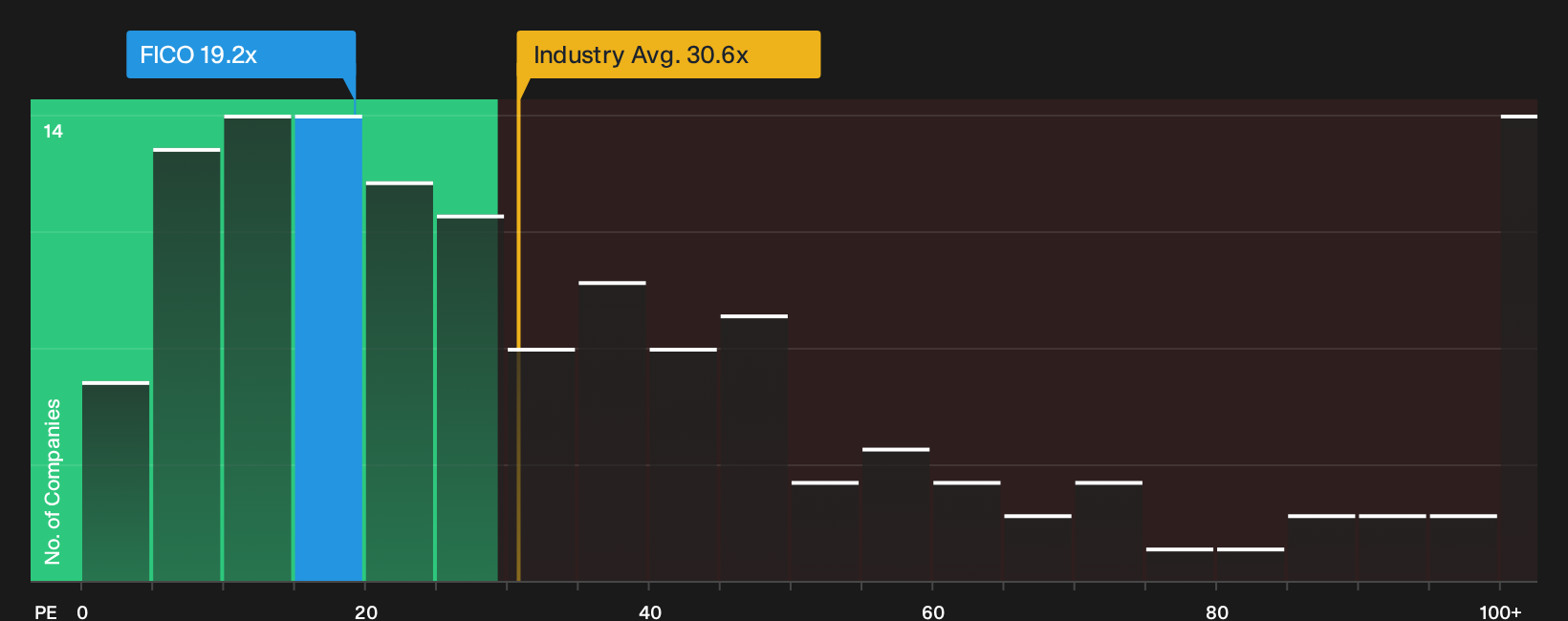
Fair Isaac (FICO)
Overview: Fair Isaac provides credit scoring and analytics software that banks and lenders use to make credit, fraud, and compliance related decisions.
Operations: Fair Isaac generates about US$1.55b from its Scores division and roughly US$844 million from Software solutions serving global clients.
Market Cap: US$16.0b
Fair Isaac matters in this screener because its scoring and decisioning engines sit inside many banks’ fraud checks, AML workflows, and credit approval pipelines. This can turn rising regulatory pressure into demand for more precise risk analytics rather than more manual reviews.
"The expanding adoption of FICO Score 10T and newer cash flow based models, supported by independent analysis that shows higher predictiveness versus rival scores and growing lender participation programs tied to hundreds of billions of dollars in eligible originations, can support future Scores revenue and help offset mortgage pricing pressure."
What happens to Fair Isaac’s margins and pricing power if a single assumption about how lenders value explainable AI risk models quietly shifts?
If that assumption is starting to bend, read the full narrative for Fair Isaac to see how Fair Isaac’s pricing power and risk engines could be quietly decoupling from traditional score models.
Mitek Systems (MITK)
Overview: Mitek Systems provides digital identity checks and fraud prevention tools that help banks and fintechs meet KYC and AML compliance requirements.
Operations: Mitek Systems generates about US$197.9 million from proprietary software solutions, with roughly US$151.9 million coming from U.S. customers and the rest from the U.K. and other countries.
Market Cap: US$754 million
Mitek Systems matters for this screen because its identity verification and fraud tools plug directly into the KYC and transaction checks banks rely on when regulators tighten expectations after large AML fines.
"Accelerating mix shift toward recurring SaaS revenue, with SaaS already around the mid 40% range of trailing 12 month revenue, could give Mitek Systems more room to reprice and upsell within long term contracts, which would directly support higher revenue visibility and smoother earnings."
What happens to Mitek Systems’ earnings path if one quiet shift in how banks price digital fraud losses changes the value of its toolkit?
That quiet shift is exactly what the full narrative for Mitek Systems unpacks, highlighting how Mitek Systems could turn tightening fraud economics into accelerating, higher quality revenue.

Curious About Your Next Investing Alternative
Fresh ideas can move first. Breakout trends, early momentum, and under the radar stocks may change before most investors even notice. Screens update. Conditions shift. Opportunities appear. Review your options in a disciplined way.
- Scan for resilient businesses that prioritize balance sheets and fundamentals before sentiment catches up by running the list of solid balance sheet and fundamentals (25 results).
- Look for cash generative AI companies that are already past the early hype stage by focusing on the 39 profitable AI stocks that aren't just burning cash.
- Explore steady income opportunities that aim to combine higher yields with durability by reviewing a curated set of 8 dividend fortresses.
This article by Simply Wall St is general in nature. We provide commentary based on historical data and analyst forecasts only using an unbiased methodology and our articles are not intended to be financial advice. It does not constitute a recommendation to buy or sell any stock, and does not take account of your objectives, or your financial situation. We aim to bring you long-term focused analysis driven by fundamental data. Note that our analysis may not factor in the latest price-sensitive company announcements or qualitative material. Simply Wall St has no position in any stocks mentioned.
Have feedback on this article? Concerned about the content? Get in touch with us directly. Alternatively, email editorial-team@simplywallst.com