
Caterpillar (CAT.US) has retreated nearly 30% from its all-time high, and high oil prices compounded the decline in the AI market to put pressure on industrial stocks
The Zhitong Finance App learned that Caterpillar (CAT.US) stock price is moving towards a trend of falling more than 30% from its historical peak. High crude oil prices and rising US bond yields, combined with artificial intelligence (AI) trading logic to cool down, continue to put pressure on the entire industrial sector.
The stock fell 4% intraday on Wednesday, hitting an intraday low of $742.01. Currently, the stock price has dropped by about 30% from the historic high of 1064.90 US dollars set in late June.
This round of decline coincided with a collective sell-off in chip stocks and the AI infrastructure sector, and the latest inflation data heightened market concerns about the Federal Reserve or a more aggressive rate hike than expected.
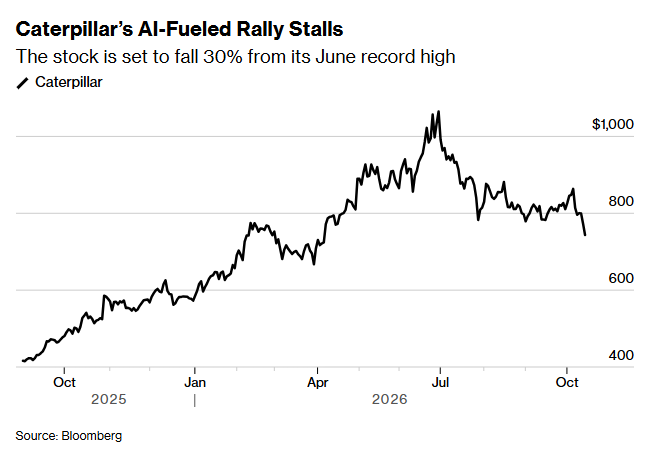
In recent months, traders have been wary of the risk of AI infrastructure targets “growing too fast and overvalued”. Caterpillar's weakening also echoes the overall fluctuation of power generation equipment manufacturers, chip makers, and companies in the data center industry chain. Since mid-August, both oil prices and US bond yields have risen, further squeezing the performance space of industrial stocks.
However, over time, Caterpillar has recorded an increase of about 40% over the past year, reflecting investors' confidence in its long-term fundamentals. Data center construction continues to drive the company's gas turbine and engine orders, and the construction machinery business has maintained a relatively rapid pace of expansion.
The market's focus is now on earnings reports released later this month. Jefferies analyst Stephen Volkmann pointed out that due to rising freight and raw material costs, machinery manufacturers generally face pressure on the cost side; if Caterpillar wants to maintain profit margins, it will increasingly rely on sales expansion.
“Demand for terminals in the construction machinery sector is still strong, and the boom is spreading outward from data centers. However, the real concern of investors is whether price transmission can cover costs and whether profit margins will be pressured against the backdrop of continuing commodity inflation,” Volkmann wrote in this week's research report.