
FMC Stock Sinks as Q3 Guidance Disappoints
FMC (FMC) stock tanked on Oct. 15 after the Philadelphia-headquartered crop protection firm lowered guidance for its third financial quarter. In its press release, FMC cited weaker demand and costly efforts to address distributor inventories, which include roughly $650 million in commercial adjustments.
The disclosure comes as FMC shares were already struggling to stage a comeback. They are currently trading at less than half their price at the start of this year.
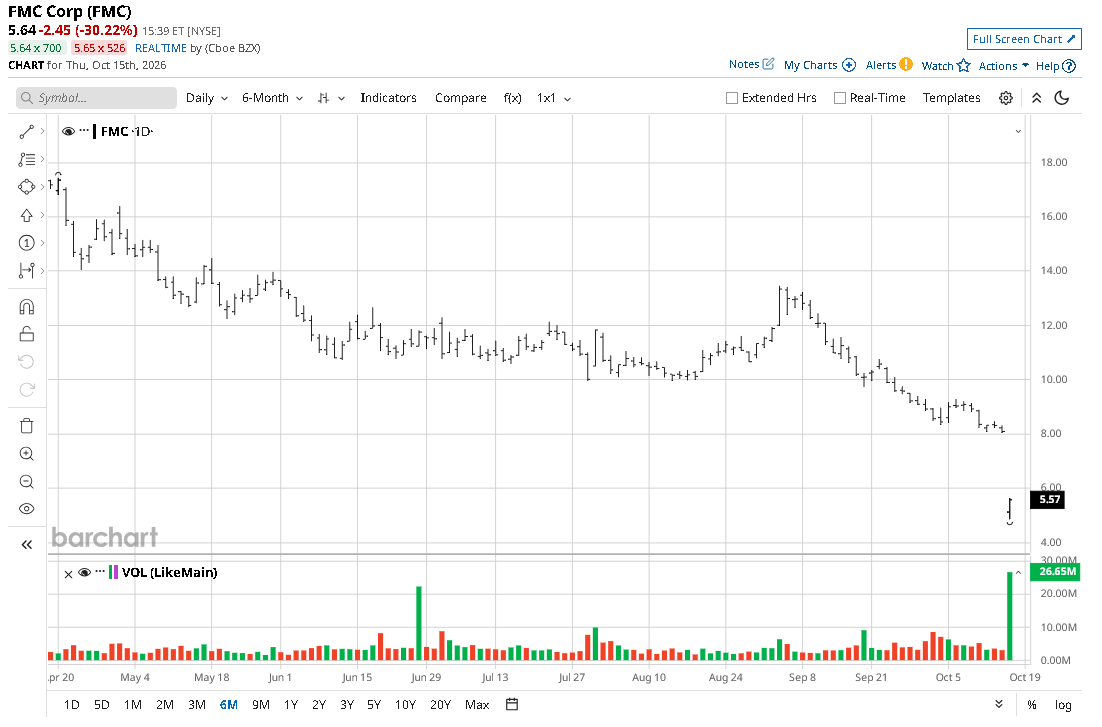
Here’s Why FMC Stock Tanked on Thursday
FMC now sees its revenue coming in at $95 million at the midpoint of its guided range, versus its previous call for up to $900 million. Adjusted EBITDA is also projected at a loss of at least $510 million, replacing an anticipated profit of about $130 million.
The problem extends beyond sluggish orders. Generic competition has pushed market prices below the value of some FMC products sitting with distributors, making that inventory harder to sell. According to FMC, it’s lowering selected inventory prices and simplifying its U.S. rebate structure.
For investors, the implication is rather painful. Helping distributors clean unsold product requires substantial concessions, undermining confidence in how quickly healthier sales can translate into earnings.
Should You Buy the Dip in FMC Shares?
FMC’s reduced share price offers a speculative turnaround opportunity, but the case for loading up immediately remains weak.
Management expects compliance with its Sept. 30 debt covenants, yet plans to discuss further modifications with lenders. That makes financial flexibility a central concern alongside sales recovery. FMC’s updated annual outlook will arrive on Oct. 29 when it reports Q3 earnings, followed by preliminary expectations for the next two years a day after.
Note that Barchart also currently holds a “100% SELL” opinion on FMC stock, signaling technical momentum remains against it for the near term.
What’s the Consensus Rating on FMC?
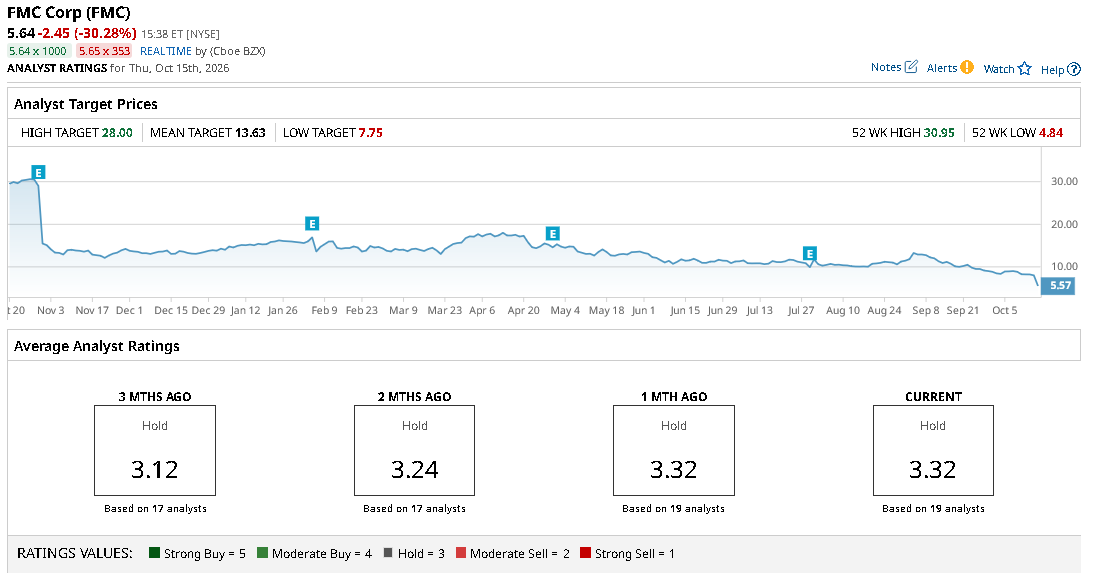
Heading into Oct. 15, Wall Street had a consensus “Hold” rating on FMC shares, with the mean price target of about $13.63 indicating significant upside potential.
However, it’s reasonable to expect downward revisions as analysts attempt to account for the firm’s lowered guidance in their estimates in the weeks ahead.
On the date of publication, Wajeeh Khan did not have (either directly or indirectly) positions in any of the securities mentioned in this article. All information and data in this article is solely for informational purposes. For more information please view the Barchart Disclosure Policy here.