
Did Network Outage Fallout Just Shift Telstra's (ASX:TLS) Investment Narrative?
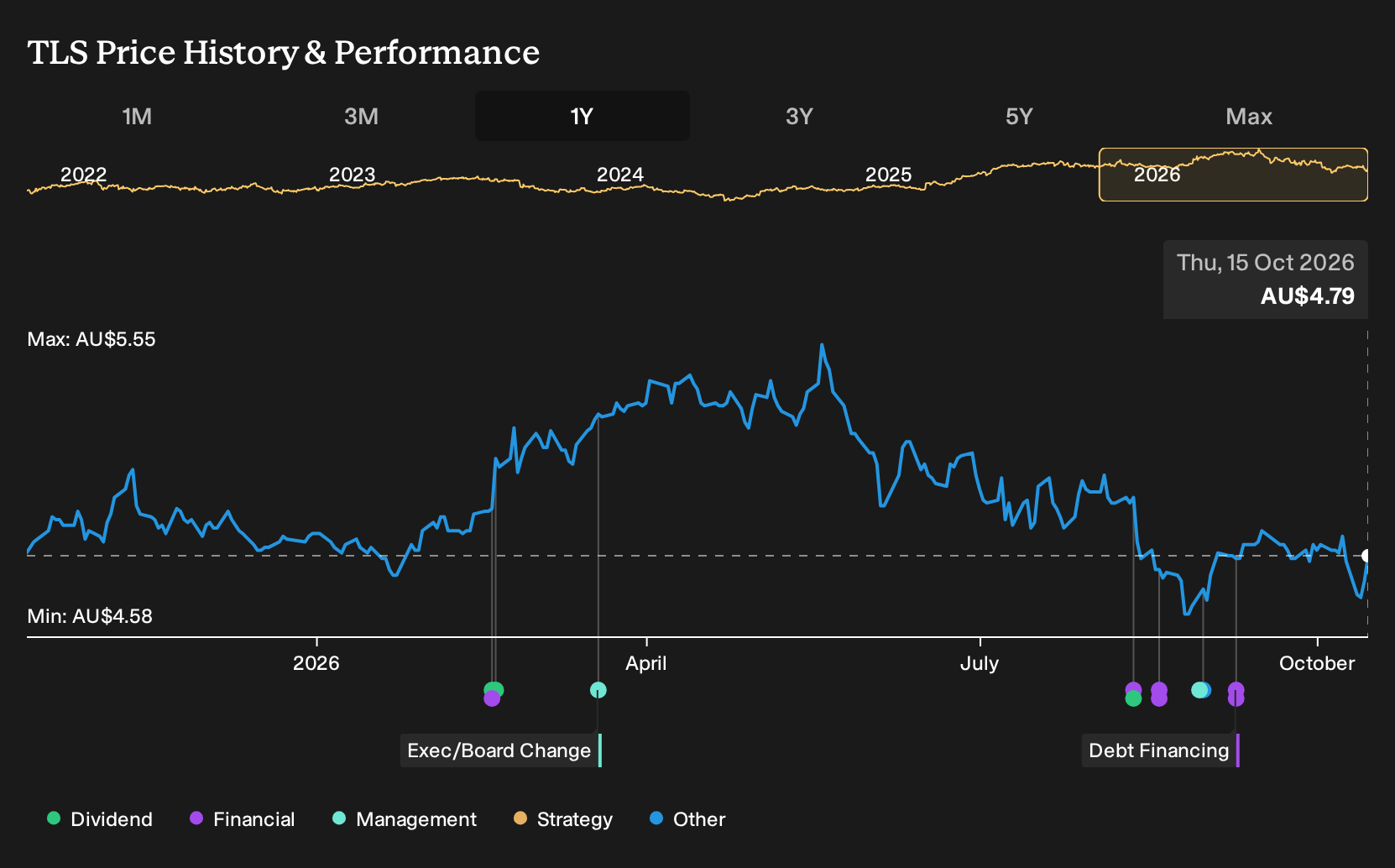
- Telstra Group is still dealing with the fallout from a major July network outage that disrupted mobile, payments, transport systems and emergency calls. Management has commissioned an external review and accepted financial penalties through reduced executive bonuses.
- The criticism of the chairman's public response highlights how operational resilience and crisis communication can directly influence confidence in Telstra Group's execution and governance.
- The focus now turns to how Telstra Group's long term investment narrative aligns with the scrutiny on its network resilience and outage response.
Telstra Group Investment Narrative Recap
To own Telstra Group, you need to believe its heavy network, fibre and digital investment can keep mobile, enterprise and infrastructure earnings resilient while customer expectations on reliability keep rising. The July outage pressures that belief because it puts a spotlight on whether the core network can realistically support growth initiatives without repeated disruption.
In the near term, the key catalyst is execution on network upgrades, automation and resilience work that supports current earnings forecasts and planned capital returns. The biggest risk now is not demand; it is operational reliability and any follow-up regulatory or remediation burden if outages or perceived governance gaps become a pattern.
The most relevant recent development is Telstra Group commissioning an external investigation into the July disruption and linking the outcome to executive pay through reduced bonuses. That decision ties outage management directly to leadership accountability and signals that remediation work is now an explicit operational priority rather than a background engineering task.
For investors, the question is whether these actions are enough to protect the existing earnings profile and dividend, given Telstra Group already carries high investment needs and a dividend that is not fully covered by current profit. Execution on this remediation, alongside ongoing cost and network programs, will shape how much regulatory, reputational and financial drag this incident creates.
What The Current Forecasts Assume For Telstra Group
Analysts are effectively asking you to underwrite a very specific glide path for Telstra Group. Revenue is modelled to rise by 1.6% a year, with profit margins lifting from 9.6% today to 10.9% in three years, and earnings moving from A$2.2b now to A$2.7b by 2029, alongside a modest reduction in share count of 1.81% annually over the next three years.
On those assumptions, consensus expects Telstra Group to be generating about A$24.6b in revenue and A$2.7b in profit in 2029, with the stock trading on a P/E of 24.5x compared with about 23.9x today and below an estimated 62.0x for the wider Australian telecom sector. That framework also leans on a discount rate of roughly 7.2%, which shapes how sensitive valuation is to any change in growth, risk, or cash flow expectations that might stem from outage related scrutiny.
Telstra Group's narrative projects A$24.6b revenue and A$2.7b earnings by 2029. This assumes 1.6% yearly revenue growth and an earnings increase of about A$500m from A$2.2b today.
Uncover why Telstra Group's fair value indicates a 6% potential upside to its current price, which could narrow quickly.
Exploring Other Perspectives
Two fair value estimates from the Simply Wall St Community sit between A$5.06 and A$7.41, which already shows how far Telstra Group opinions can stretch. Citi’s A$5.25 target and a separate A$3.50 analyst consensus add more spread. Set that against outage driven governance questions and you get very different conclusions about Telstra's resilience. Readers should treat this as a cue to review several competing viewpoints rather than anchor on a single price target.
Explore another Telstra Group fair value estimate, including one that suggests as much as 55% upside from the current price.
Decide For Yourself
Disagree with existing narratives? Extraordinary investment returns rarely come from following the herd, so go with your instincts.
- A great starting point for your Telstra Group research is our analysis highlighting 3 key rewards and 2 important warning signs that could impact your investment decision.
- See our latest analysis for Telstra Group. The report includes a comprehensive fundamental analysis summarized in a single visual, the Snowflake, making it easy to evaluate Telstra Group's overall financial health at a glance.
Looking For More Investment Ideas Beyond Telstra Group?
Once you have a view on Telstra Group, it can help to compare that thesis with other companies that score well on resilience, balance sheet strength, and income potential. The Simply Wall St Screener lets you filter for those traits directly so you are not relying on a single story or sector to carry your portfolio.
- If you want income that aims for durability rather than drama, start with companies we flag as potential yield workhorses through the 3 dividend fortresses.
- For investors who care most about financial strength and staying power, focus on businesses that pass our balance sheet stress tests using the list of solid balance sheet and fundamentals (12 results).
- If you are hunting for fresher ideas that are not already crowded, look across our 15 high quality undiscovered gems that pair solid fundamentals with lower profile coverage.
This article by Simply Wall St is general in nature. We provide commentary based on historical data and analyst forecasts only using an unbiased methodology and our articles are not intended to be financial advice. It does not constitute a recommendation to buy or sell any stock, and does not take account of your objectives, or your financial situation. We aim to bring you long-term focused analysis driven by fundamental data. Note that our analysis may not factor in the latest price-sensitive company announcements or qualitative material. Simply Wall St has no position in any stocks mentioned.
Have feedback on this article? Concerned about the content? Get in touch with us directly. Alternatively, email editorial-team@simplywallst.com