
3 UK Food Export Stocks Facing A Trade Reset
UK food exporters are under pressure as shipments to the EU fall sharply, yet pressure often reveals which businesses can adapt and which struggle. For investors, that mix of risk and adjustment can create chances that feel rare and time sensitive. This article walks through three UK agrifood stocks that are closely tied to this trade story, exploring where the recent shock might be creating resilience, pricing power or both.
The three stocks below are only a starter pack, and the full screen on Simply Wall St surfaces 19 more UK agrifood processors and exporters with equally compelling trade stories that are not covered here. To identify which UK Food Exporters and Agrifood Processors best fit your own risk and quality filters, head straight into the UK Food Exporters and Agrifood Processors screener.
Tate & Lyle (LSE:TATE)
Tate & Lyle taps directly into the UK food exporters theme as a London based ingredients supplier feeding European food producers. This makes its product mix and earnings power a useful test case for how easing trade friction might reward upstream processors.
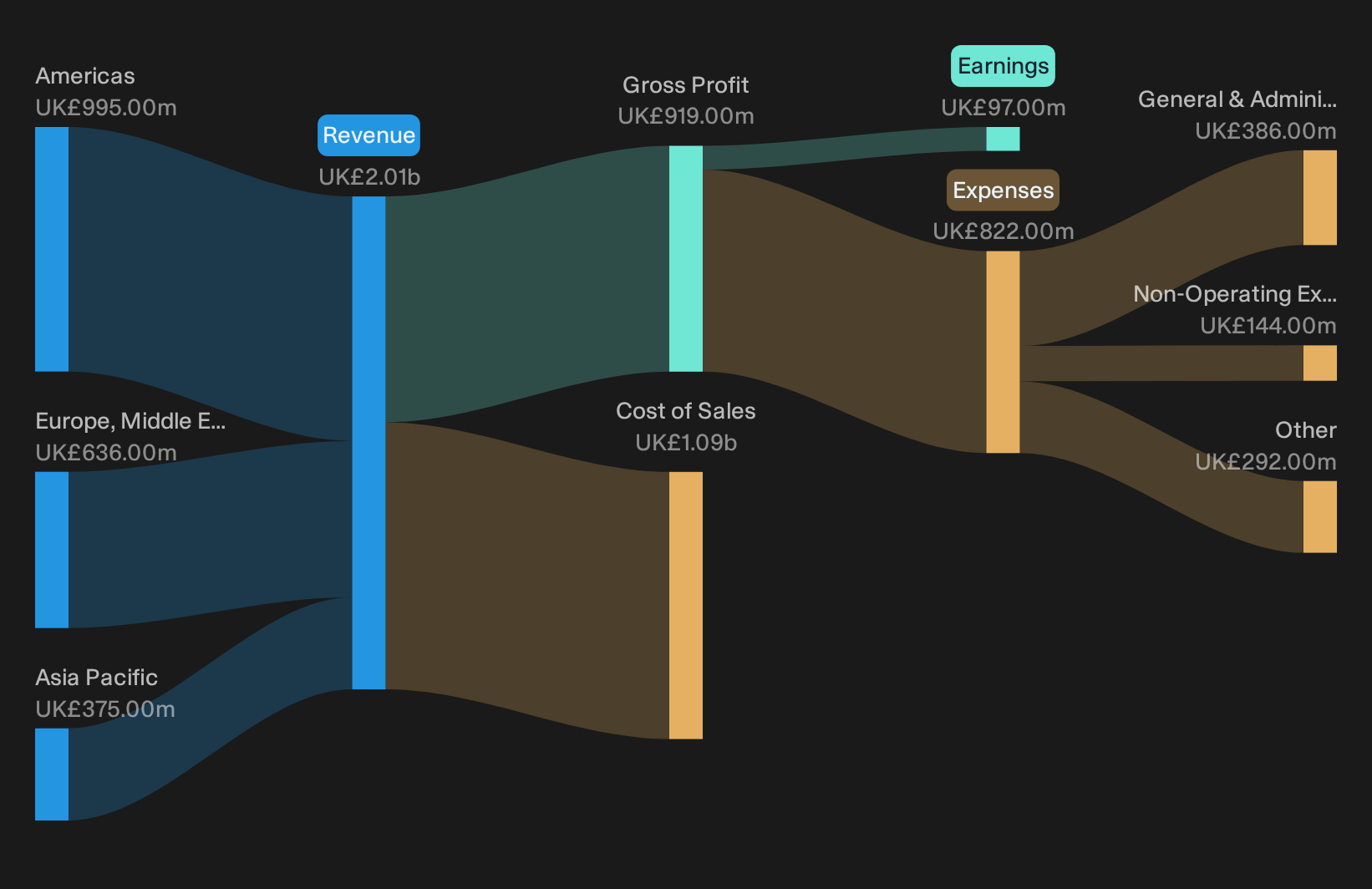
Tate & Lyle produces sweeteners, fibres, stabilisers and other specialty ingredients for global food and drink brands. Its largest revenue stream is from the Americas at £995 million, followed by Europe, Middle East and Africa at £636 million, and Asia Pacific at £375 million. The business has a market cap of about £2.5b.
"The combination with CP Kelco is still expected to accelerate Tate & Lyle's growth strategy by widening its specialty food and beverage solutions portfolio and supporting revenue growth from higher value ingredients."
What really moves the needle from here is how one pressure point in its export exposed ingredient mix ultimately feeds through to margins.
That margin story is only half the picture, and the full narrative for Tate & Lyle shows how Tate & Lyle’s reshaped portfolio could be quietly resetting its earnings profile.
Hilton Food Group (LSE:HFG)
Hilton Food Group plugs straight into the UK Food Exporters and Agrifood Processors theme, packing meat, seafood and prepared meals for major European and international retailers. This makes its next phase of expansion an important test of how scaled processors can respond as trade friction potentially eases.
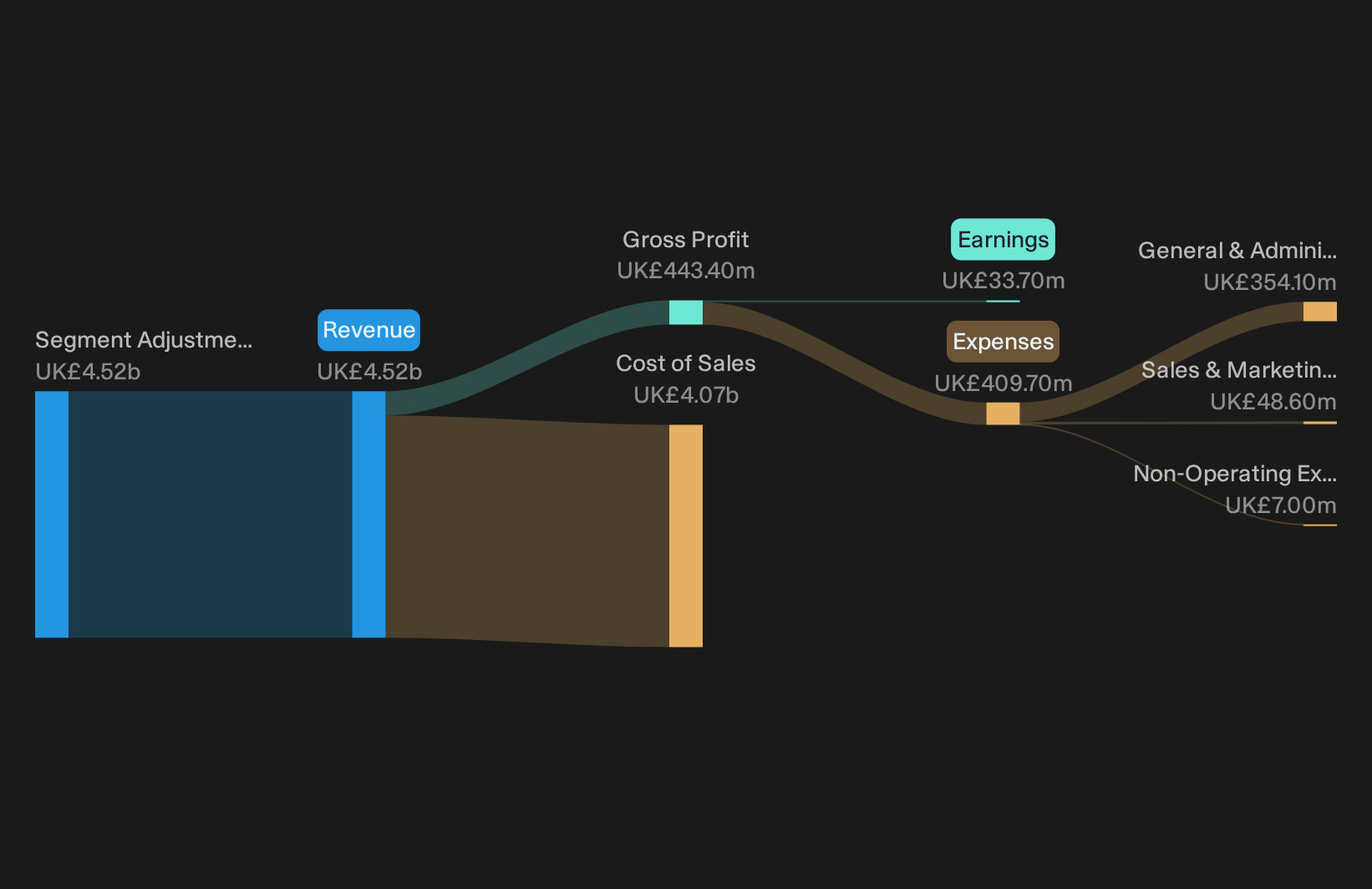
Hilton Food Group runs a multi-protein packing and supply-chain operation serving international supermarkets, with a single reported business segment generating £4.5b of revenue and a market value of about £639 million.
"The planned launch of operations in Canada with Walmart (early 2027) and Saudi Arabia with NADEC (H2 2026), both targeting fast-growing markets with rising urbanization and protein consumption, is likely to significantly expand Hilton Food Group's addressable market, driving top-line revenue growth. Continued investments in automation, supply chain optimization, and digitalization, including strategic moves like the Foods Connected partnership, are anticipated to yield operational efficiencies that support margin expansion and improve ROCE over the longer term."
What really matters for Hilton Food Group is how one unresolved cost and funding pressure shapes the payoff from all that extra volume and reach.
That funding question is exactly where the full narrative for Hilton Food Group joins the dots, unpacking how Hilton Food Group’s capital choices could accelerate or quietly cap the next leg of growth.
Marks and Spencer Group (LSE:MKS)
Marks and Spencer Group brings the UK Food Exporters and Agrifood Processors theme into everyday baskets, blending a large food business, private-label sourcing and some exported ranges with broader retail. Its mix of convenience, brand reach and supplier relationships sets up an interesting test case for trade friction relief.
Marks and Spencer Group runs clothing, home, beauty, food and Ocado-linked operations, with food the anchor at about £9.7b of revenue, Fashion, Home & Beauty at roughly £3.8b, Ocado at £3.2b and International at £543 million, and carries a market value near £8.5b.
For investors tracking trade exposed food supply chains, Marks and Spencer Group matters because its growing food halls and export linked sourcing could see both cost pressure and upside as UK EU rules evolve, and the next step in that story hinges on how much extra volume its refreshed store estate can support.
"Marks and Spencer Group is pushing ahead with store rotation and larger food halls in higher traffic locations, with more than 50 new food stores planned over the next three years and non like for like space expected to add 2 to 3 percentage points to annual Food sales growth, which could support higher group revenue and operating profit if customer numbers and basket sizes keep building."
What matters most from here is how one less visible cost friction in Marks and Spencer Group’s cross border food supply quietly shapes those future margins.
That supply friction is only half the story, and the full narrative for Marks and Spencer Group maps how Marks and Spencer Group’s expanding food halls, sourcing choices and capital spend could be quietly reshaping its earnings mix.

Curious About What You Might Be Missing Next
Fresh ideas move first. Breakout stories gain momentum while most investors are caught looking back at yesterday's winners. Scan these under the radar lists before the crowd and act now.
- Target cash generative operators with robust balance sheets by running the list of solid balance sheet and fundamentals (9 results). These fundamentals focused opportunities are still flying under most investors' radar.
- Track early price and earnings momentum in potential breakout payers using the 7 high quality undervalued stocks before interest spikes and ideal entry ranges start dropping away.
- Position ahead of the electrification build out by reviewing the curated 41 power grid technology and infrastructure stocks while the grid upgrade story is still forming in most portfolios.
This article by Simply Wall St is general in nature. We provide commentary based on historical data and analyst forecasts only using an unbiased methodology and our articles are not intended to be financial advice. It does not constitute a recommendation to buy or sell any stock, and does not take account of your objectives, or your financial situation. We aim to bring you long-term focused analysis driven by fundamental data. Note that our analysis may not factor in the latest price-sensitive company announcements or qualitative material. Simply Wall St has no position in any stocks mentioned.
Have feedback on this article? Concerned about the content? Get in touch with us directly. Alternatively, email editorial-team@simplywallst.com