
Do These 3 Checks Before Buying Tian Lun Gas Holdings Limited (HKG:1600) For Its Upcoming Dividend
Regular readers will know that we love our dividends at Simply Wall St, which is why it's exciting to see Tian Lun Gas Holdings Limited (HKG:1600) is about to trade ex-dividend in the next 3 days. Typically, the ex-dividend date is two business days before the record date, which is the date on which a company determines the shareholders eligible to receive a dividend. The ex-dividend date is important because any transaction on a stock needs to have been settled before the record date in order to be eligible for a dividend. Meaning, you will need to purchase Tian Lun Gas Holdings' shares before the 23rd of October to receive the dividend, which will be paid on the 30th of November.
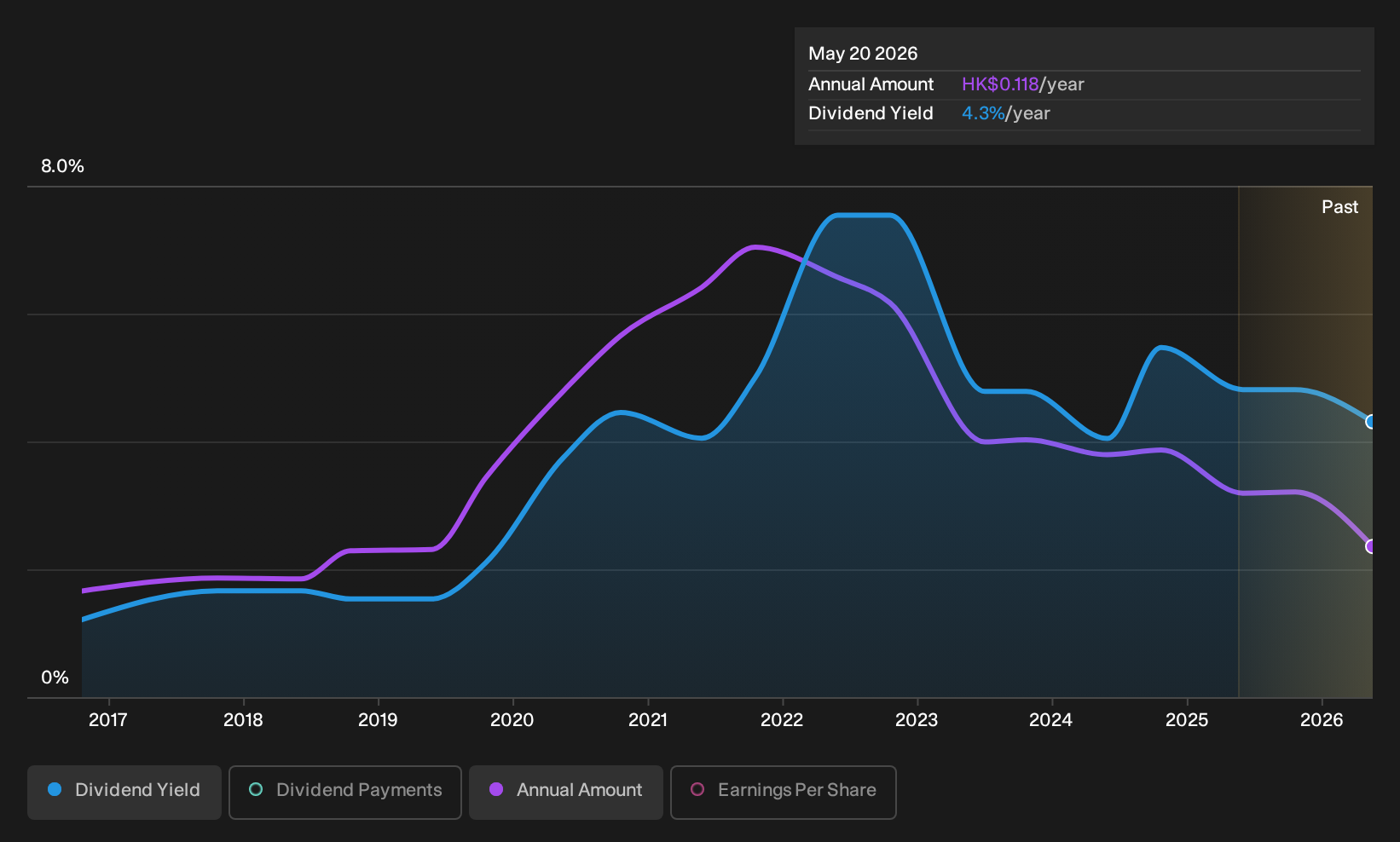
The company's upcoming dividend is CN¥0.0348 a share, following on from the last 12 months, when the company distributed a total of CN¥0.10 per share to shareholders. Based on the last year's worth of payments, Tian Lun Gas Holdings stock has a trailing yield of around 4.4% on the current share price of HK$2.715. Dividends are an important source of income to many shareholders, but the health of the business is crucial to maintaining those dividends. So we need to check whether the dividend payments are covered, and if earnings are growing.
Dividends are typically paid from company earnings. If a company pays more in dividends than it earned in profit, then the dividend could be unsustainable. Tian Lun Gas Holdings reported a loss last year, so it's not great to see that it has continued paying a dividend. Considering the lack of profitability, we also need to check if the company generated enough cash flow to cover the dividend payment. If cash earnings don't cover the dividend, the company would have to pay dividends out of cash in the bank, or by borrowing money, neither of which is long-term sustainable. It paid out 17% of its free cash flow as dividends last year, which is conservatively low.
See our latest analysis for Tian Lun Gas Holdings
Click here to see how much of its profit Tian Lun Gas Holdings paid out over the last 12 months.
Have Earnings And Dividends Been Growing?
Companies with falling earnings are riskier for dividend shareholders. If earnings decline and the company is forced to cut its dividend, investors could watch the value of their investment go up in smoke. Tian Lun Gas Holdings was unprofitable last year and, unfortunately, the general trend suggests its earnings have been in decline over the last five years, making us wonder if the dividend is sustainable at all.
Another key way to measure a company's dividend prospects is by measuring its historical rate of dividend growth. Tian Lun Gas Holdings has delivered 3.6% dividend growth per year on average over the past 10 years.
We update our analysis on Tian Lun Gas Holdings every 24 hours, so you can always get the latest insights on its financial health, here.
Final Takeaway
Is Tian Lun Gas Holdings worth buying for its dividend? We're a bit uncomfortable with it paying a dividend while being loss-making. However, we note that the dividend was covered by cash flow. Overall it doesn't look like the most suitable dividend stock for a long-term buy and hold investor.
Although, if you're still interested in Tian Lun Gas Holdings and want to know more, you'll find it very useful to know what risks this stock faces. We've identified 3 warning signs with Tian Lun Gas Holdings (at least 2 which don't sit too well with us), and understanding them should be part of your investment process.
A common investing mistake is buying the first interesting stock you see. Here you can find a full list of high-yield dividend stocks.
Have feedback on this article? Concerned about the content? Get in touch with us directly. Alternatively, email editorial-team (at) simplywallst.com.
This article by Simply Wall St is general in nature. We provide commentary based on historical data and analyst forecasts only using an unbiased methodology and our articles are not intended to be financial advice. It does not constitute a recommendation to buy or sell any stock, and does not take account of your objectives, or your financial situation. We aim to bring you long-term focused analysis driven by fundamental data. Note that our analysis may not factor in the latest price-sensitive company announcements or qualitative material. Simply Wall St has no position in any stocks mentioned.