
Learn Why The Bull Case For Tyson Foods Stock Could Change Following Beef Profit Cut
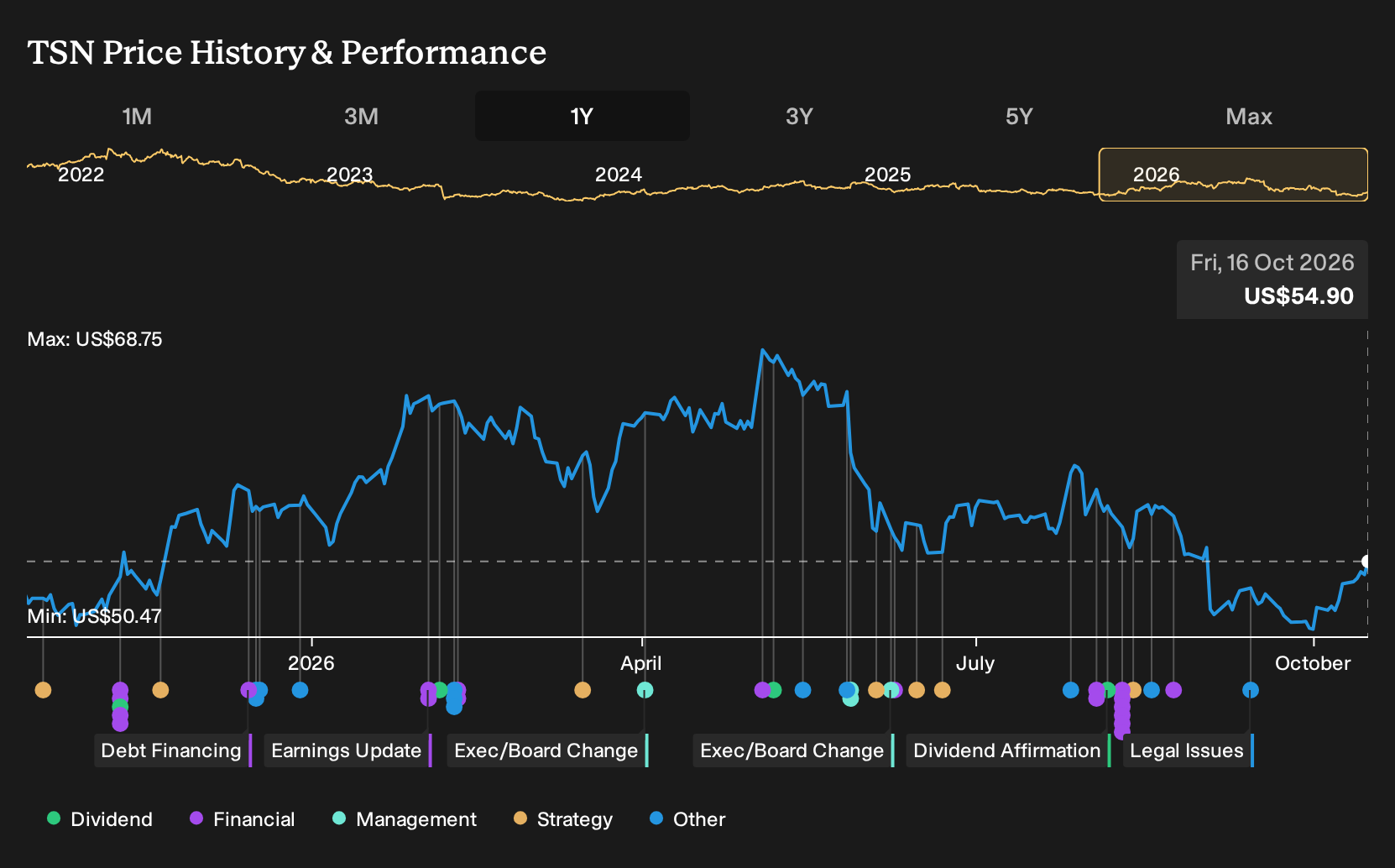
- Tyson Foods cut its fiscal 2026 profit outlook for its beef business, pointing to tighter cattle availability as a key operational constraint.
- The guidance reset highlights how concentrated Tyson Foods' earnings exposure is to beef processing economics when upstream livestock supply tightens.
- This article examines how Tyson Foods' broader investment narrative is affected by the beef unit's reduced outlook and the strain on cattle availability.
Scan beyond Tyson Foods' cattle squeeze and compare its setup with hand-picked protein and food producers that have been screened for stronger balance sheets and cash generation using the list of solid balance sheet and fundamentals (25 results).
Tyson Foods Investment Narrative Recap
To own Tyson Foods, you need to be comfortable with a protein producer that is heavily exposed to beef cycles, while also pushing more into chicken and prepared foods. The key near term catalyst is whether operational efficiencies and product mix can offset pressure from the beef unit. The latest profit cut in beef directly tests that thesis.
The biggest current risk sits in cattle availability and what that means for Beef segment losses and asset utilization. If tight supply persists or worsens, it can weigh on group earnings even if branded prepared foods perform well. If herd rebuilding or sourcing options do not ease that strain, the drag could stay meaningful.
The most relevant update is Tyson Foods lowering its fiscal 2026 profit outlook for the beef business because of cattle supply constraints. That reset puts a clearer number on a risk that was already flagged around persistent tight herds and the possibility of negative Beef operating income for several years.
For catalysts, this matters because it raises the bar for what Chicken, Pork and Prepared Foods need to deliver on mix and efficiency to support earnings growth expectations. It also puts more focus on execution in cost control, pricing power in branded products, and the timing of any improvement in cattle availability for the beef unit.
Tyson Foods' current earnings are about US$574.0 million and consensus expects earnings to reach US$2.5b by 2029, which implies an increase of roughly US$1.9b. That forecast lines up with analyst assumptions that revenue stays broadly flat, with revenues projected at about US$56.2b in 2029 and profit margins rising from 1.0% today to 4.5% by the same year.
Uncover why Tyson Foods' fair value indicates a 17% potential upside to its current price that could close sooner than many investors expect.
Exploring Other Perspectives
One alternate view focuses less on cattle and more on Tyson Foods’ ability to turn Chicken and Prepared Foods into steady profit engines. The most bearish analysts were already assuming revenue trends near US$50.7b by 2029 and earnings of about US$2.1b before this beef outlook cut, so their already cautious story may need another rethink.
Explore 3 other Tyson Foods fair value estimates, including one that suggests it could be worth just $63.00.
Form Your Own Verdict
Disagree with existing narratives? Extraordinary investment returns rarely come from following the herd, so rely on your own research and judgment.
- A great starting point for your Tyson Foods research is our analysis highlighting 3 key rewards and 1 important warning sign that could impact your investment decision.
- See our latest analysis for Tyson Foods. The report includes a comprehensive fundamental analysis summarized in a single visual, the Snowflake, making it easy to evaluate Tyson Foods' overall financial health at a glance.
Looking For More Investment Ideas Beyond Tyson Foods?
If the Tyson Foods story leaves you wanting a broader watchlist, it can help to line it up against other businesses that match your risk, income, and quality preferences.
- For investors who want quality and price discipline together, review a curated set of companies flagged as both attractively valued and financially robust using the 33 high quality undervalued stocks.
- If capital preservation and balance sheet strength sit high on your checklist, compare Tyson Foods with businesses highlighted in the 32 resilient stocks with low risk scores.
- For those hunting beyond the usual tickers, widen your opportunity set with the 20 high quality undiscovered gems.
This article by Simply Wall St is general in nature. We provide commentary based on historical data and analyst forecasts only using an unbiased methodology and our articles are not intended to be financial advice. It does not constitute a recommendation to buy or sell any stock, and does not take account of your objectives, or your financial situation. We aim to bring you long-term focused analysis driven by fundamental data. Note that our analysis may not factor in the latest price-sensitive company announcements or qualitative material. Simply Wall St has no position in any stocks mentioned.
Have feedback on this article? Concerned about the content? Get in touch with us directly. Alternatively, email editorial-team@simplywallst.com