
After the stock debt plummeted, Goldman Sachs and Komo backed CoreWeave (CRWV.US): AI infrastructure projects had strong returns, and the new cloud leader was mistakenly killed by the market
The Zhitong Finance App learned that the current financial market's unprecedented AI controversy over CoreWeave (CRWV.US), which is ranked as the “AI computing power sell-off storm”, “AI bubble bursting argument”, and NeoCloud (NeoCloud)'s core stock sell-off target, is focusing on a question: can the return on cash flow created by AI computing power assets in the future cover higher capital costs and support financing needs during the expansion period.
On October 19, Goldman Sachs upgraded its rating from “neutral” to “buy,” while lowering the target price from $139 to $106, which is still about 72.7% higher than the closing price of $61.39 last Friday; MoffettNathanson remained “neutral”. The target price dropped from $107 to $89, believing that the company was not on the verge of collapse, but its huge financial obligations made it still rely on the capital market for continuous blood transfusions. Generally speaking, there is no contradiction between the rating increase and the target price reduction — for example, Wall Street financial giant Goldman Sachs recently accepted valuation losses due to the deterioration of the financing environment, and at the same time believes that the stock price decline is already even greater.
Another Wall Street financial giant, J.P. Morgan Chase, is optimistic about the core of CoreWeave. It believes that the capital gap caused by the rapid expansion of production in the market is overinterpreted as a lack of return in the business model itself. The agency's stock strategy team recently reiterated its “gain” rating on CoreWeave, stressing that demand for data centers has continued to increase in recent months, and that CoreWeave has locked in customers ahead of time through long-term “no approval” contracts, reducing the risk of vacancies to build first and then find demand. Its competitive advantage also lies in integrating power, GPU, liquid cooling, and high-speed networks into truly deliverable computing clusters: the planned capacity announced by the industry does not equal an effective supply that can go online on time. For customers rushing to deploy models, delivery speed and cluster reliability have commercial value, and also support CoreWeave's ability to maintain pricing.
This time, Goldman Sachs and other Wall Street agencies upgraded CoreWeave's countertrend rating or reiterated bullish target price after a deep adjustment: CoreWeave fell 25.21% last week, with a cumulative decline of 29.53% as of October 16; the Philadelphia Semiconductor Index recorded eight consecutive declines during the same period, falling sharply by about 11.4% last week, and retreating about 24% from its high in the past year. South Korean memory chip giant SK Hynix and Samsung Electronics also recently experienced concentrated sell-off, while KOSPI rebounded 1.76% on October 19.
Financing pressure is also reshaping pricing in the primary market: Nvidia-supported nScale is seeking an IPO valuation of about $30 billion, but some investors only accept $16 billion to $19 billion, which is equivalent to asking for a discount of about 37% to 47%. This is a price pressure demand that is close to being cut; it is not yet a completed financing valuation. Capital markets are increasing requirements for delivery certainty, cash recovery, and return on capital.
The reason why the CoreWeave bond index has recently become a new barometer for AI transactions is that the market is beginning to re-examine whether strong demand for computing power can be transformed into sufficient cash flow to support production expansion and debt repayment. The deep contradiction that the market is currently focusing on is that GPUs, liquid cooling, high-speed optical interconnect network infrastructure and power access require initial investment, and customer payments are gradually realized as cluster delivery and service contracts are fulfilled; the faster production is expanded, the gap between mature project cash flow and new investment becomes larger. When credit spreads widen dramatically, even if US bond yields fall, corporate financing costs will not necessarily fall at the same time. As a result, financing pressure may be transmitted to GPUs, storage, optical interconnection, and the entire semiconductor industry chain through project delays, equipment procurement slowdown, and changes in delivery pace, reducing the market's pricing for future orders and profit growth.
Investment-grade bonds are relatively stable, and underrated AI debt means that capital is more strictly distinguishing between companies that “can finance growth” and “must continue to finance growth” — this also explains why, in the face of the credit market alarm, Goldman Sachs and Xiaomo are still optimistic about CoreWeave — that is, long-term pre-sale contracts increase revenue visibility, cluster delivery capabilities support order fulfillment, and old GPU renewals extend the cash recovery cycle; the unleveraged returns on projects in the Xiaomo model are still higher than their hypothetical capital costs.
As a result, the controversy centered on whether projects with long-term returns can obtain sufficient funding to successfully cross the gap between construction and repayment. The new contract pricing, cash return per megawatt, and actual financing terms can determine more room for revaluation than simply the total order amount. If new financing is successfully implemented, credit spreads stabilize, and deliveries continue to be converted into cash, the stock market rebound can receive more solid support; financing differentiation may also push orders to concentrate on operators with stronger capital strength and higher delivery efficiency, causing the AI computing power industry to expand at the same time as corporate valuation differentiation.
At the institutional level, J.P. Morgan recently reiterated “overallocation,” believing that demand for data centers has continued to increase in recent months, and that the economy of the CoreWeave project still supports healthy profits and cash returns. Of the 35 analysts compiled by MarketBeat as of October 19, 25 bought, 7 held, and sold, with an average 12-month target price of $138.82, which is 126.1% higher than last Friday's closing price; however, it is important to note that this average includes target prices for different dates, and cannot be considered as if all institutions have simultaneously completed the current round of credit shocks.
MoffettNathanson takes a cautious stance: “It's not on the verge of collapse,” but funding dependency is still there
According to reports, analysts from Moffettnathanson, a well-known Wall Street investment agency, said CoreWeave “is not on the verge of collapse,” but warned that its financial obligations are “astonishing.”
CoreWeave's stock price had just experienced a rough week before MoffettNathanson issued the warning. Borrowing costs have soared, causing the market to question whether it is sustainable to rely on debt financing to advance AI expansion.
MoffettNathanson believes that CoreWeave is not “on the verge of collapse.” However, the brokerage firm lowered the AI cloud infrastructure provider's target price from $107 to $89 on Monday and maintained a “neutral” rating.
According to The Fly, the agency said CoreWeave still has multiple funding options, although some of them may not be ideal. However, the agency warns that the company has taken on “financial obligations of an astonishing scale,” which ultimately still depends on whether the capital market is willing to fund its business.
CoreWeave shares plummeted as the company's debt concerns upset tech investors around the world. Prior to the release of this latest assessment, CoreWeave's stock price had a rough week: a cumulative decline of more than 25% from October 9 to October 16.
The sell-off intensified further last Wednesday. The higher-than-expected US inflation data strengthened expectations of further interest rate hikes, raising market concerns about the financing costs of high-debt AI infrastructure companies.
CoreWeave's borrowing costs became a particularly prominent focus. The yield on its dollar bonds due in October 2031 rose above 16% on Thursday, while the cost of debt default insurance surpassed 1,000 basis points.
Notably, with $104 billion of on-hand orders, CoreWeave is still burdened with $35.6 billion in debt. CoreWeave revealed that as of June 30, its total debt was US$35.6 billion. Net interest expenses for the second quarter increased from $267 million in the same period last year to $640 million, highlighting the costs of financing the expansion.
According to an internal memo seen by the media, CEO Michael Intertrato responded to these concerns, saying that the market sometimes “misunderstands and acts irrationally.” By the end of June, the company had signed on-hand revenue orders of approximately US$104 billion.
What do other analysts think of CoreWeave? Despite the turbulence in the bond market, some analysts believe that this round of sell-off exaggerates CoreWeave's financial risks.
According to reports, Goldman Sachs raised the CoreWeave rating from “neutral” to “buy” on Monday local time. Although the target price was lowered from 139 US dollars to 106 US dollars, the new target price still means about 73% potential increase.
Goldman Sachs acknowledged that fluctuations in the credit market have raised financing concerns, but it is expected that in the next 24 months, CoreWeave's annual recurring revenue per megawatt and return on unleveraged investment will improve. Reasons include the tight supply of AI computing power and the company's differentiated competitive advantage over other cloud service providers.
In an interview with the media last Friday, Yorkville Ives analyst Dan Ives called the market interpretation behind this round of decline a “false narrative.” He believes that strong AI demand and CoreWeave's on-hand orders have made this pullback an opportunity to buy.
J.P. Morgan analyst Samick Chatterjee also believes that market concerns about rising bond yields and returns on AI infrastructure investment are “excessive,” and pointed out that demand for data centers has increased, and CoreWeave's project economy is still stable.
What do retail investors think of CoreWeave? Despite the recent sharp drop in stock prices, retail investors' sentiment on CoreWeave shares remains “extremely bullish”, and the volume of related discussions is also at an extremely high level.
The chart above shows CoreWeave retail sentiment as of October 19 at 7 a.m. EST. Source: Stocktwits.
Since this year, CoreWeave shares have dropped more than 22%. In contrast, the iShares Future AI and Technology ETF (ARTY.US) and Invesco QQQ Trust Series ETF — that is, ETF that fully tracks the NASDAQ 100 Index (QQQ.US), which also holds the shares, rose nearly 40% and 16%, respectively, during the same period.
Why can't 100 billion orders stop credit alerts? Goldman Sachs bets on improved returns per megawatt
The transmission chain of this round of sell-off is that inflation and interest rate shocks raise the financing threshold, and further reduce shareholder value by widening credit spreads. Currently, the 10-year US Treasury yield has fallen back to about 5.08%, so it cannot continue to be described as a one-sided surge; however, CoreWeave's yield on bonds due in 2031 hit 16% last week, and the 5-year credit default swap (CDS) spread exceeded 1,100 basis points. According to media reports, this corresponds to a cumulative five-year implied default probability of about 63% — it is market pricing influenced by recovery rate assumptions, risk premiums, and liquidity; it is not an objective measurement of the company's actual default probability.
The core of market concerns is a mismatch in the timing of capital expenditure payment first, contract repayment, and then fulfillment. CoreWeave's net interest expenses for the second quarter reached US$640 million, an increase of about 140% year on year; operating cash flow for the quarter was US$679 million, while cash capital expenditure was US$6.422 million. Even with an on-hand revenue order of approximately $104 billion, revenue recognition must still meet delivery and service availability conditions, and the order amount cannot directly equal net cash that can be used to repay debts. Delays in construction or power supply will delay charges, but interest, rent, and equipment payments will not necessarily be delayed at the same time, so it is entirely possible that strong demand and tight financing will exist at the same time.
Goldman Sachs's bullish judgment is based precisely on a re-estimation of this set of relationships: the bank expects CoreWeave's annual recurring revenue per megawatt (ARR/MW) and unleveraged internal rate of return (Unlevered IRR) to rise over the next 24 months. At the same time, Goldman Sachs expects the cost of comprehensive debt to rise by 100-200 basis points, and emphasized that the company mainly uses asset-backed financing, and that the worst yield of 13.5% to 15% of unsecured bonds cannot be directly applied to all new financing. Its core judgment is that the market may overestimate further deterioration in financing costs while underestimating improvements in returns on computing power assets.
Looking at technology and business mechanisms, this judgment needs to be implemented into cluster efficiency: high-speed networks and storage reduce GPU waiting, task scheduling increases resource utilization, and fault identification and recovery reduces invalid computation, thereby reducing the cost for customers to complete the same training or inference tasks. CoreWeave provides a dedicated platform covering these aspects. Its value is to improve effective computing power output and delivery reliability, and provide support for pricing and contract renewals. Only if each megawatt of revenue growth can increase project returns after deducting additional equipment, electricity, and operation and maintenance investment, will technological advantages translate into solvency and shareholder returns — this is also the key to whether this round of potential semiconductor and broad technology stock counterattacks can continue: financing channels remain unobstructed, and orders already signed are converted into cash that can be collected on schedule.
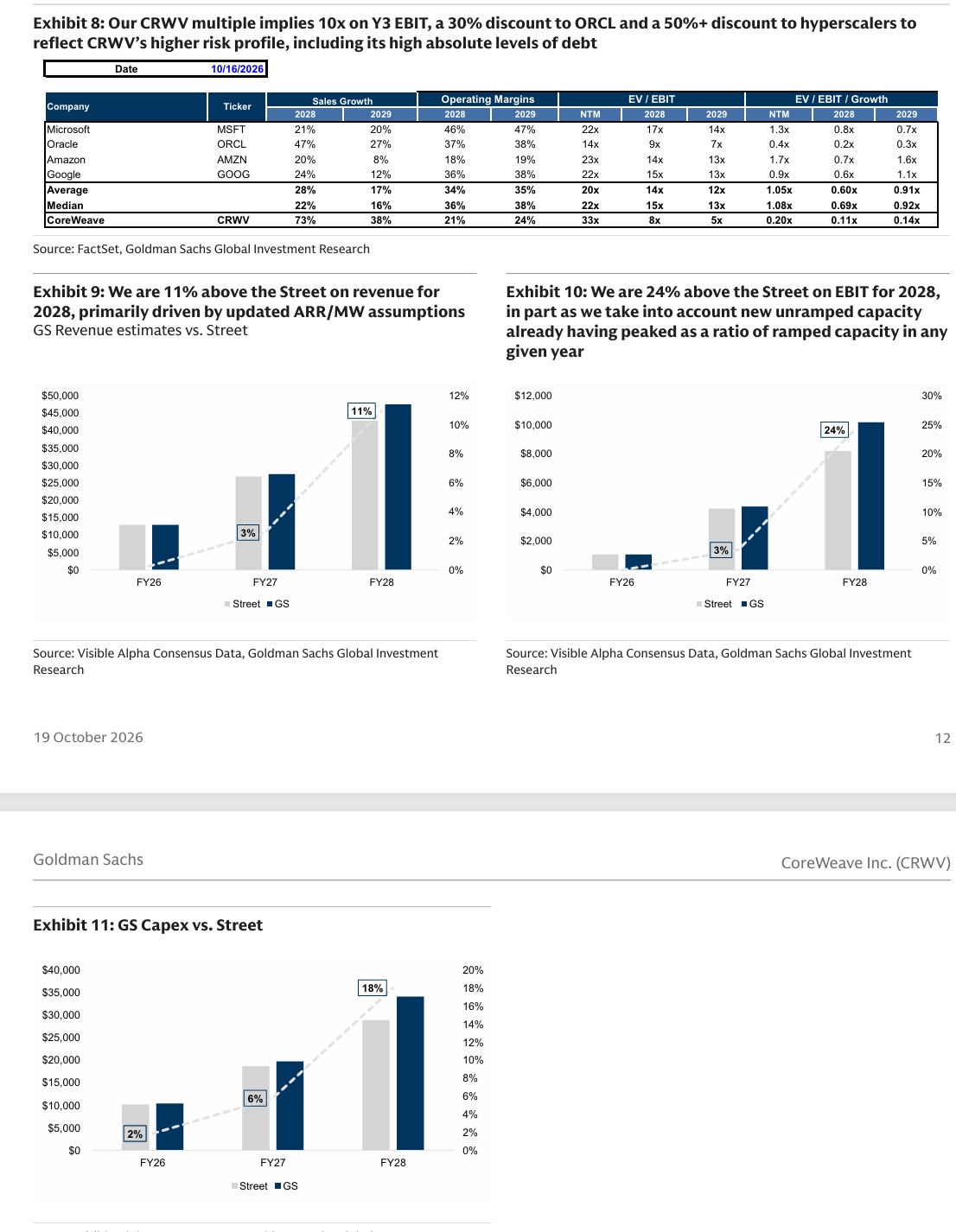
The bullish basis for Komo lies further on the contract's cash return. According to its schematic estimate, the unleveraged internal rate of return for a typical five-year contract is “10 percentage points in the middle”, which is higher than the 9%-11% mixed capital cost assumed by the model; after settling the asset-level debt, it can also contribute remaining cash equivalent to about 16% of the total contract value to the parent company. However, this 16% is not the net profit margin for shareholders, and the parent company still has to bear its own financing and operating obligations. Komo believes that the tight supply of computing power gives new contracts an opportunity to include higher financing costs in the quotation, thereby maintaining the return space for the project. The key is whether the new project can continue to earn cash returns higher than the cost of capital, rather than whether the market yield of a single stock bond will suddenly rise; the latter will affect future financing, but it does not mean that all debts will immediately accrue interest at the same high interest rate.
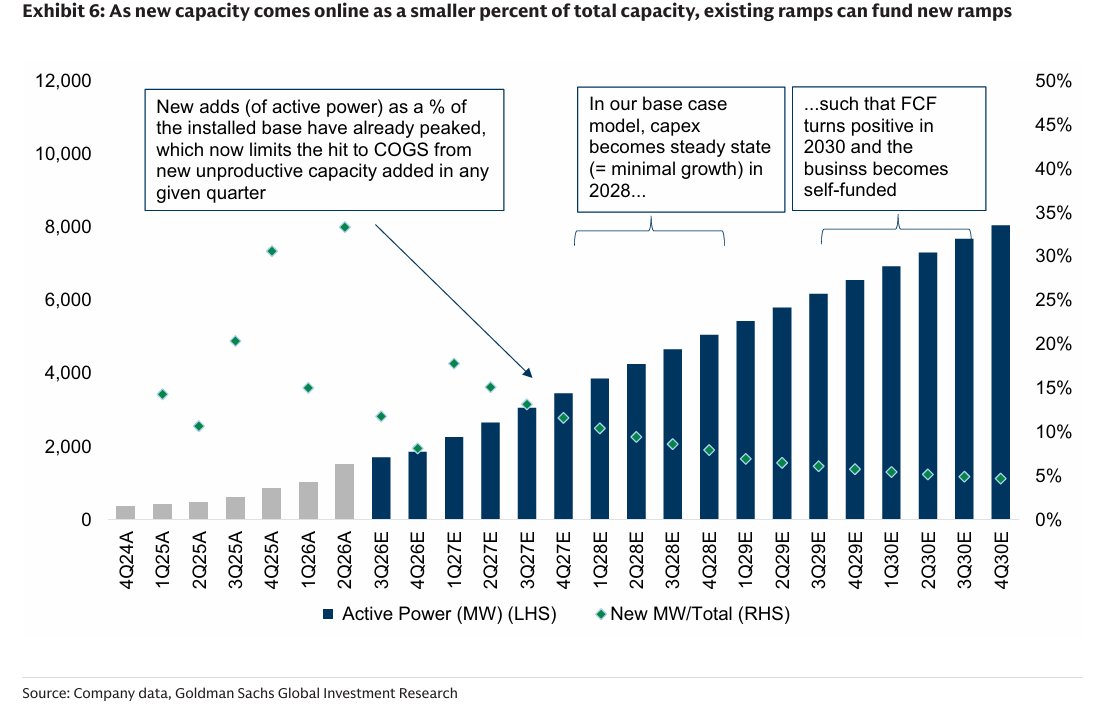
Continued monetization of old GPUs has added room to this return model. The company disclosed that the A100 related contract has been extended to 2029, indicating that older generation equipment can still service suitable loads such as data processing and model fine-tuning; after the initial contract covers equipment investment and repayment of related debts, renewal revenue may still contribute cash after deducting costs such as electricity, leasing, and maintenance. At the same time, Xiaomo mainly attributes current cash consumption to being invested in new production capacity too fast: mature projects pay back year by year, but new projects need to first pay large amounts of construction and equipment. The model predicts that when mature production capacity reaches about 4-5 times the annual increase in production capacity, operating cash income will be more able to cover expansion expenses. This is a scaled judgment that relies on the continuity of delivery, pricing, and financing; cash flow will not automatically improve.
Therefore, the positive judgments of Xiaomo and Goldman Sachs all point to that CoreWeave may have project value overshadowed by credit fears, but the revaluation requires that the contract value be converted into actual solvency. Goldman Sachs upgraded to a “buy”, focusing on its competitive position and ability to finance future growth; MoffettNathanson's emphasis on huge financial obligations reminded the market that long-term profitability of the project and the company's sufficient short-term capital are still two different things. What can really drive a continuous counterattack is a combination of the timely commissioning of the project, improved return on cash per megawatt, and stabilizing new financing costs.