
Missed Coca-Cola's Run? What Holders Had To Believe
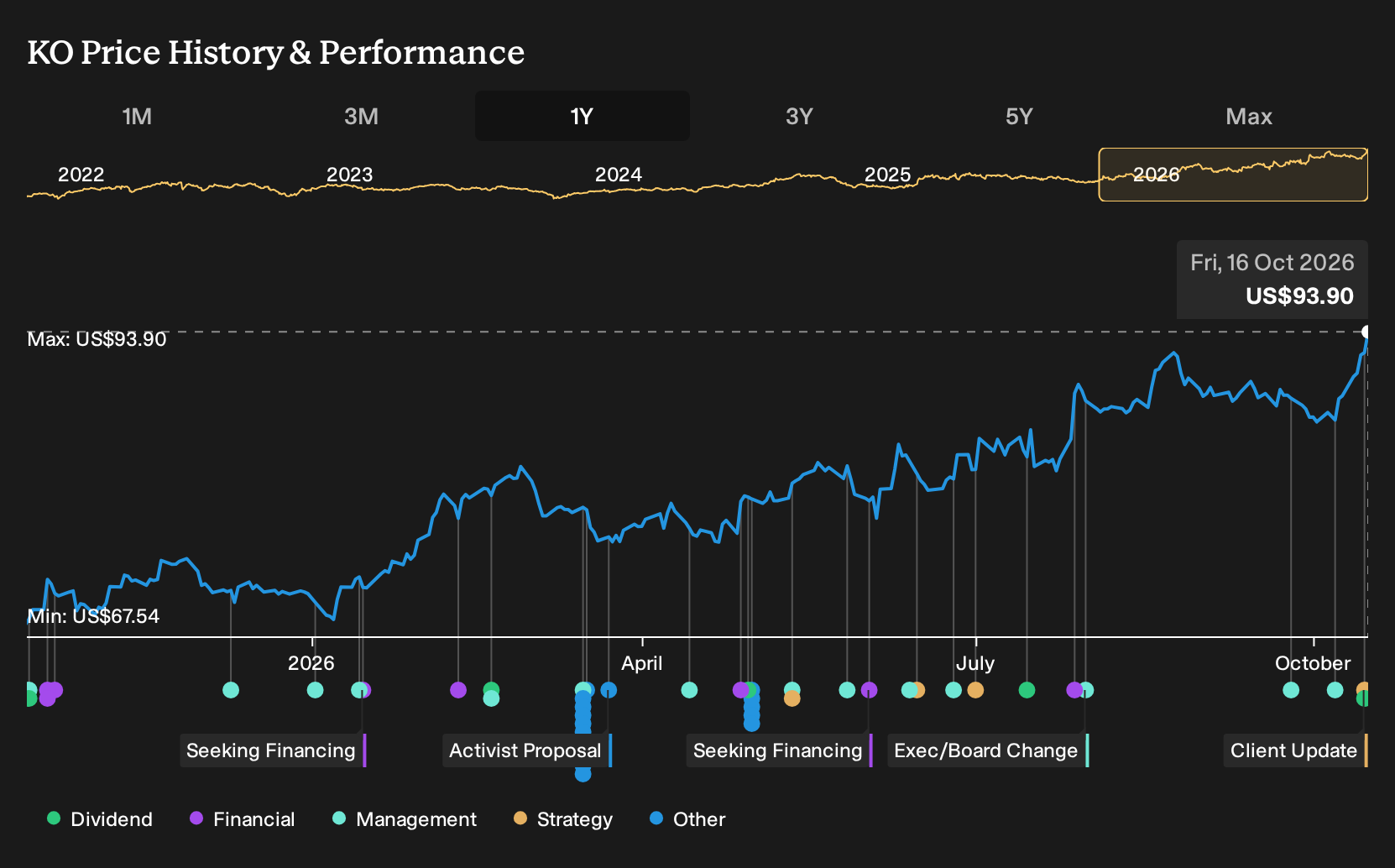
If you only glanced at Coca-Cola headlines about a giant IRS tax dispute and Diet Coke shortages in India, you might have expected a rough ride. Holding Coca-Cola over the past year would have returned 40.8%, including dividends. That outcome sits awkwardly next to earlier worries about rich valuation, slowing segments and a possible multibillion dollar tax bill. If you had been weighing those crosscurrents in October 2025, what really deserved the most attention?
Coca-Cola has already moved. See which of 33 high quality undervalued stocks still trade below our estimates.
The Argument Investors Had To Settle On Coca-Cola
The shares cost US$67.59 at the start of the period, and anyone looking at Coca-Cola then had to choose between two very different but plausible stories.
On the optimistic side, the bullish view saw a global brand that could lean on its resilience in choppy economies, with a fair value of US$71 that reflected what those expectations implied. That stance rested on assumptions such as 6.6% revenue growth and a 29.0x future P/E.
The cautious camp focused on slower expansion and concentration in carbonated drinks, with a fair value of US$54.61 based on more restrained assumptions. That narrative leaned on ideas such as 5.5% revenue growth and a 22.0x future P/E, as well as concern that health trends and sugar taxes could pressure the core category.
What The Evidence Around Coca-Cola Actually Showed
Coca-Cola’s Q2 2026 report showed revenue of US$13.38b and net income of US$4.43b versus US$12.54b and US$3.81b a year earlier, with net margin rising from 30.4% to 33.1%. That outcome backed the optimistic case that assumed strong profitability at a rich P/E, even as the unresolved US$20b IRS tax dispute kept a key cautious pillar alive. Overall, the evidence cut both ways.
The useful takeaway is simple. When a debate hinges on premium valuation versus risk, focus on whether earnings power and margins, like Coca-Cola’s, move toward the higher-case assumptions, and monitor any single contingent liability that could redraw the whole thesis.
What Coca-Cola’s Price Now Asks You To Believe
Today’s Coca-Cola share price is US$93.9. The selected Narrative’s Fair Value sits below the current price, even though it frames Coca-Cola as a powerful, cash generative beverage platform built on concentrate sales, pricing power and a capital light franchise system.
The question shifts to what must keep working for that tag to hold. A buyer at this level has to judge whether Coca-Cola can keep lifting price and mix in slower volume markets while relying on emerging regions to carry more of the growth weight.
"The moat is iconic: unmatched brand power (one of the most recognized globally), distribution network in 200+ countries, and pricing power that offsets inflation. Recent performance shows resilience; organic growth held at 5% despite currency headwinds and soft volumes in mature markets."
That disagreement has a full argument behind it. → Uncover the lower Fair Value this Narrative argues for
Before The Next Story Makes Headlines
The story behind this run has already been told. The next one could be taking shape somewhere else. Where could you start looking before it becomes the headline?
- Company 1 - 46% below our estimate - turns a large pipeline of complex data-center builds into billed work.
- Company 2 - 33% below our estimate - secures rapid-turnaround subsea tieback work that lifts project-related services margins.
- Company 3 - 42% below our estimate - addresses AI-driven, utility and chemical challenges needing advanced technical consulting capabilities.
That is three of the list. See all 25 companies with the balance sheet to back it up →
This article by Simply Wall St is general in nature. We provide commentary based on historical data and analyst forecasts only using an unbiased methodology and our articles are not intended to be financial advice. It does not constitute a recommendation to buy or sell any stock, and does not take account of your objectives, or your financial situation. We aim to bring you long-term focused analysis driven by fundamental data. Note that our analysis may not factor in the latest price-sensitive company announcements or qualitative material. Simply Wall St has no position in any stocks mentioned.
Have feedback on this article? Concerned about the content? Get in touch with us directly. Alternatively, email editorial-team@simplywallst.com