
What Kyocera Shares Buyback Completion Means For Shareholders
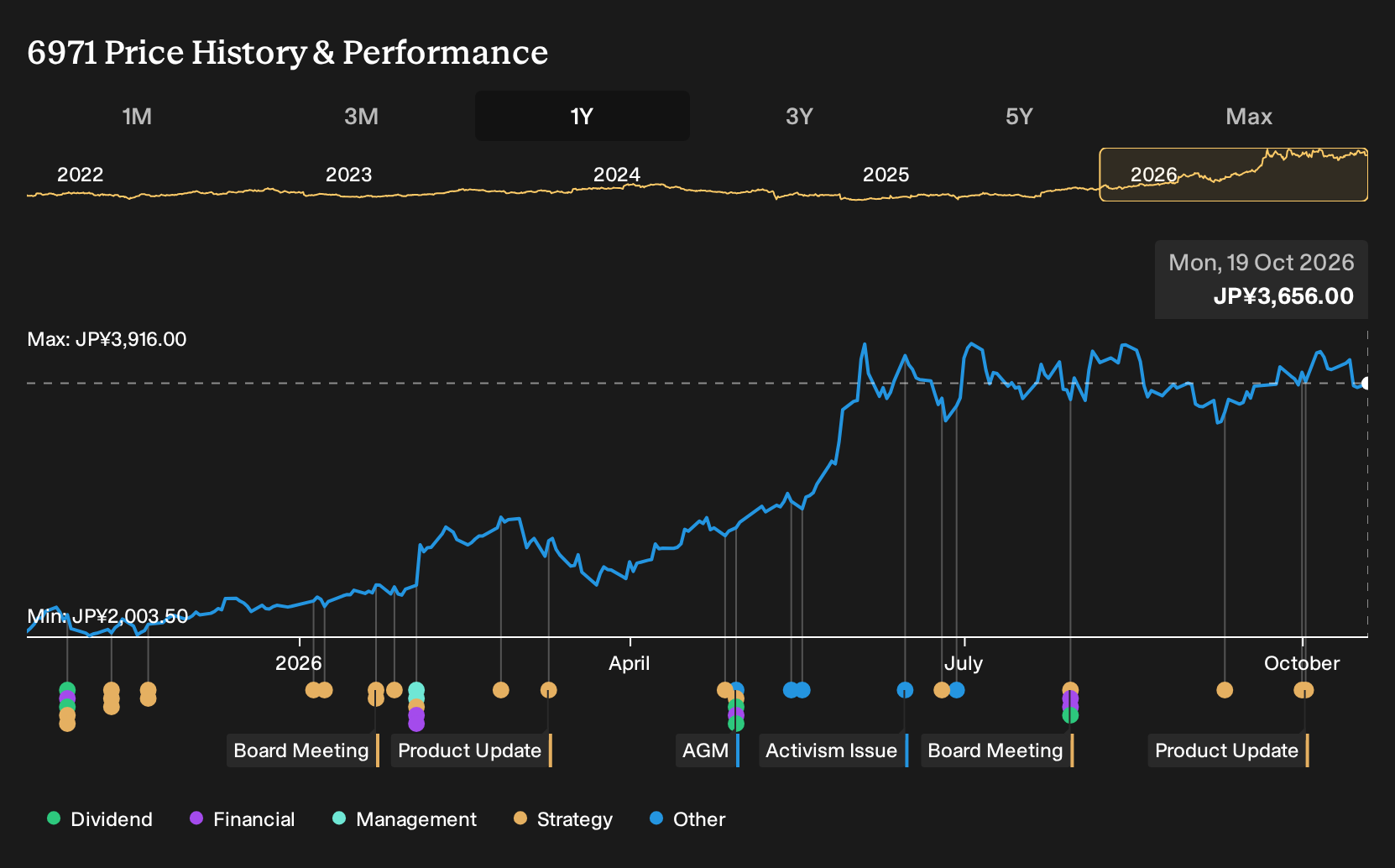
- Kyocera has completed the share repurchase program announced on April 30, 2026, buying back a total of 49,227,800 shares, or 3.77% of outstanding equity, for ¥177,628.19 million. This includes 30,153,300 shares acquired between July 1 and September 30, 2026.
- The completed buyback reduces Kyocera's free float and may lift earnings per share. This can reshape how investors assess capital allocation discipline and balance sheet flexibility.
- The focus will now be on how Kyocera's completed buyback and reduced share count could influence the broader investment narrative.
Compare Kyocera's buyback move with other companies tightening share counts and balance sheets by scanning the 22 resilient stocks with low risk scores today.
What Is Kyocera's Investment Narrative?
To own Kyocera, you have to buy into a fairly simple idea. This is an industrial tech group with roots in ceramics and components that still lives or dies on execution in complex, capital intensive markets like semiconductors, autos, tools, and document solutions. Earnings have rebounded sharply over the past year and are forecast to keep growing, but at a moderate pace compared with high growth stories. The recent buyback completion tightens the share count and can make each yen of profit matter more per share, without changing the day to day operational work of filling orders, managing input costs, and keeping factories running efficiently.
Near term, the bigger swing factors still look operational. Demand across automotive, communications, and industrial equipment, the pricing power Kyocera can hold on components and tools, and how it prioritises capex across segments are likely to matter more than the repurchase headline. The company trades on a higher P/E multiple than the broader Japanese electronic industry and above one internal cash flow estimate, while carrying a relatively low current and forecast return on equity. Those valuation and profitability markers frame the buyback as a capital allocation choice rather than a cure all for the main risks around execution and board and management depth.
Yet the more interesting part of the Kyocera story starts when you look at one pressure point that rarely shows up in the headline numbers...
There's only one way to know the right time to buy, sell or hold Kyocera. Head to Simply Wall St's company report for the latest analysis of Kyocera's Fair Value.
Exploring Other Perspectives
Only two fair value estimates from the Simply Wall St Community currently bracket Kyocera between ¥2,824.15 and ¥3,500 per share, so you are looking at a wide band from a very small sample. Those views also predate the completed buyback, which could influence how future community models treat per share metrics and balance sheet strength.
Explore another Kyocera fair value estimate, including one that suggests as much as 23% downside from the current price!
The Verdict Is Yours
Don't just follow the ticker. Dig into the data and build a conviction that's truly your own.
- A great starting point for your Kyocera research is our analysis highlighting 2 key rewards that could impact your investment decision.
- See our latest analysis for Kyocera. The report includes a comprehensive fundamental analysis summarized in a single visual, the Snowflake, making it easy to evaluate Kyocera's overall financial health at a glance.
Looking For More Investment Ideas Beyond Kyocera?
Once you have a view on Kyocera, it can help to widen the lens and compare it with other businesses that match the kind of risk and return profile you prefer.
- If capital preservation sits high on your list, scan a curated set of 22 resilient stocks with low risk scores that score well on resilience and balance sheet strength.
- If you are hunting for potential mispricings, review a focused group of 73 high quality undiscovered gems that pair solid fundamentals with relatively low market attention.
- If dependable income matters to you, assess a selection of 29 dividend fortresses that offer higher yields supported by underlying financials.
This article by Simply Wall St is general in nature. We provide commentary based on historical data and analyst forecasts only using an unbiased methodology and our articles are not intended to be financial advice. It does not constitute a recommendation to buy or sell any stock, and does not take account of your objectives, or your financial situation. We aim to bring you long-term focused analysis driven by fundamental data. Note that our analysis may not factor in the latest price-sensitive company announcements or qualitative material. Simply Wall St has no position in any stocks mentioned.
Have feedback on this article? Concerned about the content? Get in touch with us directly. Alternatively, email editorial-team@simplywallst.com