
Xamble Group's AU$513k Market Cap Fall Books Insider Losses
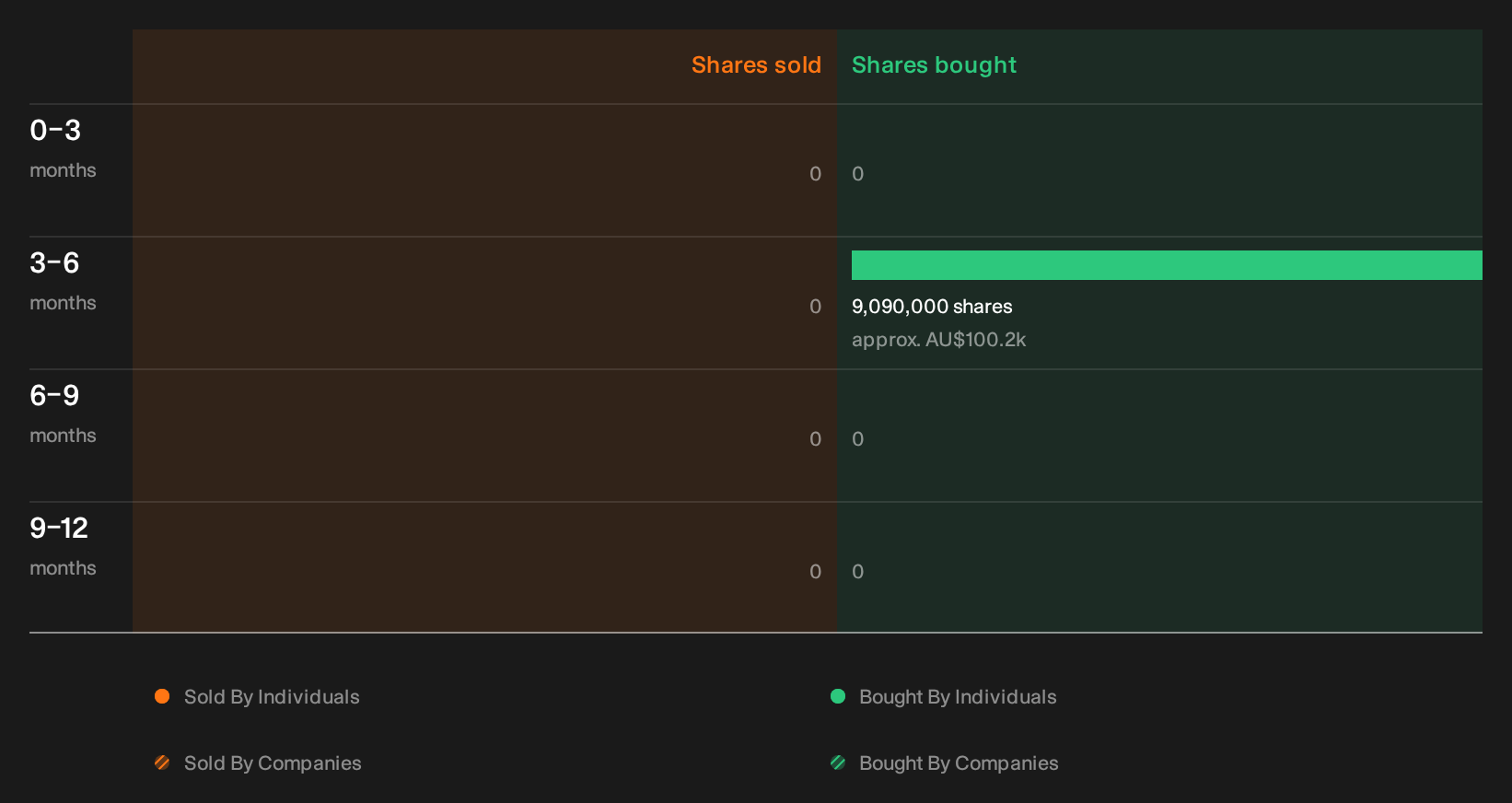
The recent 17% drop in Xamble Group Limited's (ASX:XGL) stock could come as a blow to insiders who purchased AU$100.0k worth of stock at an average buy price of AU$0.011 over the past 12 months. Insiders purchase with the hope of seeing their investments increase in value over time. However, due to recent losses, their initial investment is now only worth AU$45.5k, which is not great.
Although we don't think shareholders should simply follow insider transactions, logic dictates you should pay some attention to whether insiders are buying or selling shares.
Xamble Group Insider Transactions Over The Last Year
The insider Ganesh Bangah made the biggest insider purchase in the last 12 months. That single transaction was for AU$100k worth of shares at a price of AU$0.011 each. That means that even when the share price was higher than AU$0.005 (the recent price), an insider wanted to purchase shares. While their view may have changed since the purchase was made, this does at least suggest they have had confidence in the company's future. To us, it's very important to consider the price insiders pay for shares. Generally speaking, it catches our eye when an insider has purchased shares at above current prices, as it suggests they believed the shares were worth buying, even at a higher price. The only individual insider to buy over the last year was Ganesh Bangah.
You can see a visual depiction of insider transactions (by companies and individuals) over the last 12 months, below. If you want to know exactly who sold, for how much, and when, simply click on the graph below!
View our latest analysis for Xamble Group
There are plenty of other companies that have insiders buying up shares. You probably do not want to miss this free list of undervalued small cap companies that insiders are buying.
Insider Ownership
For a common shareholder, it is worth checking how many shares are held by company insiders. I reckon it's a good sign if insiders own a significant number of shares in the company. Xamble Group insiders own about AU$1.6m worth of shares (which is 62% of the company). Most shareholders would be happy to see this sort of insider ownership, since it suggests that management incentives are well aligned with other shareholders.
What Might The Insider Transactions At Xamble Group Tell Us?
It doesn't really mean much that no insider has traded Xamble Group shares in the last quarter. On a brighter note, the transactions over the last year are encouraging. Judging from their transactions, and high insider ownership, Xamble Group insiders feel good about the company's future. So these insider transactions can help us build a thesis about the stock, but it's also worthwhile knowing the risks facing this company. At Simply Wall St, we found 5 warning signs for Xamble Group that deserve your attention before buying any shares.
If you would prefer to check out another company -- one with potentially superior financials -- then do not miss this free list of interesting companies, that have HIGH return on equity and low debt.
For the purposes of this article, insiders are those individuals who report their transactions to the relevant regulatory body. We currently account for open market transactions and private dispositions of direct interests only, but not derivative transactions or indirect interests.
Have feedback on this article? Concerned about the content? Get in touch with us directly. Alternatively, email editorial-team (at) simplywallst.com.