
JLL: Mainland China's hotel investment transaction volume reached 12.4 billion yuan in the first three quarters of 2026, an increase of 22.5% year-on-year
The Zhitong Finance App learned that JLL published an article stating that in the first three quarters of 2026, mainland China's hotel investment transaction volume reached 12.4 billion yuan, an increase of 22.5% over the previous year, and the overall willingness of the bulk trading market to invest in hotel assets continued to rise.
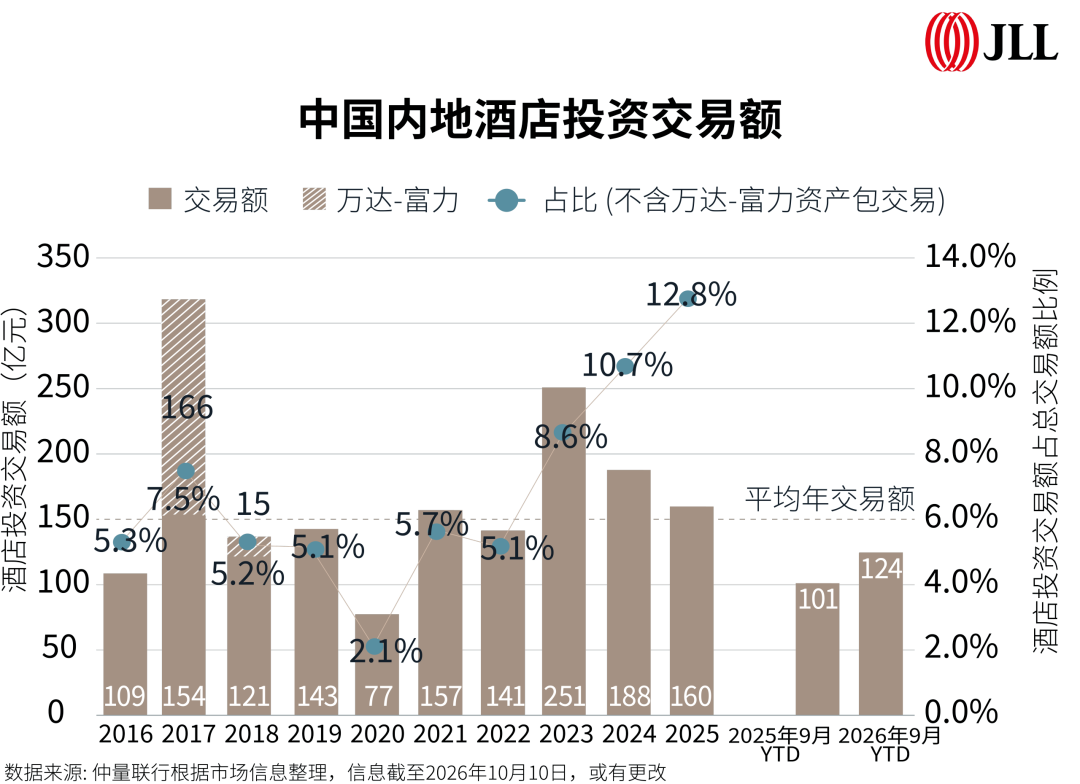
At the regional level, East China continues to be in the first tier of hotel transactions, accounting for 42% of total hotel transactions in mainland China; trading activity in North China and Midwest China has increased markedly. As asset disposal of insured housing enterprises progressed, property assets from bankruptcy and restructuring continued to be released. Most of the targets were concentrated in strong second-tier cities to further expand the pool of tradable assets, and investors also began to explore discount opportunities for non-performing assets under adequate risk control.
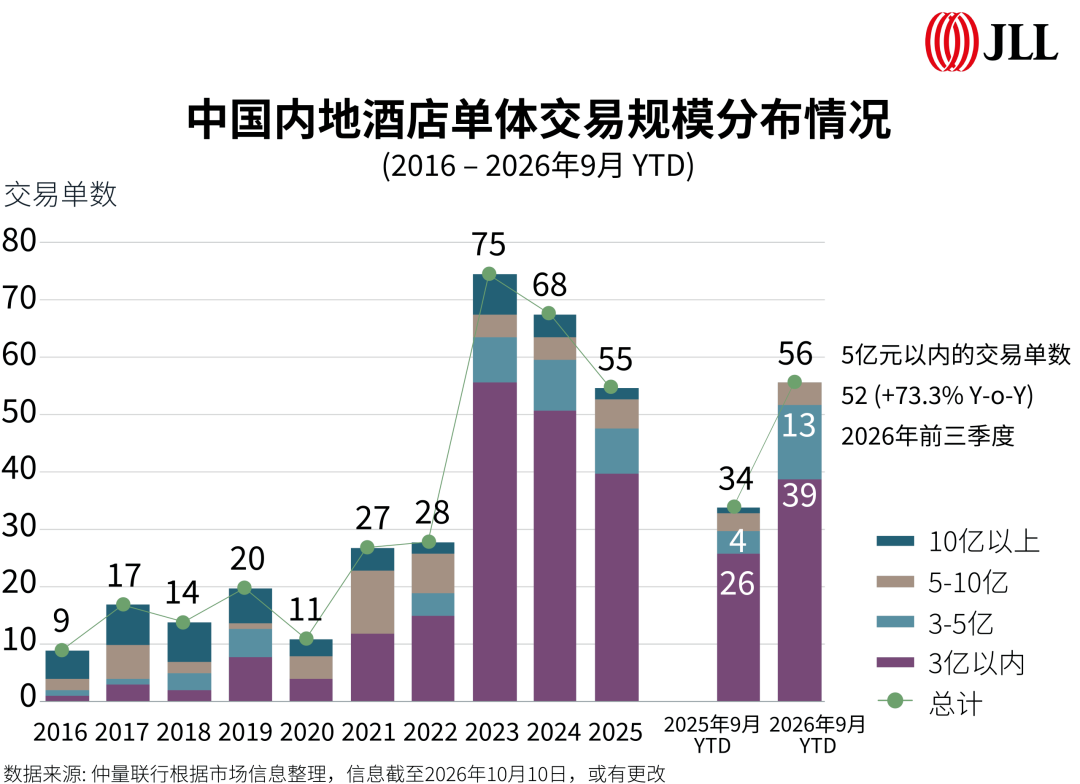
In terms of investment preferences, small to medium projects of less than 500 million yuan are generally welcomed by the market. The upfront capital investment of this type of project is low, the financial risk is controllable, and the return cycle is shorter. In line with current investors' safe-haven needs, the number of transactions in this tier surged 73.3% year on year in the first three quarters.
The buyer pattern has also changed markedly. High-net-worth individuals have quickly become an important acquisition force for hotel assets, accounting for 32.3% of the total transaction volume, preferring first-tier cities and high-quality targets of no more than 500 million yuan per transaction; enterprises and central enterprises have also performed positively, and domestic capital has become the core driving force for transactions.
Policy tools continue to improve, and hotel investment ushered in a new development environment
At the same time, the gradual advancement of hotel REITs continues to broaden the exit path of hotel assets, driving the investment logic from valuing land appreciation to focusing on cash flow returns; it will also continue to promote the institutionalization of hotel assets to provide reliable exit channels for assets and improve medium- to long-term liquidity.
Guangzhou, Shanghai and other places have successively introduced new industrial and commercial land renewal policies, clarifying renewal conditions and costs, effectively mitigating the risk of property asset impairment during the remaining 10 to 20 years, and dispelling investors' long-standing concerns about land expiration. Along with the return of valuations to an attractive range, foreign private equity capital, particularly Zhongdong Capital, has also begun to re-examine opportunities to acquire high-quality domestic hotels.