
Ally Financial (ALLY) Q3 Results Clash With Rising Credit Costs
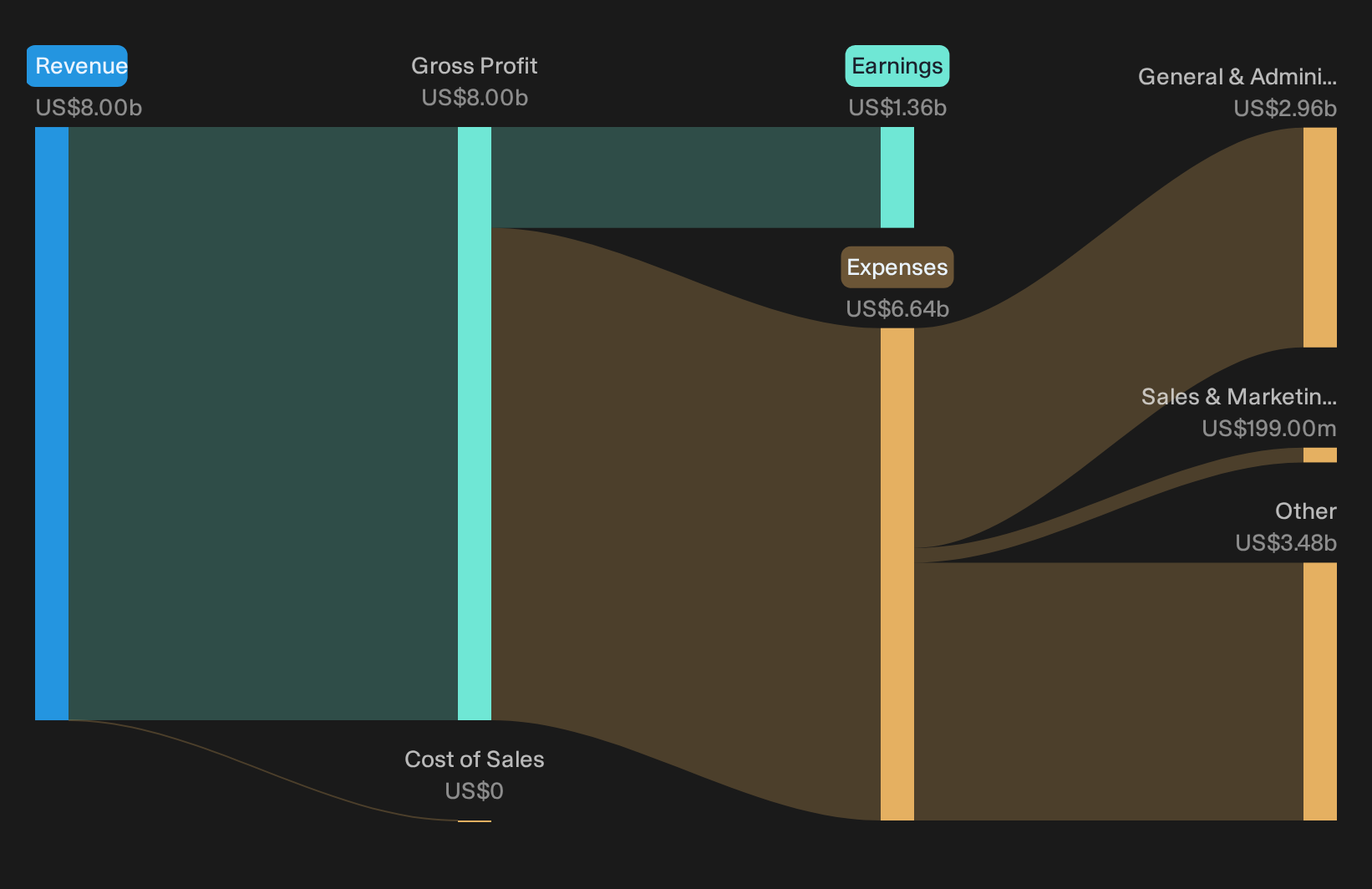
Ally Financial came into this Q3 2026 print out of favor, with the share price down about 15% over the past three months and investors still debating whether the recent earnings rebound is durable. The stock ticked up about 1% today to US$37.97 after the release. The headline result was clean. Adjusted earnings per share landed at US$1.34 and adjusted net revenue reached US$2.3b, backed by a 10.2% Common Equity Tier 1 capital ratio, which speaks directly to the balance sheet strain question the market has been wrestling with.
Like the clean Q3 print from Ally Financial but still uneasy about whether that rebound sticks given the recent share price drop? Compare this with a curated list of stronger balance sheet plays through the list of solid balance sheet and fundamentals stocks (25 results).
Q3 2026 Earnings Summary
- Total Revenue (Q3 2026 vs. Q3 2025): US$2,076m vs. US$1,978m (up 4.9%)
- Net Income (Excl. Extra Items) (Q3 2026 vs. Q3 2025): US$401m vs. US$371m (up 8.1%)
- Basic EPS (Q3 2026 vs. Q3 2025): US$1.32 vs. US$1.20 (up 10.1%)
- Net Interest Margin (NIM, Trailing 12 Months to Q4 2025 vs. Prior TTM to Q3 2025): 3.43% vs. not disclosed (direction not specified)
Earnings tell you what Ally Financial produced this quarter, but investors who care about valuation often focus on the cash flowing through the business instead. Based on Ally Financial's cash flows alone, the stock could be a notable 18% undervalued.
Ally Bull Case Hinges On Execution, Not Hype
"The main requirement for this outcome is that Ally Financial maintains its current balance of asset growth, credit outcomes and cost discipline while it pursues higher yielding auto and Corporate Finance loans funded primarily by retail deposits."
Ally Financial is partially delivering on that formula. Asset growth is clear, with retail auto originations up and Corporate Finance loans at US$15.8b. Cost discipline is visible too, as adjusted noninterest expense stayed flat while adjusted net revenue rose 9%. Credit is the swing factor. Provision expense climbed to US$529m and auto delinquencies ticked higher. The growth and efficiency milestones are in place, but the credit side of the equation is still being tested.
One Narrative has put a figure on that disagreement. → See the Narrative with its higher Fair Value, assumptions and all.
Ally Credit Costs Validate Margin Ceiling Concerns
Bearish research has argued that Ally Financial’s growth push would run into a wall once funding and credit costs caught up with it.
"While record auto application volume and 21% growth in retail consumer originations suggest the auto franchise is gaining traction, the higher CECL reserve builds that lifted consolidated provision expense to US$430 million in Q2 2026 mean that faster asset growth can keep credit provisions structurally elevated and weigh on net income even if reported net charge-offs remain contained."
Q3 results lean toward that caution. Provision expense stepped up again to US$529m, with CECL growth tied to retail auto and a roughly US$0.20 EPS drag. Stellantis lease losses added US$16m of pressure and management still describes the NIM path as uneven, even with NIM at 3.66%. Execution on growth is clear, yet the cost of carrying that growth is tracking closer to the bearish script than to a clean rerating story.
Hunt Quiet Disconnects In Plain Sight
Ally Financial just showed how a clean headline quarter can still leave big questions around credit costs. The real opportunity is finding stocks that could be undervalued before the market corrects them.
- Company 1 - 33% below our estimate - uses expanded engine capacity and data center contracts to deepen high horsepower systems across fleets.
- Company 2 - 31% below our estimate - shifts a large app user base toward secured, higher yielding credit while managing funding and risk costs.
- Company 3 - 42% below our estimate - scales new teahouse markets and a large membership program so procurement gains and volume reshape unit economics.
Those are three of them. See every one of the 34 undervalued companies on it →
Have feedback on this article? Concerned about the content? Get in touch with us directly. Alternatively, email editorial-team@simplywallst.com