
3 Satellite Connectivity Stocks to Watch After Starlink Revenue Growth
Satellite-enabled connectivity just grabbed the spotlight again after SpaceX posted strong Q3 numbers and Starlink reported millions of broadband users and multi billion dollar connectivity revenue, reminding investors that space is no longer a distant story. If satellite services scale further, companies tied to this theme could see real shifts in sentiment. This article walks through 3 stocks exposed to that news and explains why each might deserve a closer look.
The three stocks below are just a sample of what satellite-linked connectivity could look like in public markets, while the full screen surfaced 25 more companies with equally interesting business stories that are not covered here. To see the wider field and quickly identify which setups best fit your own thesis, analyze the Global Satellite-Enabled Connectivity Providers screener.
Gilat Satellite Networks (GILT)
Overview: Gilat Satellite Networks provides satellite based broadband and managed connectivity services, supplying ground equipment and network operations that help telecom and defense customers deliver high capacity satellite links worldwide.
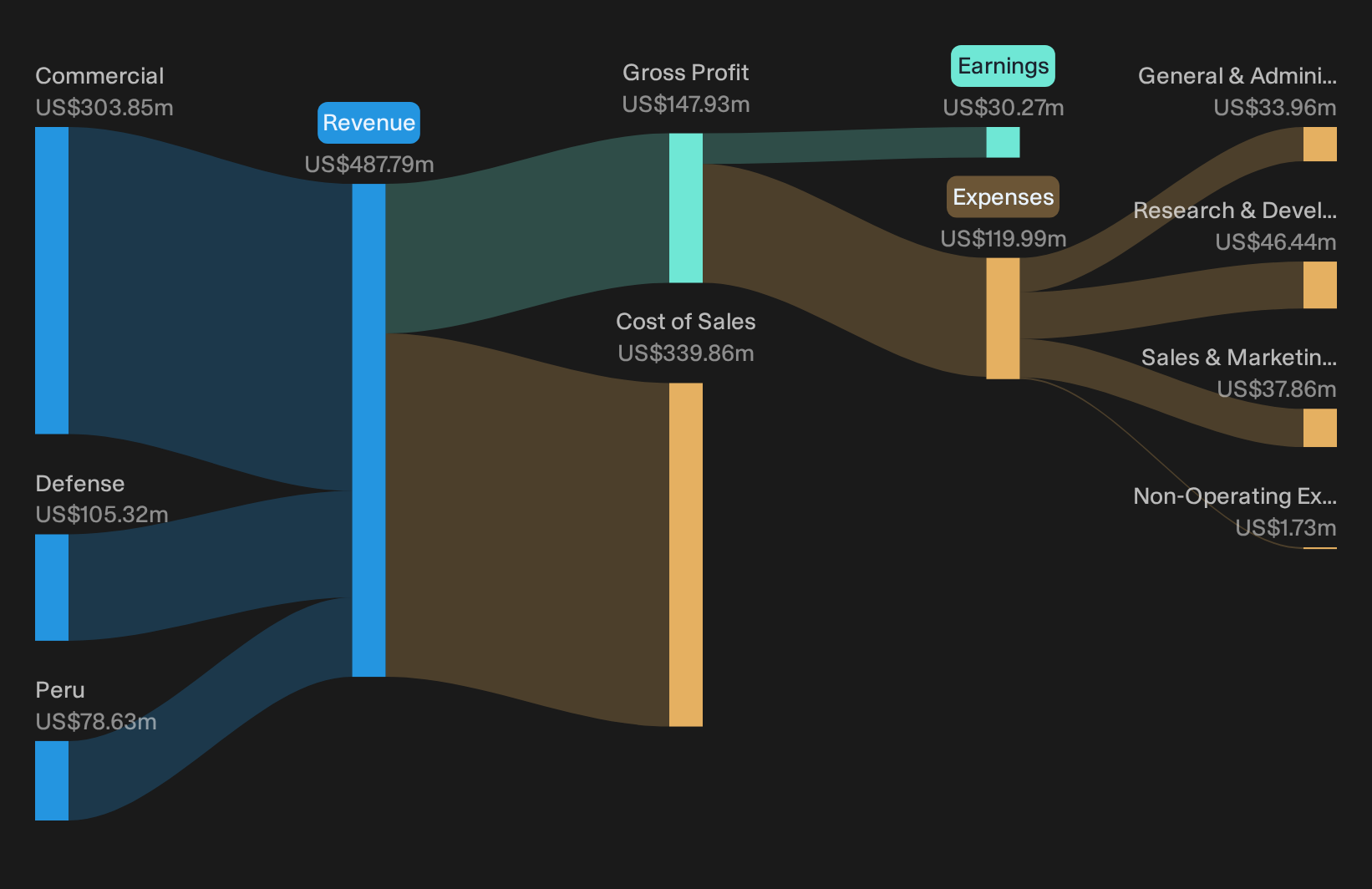
Operations: The group generates about US$304 million from Commercial activity, US$105 million from Defense and US$79 million from Peru focused connectivity and services.
Market Cap: US$598 million
Gilat Satellite Networks matters for this theme because it sells the ground hardware and connectivity services that help turn satellite capacity into real-world broadband for airlines, governments and telecom operators when interest in satellite internet is running high again.
"Expanding in flight connectivity programs, including more than 200 Sidewinder ESA terminal shipments in Q2 2026 and US$43 million of Sidewinder orders to be delivered over the next 18 months, are expected to add volume driven Commercial revenues and may support earnings through scale benefits."
What happens to Gilat Satellite Networks margins and cash generation depends heavily on how one unseen pressure in its connectivity mix plays out.
That pressure point is exactly where the opportunity might be hiding, and the full narrative for Gilat Satellite Networks unpacks how connectivity mix, contracts and capital needs could be decoupling expectations from reality.
Kyivstar Group (KYIV)
Overview: Kyivstar Group runs mobile, broadband and digital services that keep individuals and businesses connected, increasingly layering satellite-linked resilience into its connectivity offer.
Operations: Kyivstar Group generates about US$1.28 billion from Wireless Communications Services, primarily through mobile voice, data and broadband connectivity fees.
Market Cap: US$2.88 billion
Kyivstar Group matters in this satellite-enabled connectivity screen because it already blends everyday telecom services with partnerships that lean on space-based backup. This turns a traditional network into something closer to an always-on digital utility for customers.
"Wider adoption of Starlink Direct to Cell light data and potential new satellite based services beyond text can create a premium tier of connectivity that sits on top of the current mobile base, which offers an additional revenue stream that is not fully tied to SIM growth."
The real swing factor is how quickly Kyivstar Group can shift more customers into that higher value tier without eroding overall profitability.
That shift in mix is exactly what the full narrative for Kyivstar Group unpacks, showing where satellite tiers could accelerate Kyivstar Group’s earnings power or quietly cap the upside.

Airtel Africa (LSE:AAF)
Overview: Airtel Africa runs mobile networks and digital payment services across Nigeria, East Africa and Francophone Africa, linking millions to voice, data and mobile money.
Operations: Airtel Africa generates about US$2.30b from East Africa Mobile Services, US$1.76b from Nigeria Mobile Services, US$1.61b from Francophone Africa Mobile Services and US$1.47b from Mobile Money.
Market Cap: £10.18b
Airtel Africa matters for the satellite-enabled connectivity theme because it can plug Starlink-powered backhaul and bundled services into an already huge mobile and fintech footprint, turning higher quality coverage into more data usage rather than starting from scratch with new customers.
"Rapidly rising smartphone penetration (now at ~46% but still well below global averages) and accelerating data consumption (data traffic up 47%) are driving higher-value data revenues, with substantial room for further ARPU uplift and mix improvement as 2G users migrate to 4G/5G, positively impacting both topline and margins."
What happens when one key partnership shapes how quickly that richer data mix turns into sustainable margins and cash generation will be crucial.
That partnership risk cut both ways, and the full narrative for Airtel Africa shows how Airtel Africa’s satellite tie up could accelerate data economics while masking a few underappreciated pressure points.

Seeking Alternatives Before The Crowd Moves
Fresh breakout stories rarely stay quiet for long. Momentum shifts, prices start flying, and the clean entry window can close fast. Scan these under the radar for now and consider acting before attention broadens.
- Spot resilient compounders before they get widely noticed by running the list of solid balance sheet and fundamentals (25 results) and focus on businesses where fundamentals still drive the story.
- Track powerful yield engines while prices are still dropping into attractive ranges with the 8 dividend fortresses and pinpoint income ideas built on sturdier foundations.
- Hunt for early leaders in physical infrastructure behind AI momentum using the 55 AI infrastructure stocks and narrow in on potential beneficiaries of rising compute demand.
Have feedback on this article? Concerned about the content? Get in touch with us directly. Alternatively, email editorial-team@simplywallst.com