
The yield after hedging is nearly 6.5%! France and Pakistan asset management increased ultra-long-term Japanese bonds, steep betting curves for overseas capital, and a return to domestic demand
BNP Paribas Asset Management has been increasing its position on ultra-long-term Japanese treasury bonds, attracting it by steep yield curves and signs that domestic demand in Japan is returning to the market.
James McAllivey, the company's head of global consolidation and absolute returns, said that the company has raised its ultra-long-term Japanese treasury bond position from a “very small amount” at the beginning of this year to a “medium size”, focusing on 20-year and 30-year treasury bonds.
“We prefer the long end of the market because the curve is very steep,” McAlivey said at a briefing in Tokyo. He said the sector recently “significantly outperformed other long-term varieties in the world” and provided a source of decentralization.
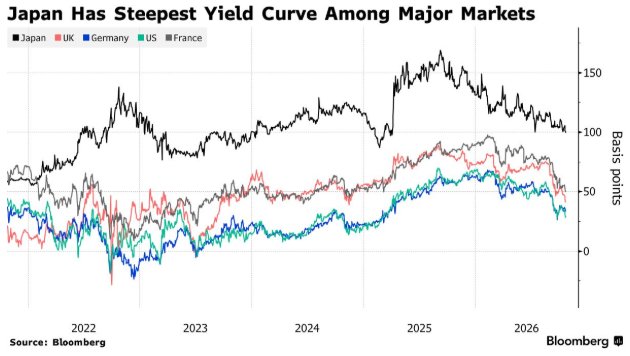
In part of its flexible strategy, the company shorted 2-year and 5-year Japanese treasury bonds while increasing 20-year and 30-year treasury bonds, essentially betting that the yield curve would flatten.
This bullish stance comes at a time when the yield on ultra-long-term Japanese treasury bonds rose to a decades-high level this year due to concerns about inflation, fiscal spending, and the Bank of Japan's policy path. High yields are increasingly attracting buyers, and a recent 20-year treasury bond auction recorded record demand.
According to McAlivey, the yield of ultra-long-term Japanese treasury bonds is about 6% to 6.5% after being hedged into US dollars, which is particularly attractive to overseas buyers.
In contrast, investors in Japan were previously “relatively absent” in the long-term market because insurance companies were busy dealing with the impairment of low-coupon bonds. However, the recent boom in auctions shows that domestic demand is “returning to the long end of the Japanese treasury bond curve.”
According to data from the Japan Securities Association, Japanese insurance companies have been net buyers of ultra-long-term Japanese treasury bonds for the past four months. A number of life insurance companies have also sent signals that they plan to maintain or increase purchases of domestic bonds in the second half of this fiscal year.
McAlivey said that the government's “relatively restrained fiscal response” would strengthen his confidence in further boosting Japanese treasury bonds. At the same time, he is concerned about whether the Bank of Japan can maintain the pace of interest rate hikes about once a quarter according to its judgment.
He said that the next meeting of the central bank will not necessarily require an interest rate hike; it is enough to raise interest rates in December and continue to release relatively hawkish communication.
McAlivey said that a stronger yen will further support the long-term market by helping contain overall inflation and ease pressure on the Bank of Japan. Earlier this year, the weak yen intensified the double pressure on the bond market and central banks, but he believes this trend is beginning to reverse.