
Nebius Stock Alert: I’m Watching This 43% Crash as AI Bubble Fears Return
Nebius Group (NBIS) stock has recently taken a serious hit as investors reassess the risks of the artificial intelligence infrastructure boom.
After reaching a record high near $300 in June, shares closed at $171.45 on Tuesday, down roughly 43% from their peak. Still up more than 100% in 2026. The dismal sell-off is indicative of real worries about debt, higher financing expenses, and whether the new "neocloud" firms can return enough value from their huge capital investments in data centres.
Nebius isn't just any leveraged AI infrastructure bet, though. The company is flush with $8 billion in cash and over $40 billion in customer pledges, and is easily expanding its revenue.
It raises a vital question for investors: Is this a window into positioning my investment, or does it still have an excess of risk? Let's try to find out the answer.
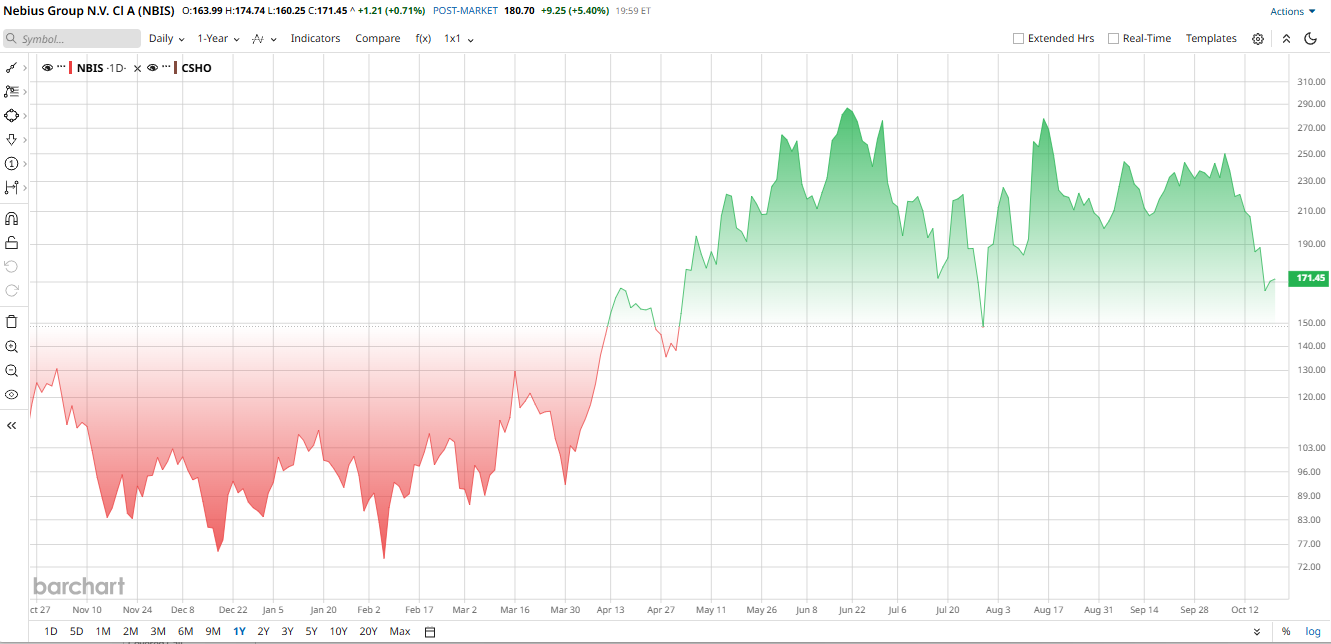
Nebius Stock Faces a Sector-Wide Reset
Investors' fears regarding the funding of neoclouds are behind the recent downturn, and are not a sign of falling demand for AI computing.
The debt problems for CoreWeave (CRWV) are now a warning to the industry. Investors are raising doubts about whether firms are spending billions on GPUs, data centers, and power infrastructure when cash flow could clearly be used to benefit the business.
The fears ramped up following Reuters' prediction by Gartner of the loss of independence for 80% of neo-cloud providers by 2030.
There are some drawbacks to Nebius. It has $8 billion in cash holdings and significant customer commitments to provide financial flexibility, and a $775 million secured financing facility as an additional source of funding.
However, investors must not take any complacency for granted about Nebius' ability to withstand the risks plaguing the industry. Even if demand is healthy, returns might be under pressure due to heavy capital investment, delays, and increased borrowing costs.
Strong Revenue Growth Comes With a Heavy Price Tag
Nebius' financials provide a compelling reason to look beyond the selloff.
In the second quarter of 2026, the company topped analysts' estimates. Its revenue soared 454% year over year to $582.3 million. The top driver was the core AI cloud business, which generated approximately $575 million, up 514% from the prior-year period. Adjusted EBITDA reached $236.2 million, compared with a $21 million loss a year earlier. However, Nebius still reported a $190.4 million net loss from continuing operations.
The other side of the story is spending. Capital spending was nearly $5.7 billion, well ahead of revenue in the quarter. That spending represents a reflection of the increased investment in infrastructure to satisfy customers' demand.
The progress of the business is promising. In a Q2 shareholder letter, CEO Arkady Volozh said that Nebius had decided to keep some capacity for its immediate customers but could sell the full 2027 capacity at current rates. The statement implies there is demand for their services, but converting these pledges into business models that create cash flow has proved to be a major challenge.
How Investors Should Approach the Pullback
While the drop may be interpreted as a sales signal for Nebius investors, it might also be wise to take a step-by-step route rather than blindly jumping on any sale.
The future of the company is still promising, fueled by the ongoing expansion of its customer base, growth of AI usage loads, and its future plans for expanding capacity. It's also different from other more economically challenged opponents in terms of its funding alternatives.
This is still a considerable amount of money for Nebius, though, and diluting the company and/or borrowing money could put pressure on shareholder returns. The other issue is valuation. NBIS market capitalization exceeds $47 billion, and analysts estimate 2026 sales will be about $3.34 billion, meaning that the stock trades at about 14 times forecasted annual sales. Multiple issues constrained its ability to deliver less than was expected on new infrastructure investments.
Meanwhile, existing shareholders should be aware of Carillion's future updates on production and results, as well as its cash-flow forecast and the delivery of new capacity, which is expected to occur as promised. New investors may wish to create a layered entry through the market over the course of time, avoiding the entry of a large portion of the total amount of investment in one trade during a period of high volatility.
What Wall Street Analysts Say About NBIS Stock
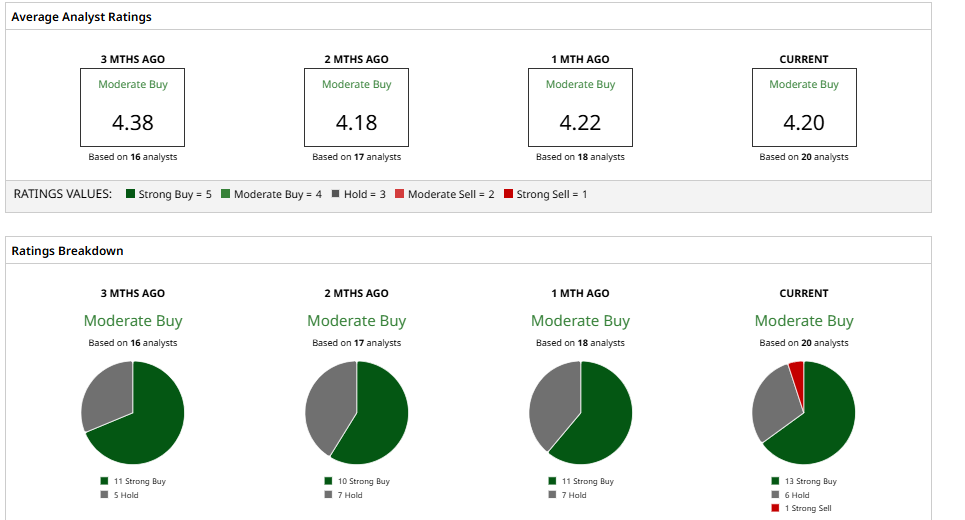
Analysts are mostly bullish. The consensus rating is “Moderate Buy.” The average price target is $288, implying roughly 68% upside from recent prices.
The bull case is simple. The recent selloff has been a sentiment-driven transaction, though the Contracts backlog remains in place. Capacity is adding up in the second half as well. Not everyone agrees. Morgan Stanley has a Hold rating. Rothschild initiated with a Sell. The bears worry about cash burn and dilution. But the weight of the Street still leans positive.
The pullback has made the price of Nebius more reasonable than the June price, but not necessarily low, for now. The share could be a worthwhile investment if investors don't mind high volatility and a wait-and-see mindset if they loathe the idea that a company with great revenue growth is not generating any cash.
On the date of publication, Nauman Khan did not have (either directly or indirectly) positions in any of the securities mentioned in this article. All information and data in this article is solely for informational purposes. For more information please view the Barchart Disclosure Policy here.