
Foldable Phone Demand Might Change The Case For Investing In Apple (AAPL)
- Apple’s recent hardware blitz, led by the US$1,999 and up iPhone Duo and iPhone 18 Pro, coincides with expanded American Manufacturing Program partnerships that secure titanium, advanced camera components, and U.S. made chips for premium devices.
- The mix of very high priced foldable hardware, tight Duo supply, and deeper U.S. sourcing concentrates both demand opportunity and cost pressure in Apple’s most premium tier of the iPhone lineup.
- The focus now turns to how Apple’s push into foldables and U.S. manufacturing could reshape the longer term investment narrative.
Scan how Apple’s premium push compares with other high-end hardware makers by zeroing in on 55 AI infrastructure stocks powering the next wave of device and data demand.
Apple Investment Narrative Recap
To own Apple, you need to believe the firm can keep selling higher priced, AI heavy hardware while absorbing a spike in memory costs and a reshaped supply chain. The key near term swing factor is whether premium iPhone demand, including Duo and 18 Pro, stays firm enough to support volumes as gross margin guidance already reflects cost pressure.
The biggest risk right now is that elevated component pricing and higher flagship entry points meet consumer pushback, forcing Apple to lean on promotions or accept weaker profitability. The expanded U.S. sourcing and foldable ramp tighten that trade off but do not yet look like a break in the story.
The American Manufacturing Program announcement around Perryman, Qnity, Broadcom, TSMC and others directly ties into the foldable launch and iPhone 18 Pro ramp. It concentrates Apple’s premium tier on a deeper U.S. component base at the same time memory is described as a 100 year flood on costs, which keeps near term margin management front and center.
For catalysts, a more resilient, geographically diversified supply chain can help Apple execute on Apple Intelligence rollouts and high end device launches without severe stock outs. The trade off is straightforward for you as a shareholder. Better component security supports product momentum, while higher unit costs keep the risk of gross margin compression very real if demand softens.
Apple analysts are working with a narrative that points to US$618.2b in revenue and US$164.4b in earnings by 2029. This outlook is based on a 9.8% yearly revenue growth rate and an earnings increase of about US$35.5b from US$128.9b today.
Uncover why Apple's fair value indicates a 6% potential downside to its current price, which leaves little room for error.
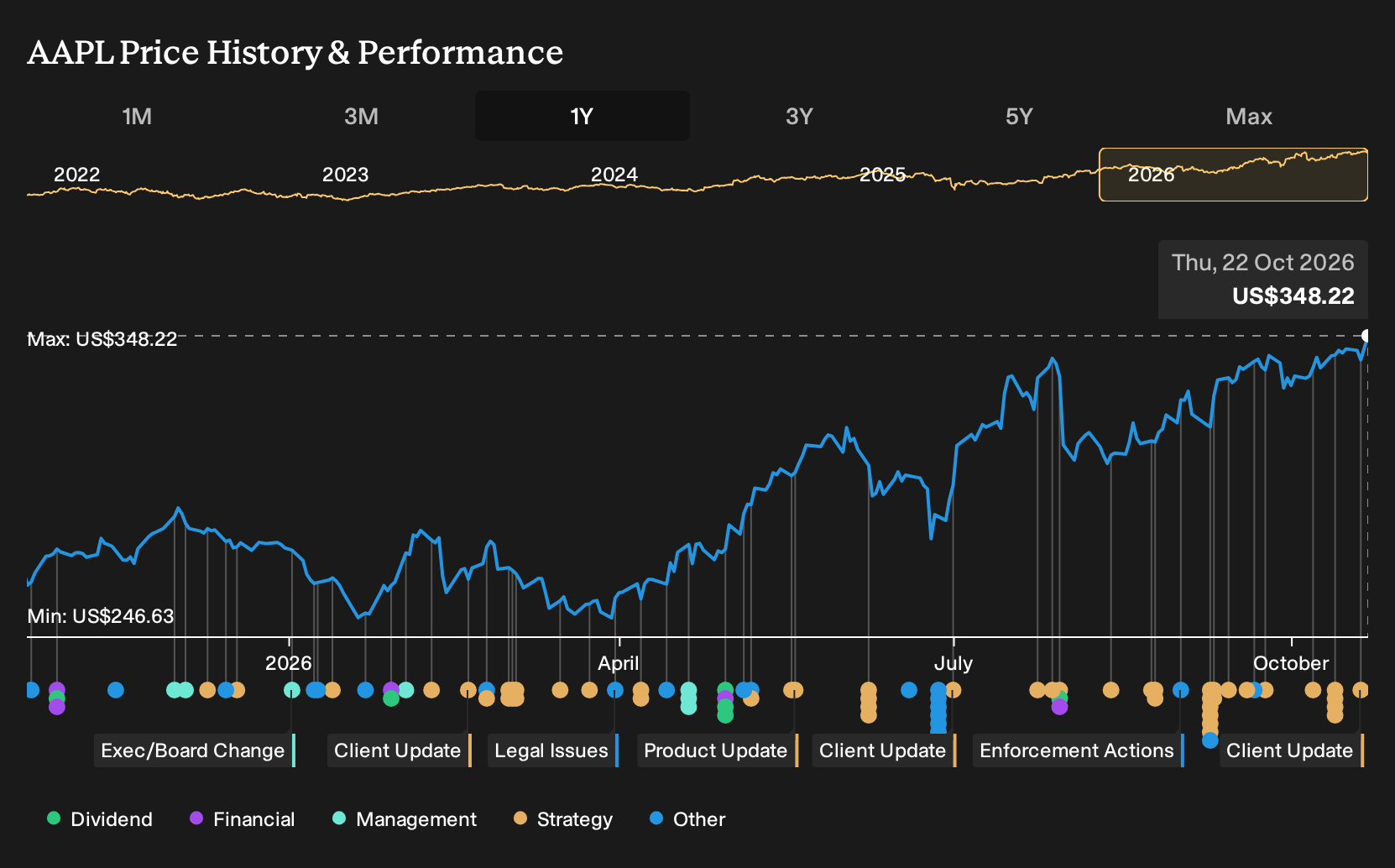
Exploring Other Perspectives
Some of the lowest Apple analysts lean hard into the risk that higher U.S. manufacturing and component costs eat into profitability. They were penciling in about US$623.9b of revenue and US$156.0b of earnings by 2029, yet still arrived at a bearish Fair Value near US$232 per share. That is a far more cautious story than consensus. These views were set before the latest foldable push and American Manufacturing Program update, so treat them as a starting point. Compare several viewpoints before deciding how this news might reshape your own Apple thesis.
Explore 42 other Apple fair value estimates, including one that suggests as much as 47% downside from the current price!
Form Your Own Verdict
Disagree with existing narratives? Extraordinary investment returns rarely come from following the herd, so go with your instincts.
- A great starting point for your Apple research is our analysis highlighting 2 key rewards that could impact your investment decision.
- See our latest analysis for Apple. The report includes a comprehensive fundamental analysis summarized in a single visual, the Snowflake, making it easy to evaluate Apple's overall financial health at a glance.
Looking For More Investment Ideas Beyond Apple?
Once you have formed a view on Apple, it helps to widen the lens and compare it with other businesses that fit different risk and return profiles. The Simply Wall St Screener can surface stocks that match the type of portfolio you want to build, rather than forcing you to sift through endless tickers on your own.
- If you want potential mispricings with quality fundamentals, scan for companies on our 20 high quality undiscovered gems that might not yet be crowded trades.
- For investors who care most about resilience, focus on companies screened for 30 resilient stocks with low risk scores so you can tilt your holdings toward steadier profiles.
- If balance sheet strength is non negotiable for you, start with the list of solid balance sheet and fundamentals (26 results) and narrow in on businesses backed by robust finances.
Have feedback on this article? Concerned about the content? Get in touch with us directly. Alternatively, email editorial-team@simplywallst.com