
CORE VNS Results Could Be A Turning Point For LivaNova Stock (LIVN)
- LivaNova reported that a peer-reviewed journal published 36-month CORE-VNS data showing clinically meaningful long-term effectiveness and safety for its VNS Therapy in drug-resistant epilepsy across 61 sites in 16 countries.
- The study’s 76% median seizure reduction, 64% responder rate, and sharp fall in seizure-related hospital use highlight a therapy that may reshape long-term treatment patterns and resource needs for difficult-to-treat epilepsy.
- The next consideration is how LivaNova’s long-term CORE-VNS seizure reduction data fits within the existing investment narrative around neuromodulation.
Scan how LivaNova’s neuromodulation story compares with other potential breakouts in complex care by reviewing our curated list of 34 healthcare AI stocks.
LivaNova Investment Narrative Recap
To own LivaNova, you need to believe neuromodulation can be a durable second engine alongside cardiopulmonary hardware. The CORE VNS 36 month data gives the epilepsy franchise a stronger clinical footing, which can help support procedure volumes and pricing discussions. The near term swing factor still looks like execution across both segments while integrating higher R&D spend into a cleaner margin story.
The biggest operational risk remains cost pressure and reimbursement scrutiny on device based therapies, especially as value based care prefers cheaper or non device options. This new VNS dataset does not remove that risk. It simply gives LivaNova more evidence to put on the table when payers or hospitals question long term benefit and resource use.
The CORE VNS publication itself is the key announcement here. It ties directly into LivaNova’s neuromodulation catalyst, which is broader adoption of VNS Therapy in drug resistant epilepsy and potentially more favorable reimbursement. With 76% median seizure reduction, 16% seizure freedom and a 73% drop in seizure related hospitalizations at 36 months, the dataset is clinically substantial.
For you as a shareholder, this kind of long horizon evidence speaks to durability of therapy use rather than short term volume spikes. It also feeds into existing expectations that VNS could benefit from reimbursement tailwinds and procedure growth. Execution risk stays real, especially on costs and competition, but the operational story around VNS outcomes now rests on a deeper pool of real world data.
LivaNova's current analyst playbook points to US$1.8b in revenue and US$242.2m in earnings by 2029, based on 7.7% yearly revenue growth and an earnings increase of about US$53.6m from US$188.6m today.
Uncover why LivaNova's fair value indicates a 10% potential upside to its current price that could narrow quickly.
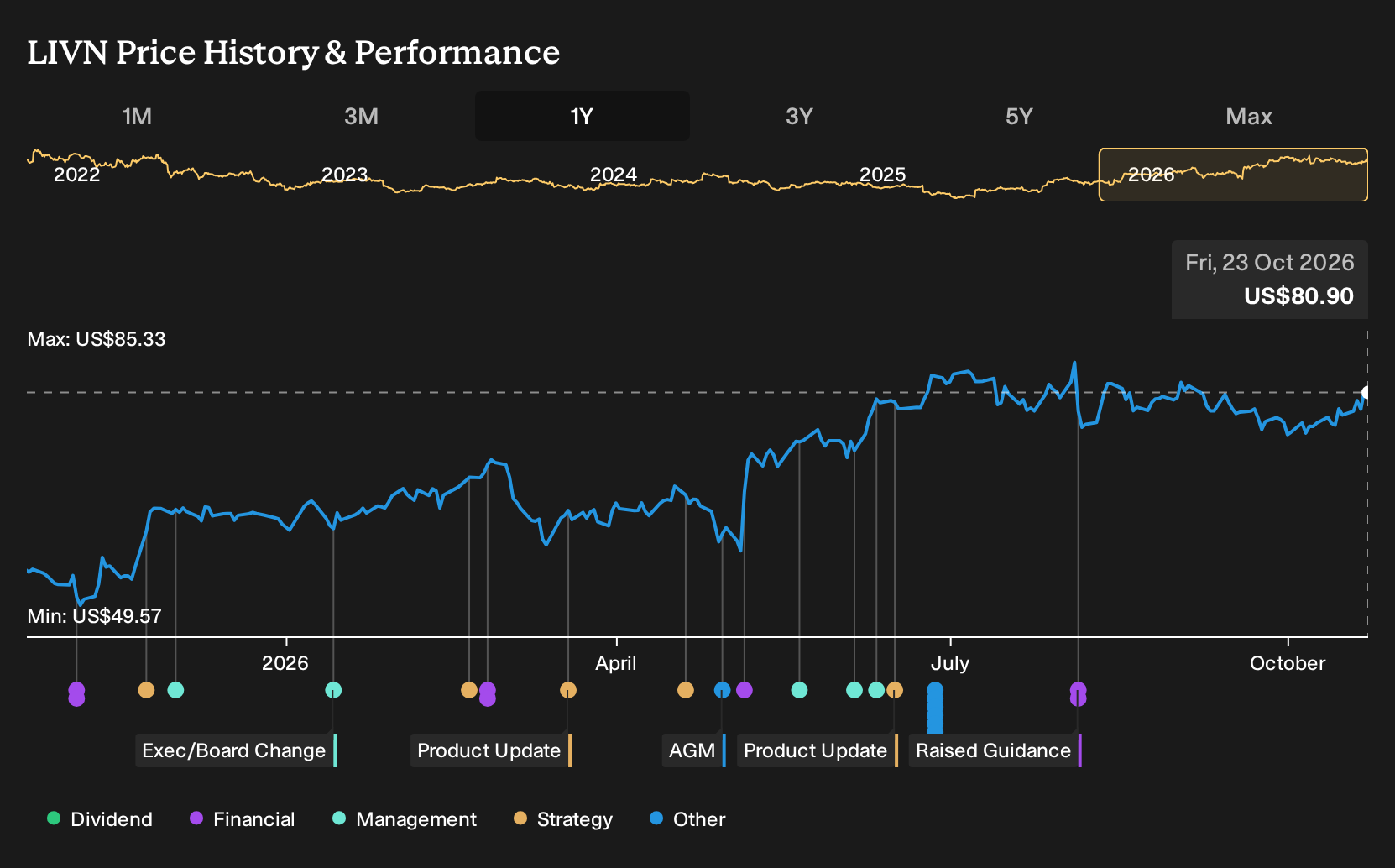
Exploring Other Perspectives
Not every analyst sees the new CORE VNS data as the main swing factor. The most bearish views focus on LivaNova’s heavy cardiopulmonary and digital spending, which they thought would keep 2029 earnings closer to US$218.4m on roughly US$1.8b of revenue. That is a much tougher hurdle, and this fresh neuromodulation evidence could eventually challenge it.
Explore another LivaNova fair value estimate, including one that suggests it could be worth just $89.10.
Form Your Own Verdict
Don't just follow the ticker; dig into the data and build a conviction that's truly your own.
- A great starting point for your LivaNova research is our analysis highlighting 4 key rewards and 1 important warning sign that could impact your investment decision.
- See our latest analysis for LivaNova. The report includes a comprehensive fundamental analysis summarized in a single visual, the Snowflake, making it easy to evaluate LivaNova's overall financial health at a glance.
Looking For More Investment Ideas Beyond LivaNova?
If this LivaNova update has sharpened your view on neuromodulation, it can help to set it alongside a few very different opportunities and see what truly fits your portfolio.
- For investors who want potential mispricing combined with quality fundamentals, scan our curated set of 27 high quality undervalued stocks that may warrant a closer look.
- If capital preservation ranks high on your checklist, compare LivaNova with a 30 resilient stocks with low risk scores that score well on stability and balance sheet metrics.
- When you are hunting for underfollowed stories rather than crowded trades, widen the watchlist with a 21 high quality undiscovered gems that still show strong fundamentals.
Have feedback on this article? Concerned about the content? Get in touch with us directly. Alternatively, email editorial-team@simplywallst.com