
Should Pelican 12 Launch Require Action From Planet Labs Stock Investors?
- Planet Labs PBC reported the successful past launch and initial contact of Pelican-12, a Gen 2 high resolution satellite flown on SpaceX’s Bandwagon-5 mission, carrying upgraded payload, communications hardware and on orbit AI compute to support future constellations.
- The mission serves as a testbed for satellite-to-satellite links using SES’s O3b mPOWER network and on board NVIDIA Jetson edge processing, which could influence how Planet Labs PBC delivers imagery products to customers.
- We will now examine how Planet Labs PBC's investment narrative could be affected by Pelican-12's satellite-to-satellite communications test capabilities.
Track how Planet Labs PBC fits into the broader AI hardware trend by comparing it with 55 AI infrastructure stocks, which is shaping the data pipeline from orbit to ground.
Planet Labs PBC Investment Narrative Recap
To be comfortable as a Planet Labs PBC shareholder, you need to believe the business can turn its large satellite and data footprint into higher value contracts and, over time, a path toward better cash generation. Pelican-12 fits that belief because it keeps the upgrade cycle moving, but on its own it does not change the short term focus on winning and executing sizeable solution deals.
The bigger near term swing factor remains how quickly Planet Labs PBC converts its pipeline with larger customers into revenue that supports heavy capital spending on new fleets. The main risk stays the same. High spending and ongoing losses leave little room if contract timing slips or experimental AI and data relay services take longer to show clear commercial traction.
The Pelican-12 launch ties most directly into the existing catalyst around richer solutions, since it is intended to support higher resolution imagery and lower latency through satellite relay tests. If those capabilities move into regular service, they could make Planet Labs PBC’s platform more compelling for governments and enterprises that care about speed and detail, especially in time sensitive use cases.
What has not changed is the execution risk around capital intensity and partnerships such as the JSAT contract, which is already framed as important for cash inflows and satellite services. Pelican-12’s AI and relay experiments sit alongside that effort. They add technical momentum, but investors still need to watch contract wins, retention of larger accounts and progress toward narrowing substantial current losses.
What Pelican-12 Means Against Planet Labs PBC's Long-Term Forecasts
Planet Labs PBC's current analyst framework points to revenue growth of 27.7% a year over the next three years, with earnings today at a loss of $359.9 million and a consensus view that earnings could reach $53.3 million by 2029, a swing of roughly $413 million in the firm’s favor by that forecast year.
Planet Labs PBC's narrative projects $788.4 million revenue and $53.3 million earnings by 2029. This implies 27.7% yearly revenue growth and an earnings increase of about $413 million from earnings today of a $359.9 million loss.
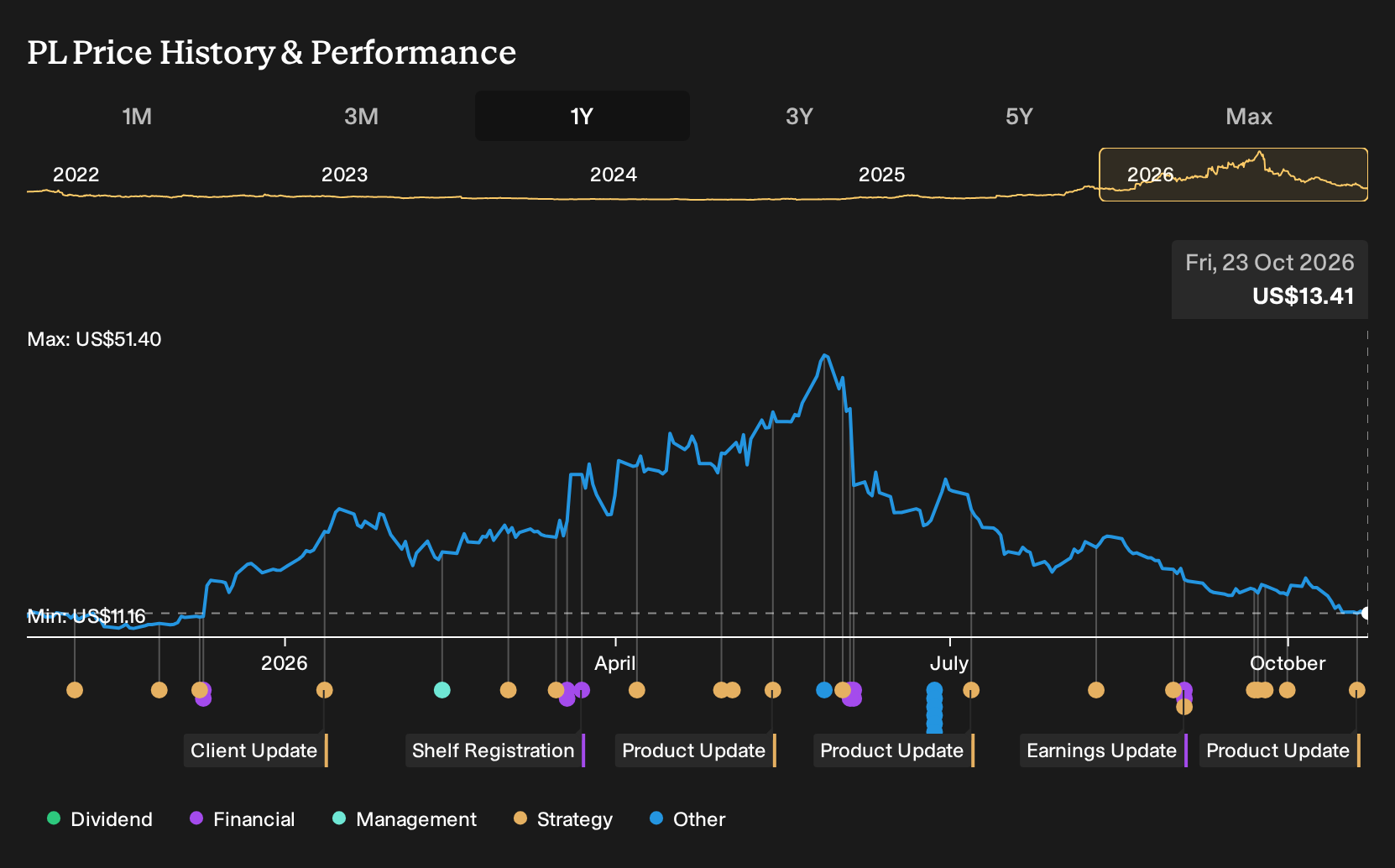
Uncover why Planet Labs PBC's fair value indicates a 126% potential upside to its current price, which could narrow quickly.
Exploring Other Perspectives
For a different angle, focus on the bearish concern around data sovereignty. The lowest analysts were already cautious, even while modeling roughly 28.4% annual revenue growth and earnings of about $54.1 million by 2029, prior to Pelican-12. That group worries regulators cap global demand. Use this launch as a prompt to compare several viewpoints.
Explore 8 other Planet Labs PBC fair value estimates, including one that suggests as much as 58% downside from the current price.
Form Your Own Verdict
Disagree with existing narratives? Extraordinary investment returns rarely come from following the herd, so trust your own research and judgment.
- A great starting point for your Planet Labs PBC research is our analysis highlighting 1 key reward and 2 important warning signs that could impact your investment decision.
- See our latest analysis for Planet Labs PBC. The report includes a comprehensive fundamental analysis summarized in a single visual, the Snowflake, making it easier to evaluate Planet Labs PBC's overall financial health at a glance.
Looking for more Planet Labs PBC style investment ideas?
If you want to stress test your thesis on Planet Labs PBC, it helps to line it up against other candidates that share some of the same qualities, whether that is stronger balance sheets, lower perceived risk, or underappreciated potential.
- For resilience first investors who care about durability before upside, consider screening a group of 30 resilient stocks with low risk scores that may hold up better when conditions get rough.
- If your focus is on quality businesses that the market may be overlooking, compare Planet Labs PBC with a 21 high quality undiscovered gems and see which stories feel more compelling on a risk reward basis.
- When you want financial strength to be non negotiable, start with a list of solid balance sheet and fundamentals (24 results) so you can filter for companies with steadier fundamentals before doing deeper research.
Have feedback on this article? Concerned about the content? Get in touch with us directly. Alternatively, email editorial-team@simplywallst.com