
Canadian Stock Market Today: TSX Futures Tick Up On Firm Demand And BoC Watch
The Morning Bull - Canadian Market Morning Update Monday, 26 Oct 2026
Canadian equities are set for a mildly positive tone at the open, with the Canadian market focused on one main factor today: domestic demand data appears firm enough to support risk appetite without clearly forcing a policy rethink.
September retail sales are estimated to have risen 0.7% month on month, following a revised 1.2% gain in August. Manufacturing sales moved 0.1% higher, with strength in petroleum, coal products, and aerospace indicating steady industrial demand.
Stronger consumer spending gives companies some additional pricing power and revenue support, which can help offset pressure from higher funding costs if central banks remain cautious. That combination often supports earnings resilience in areas tied to day-to-day spending and energy investment.
The open question is how the Bank of Canada will interpret this recent demand data at its decision on Wednesday. Investors are weighing whether firmer consumption justifies tighter policy or whether global inflation risks already point to a more patient stance.
Top Movers
- Tenaz Energy (TSX:TNZ) climbed 4.46% as higher oil prices supported interest in upstream producers and cash flow exposure.
- Saturn Oil & Gas (TSX:SOIL) gained 4.27% following heavy trading interest after GMT Capital's recent multi day share sale disclosure.
- Hemlo Mining (TSX:HMMC) advanced 3.74% after investors assessed solid Q3 production figures and upcoming earnings timing for the miner.

Top Losers
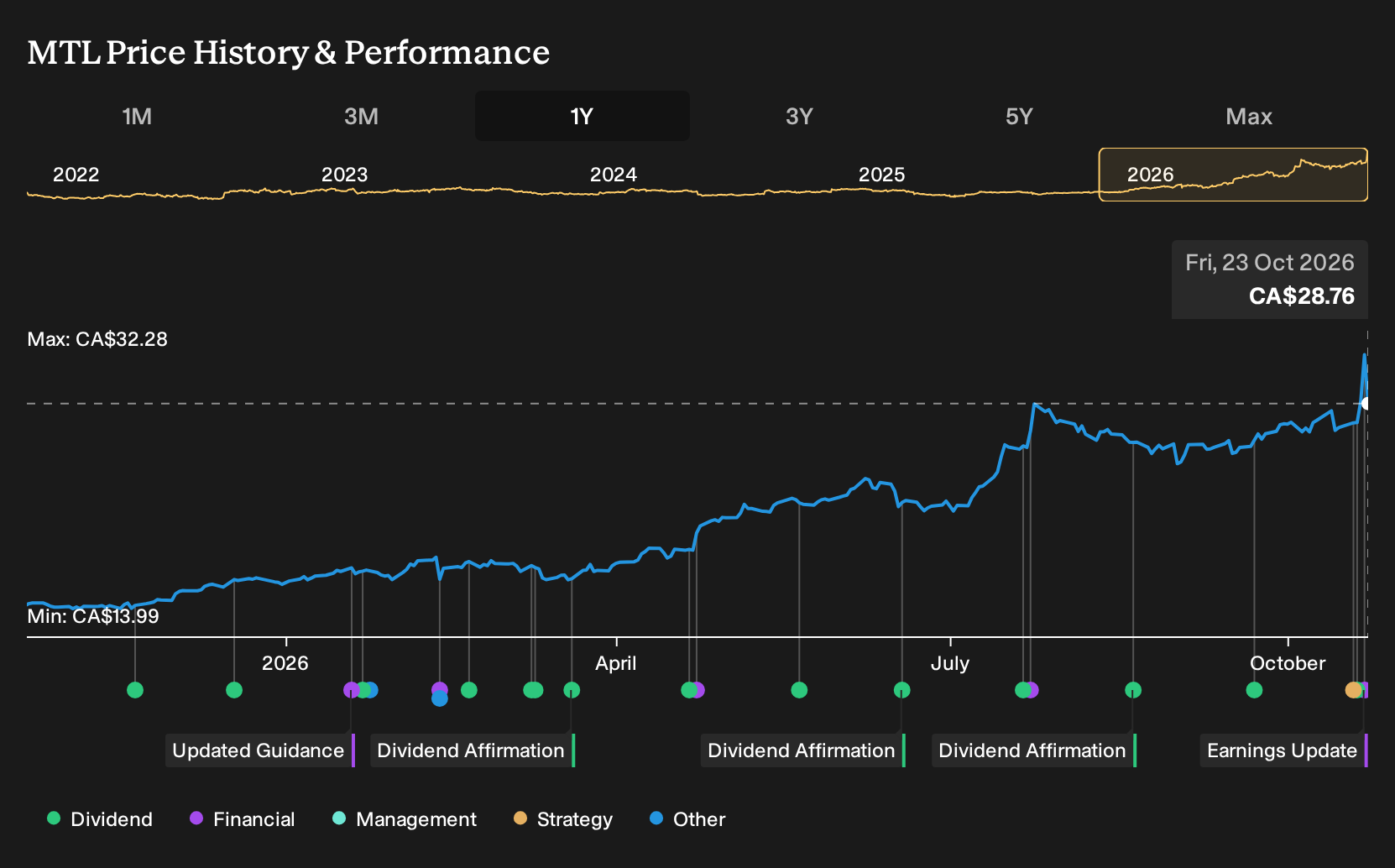
- Mullen Group (TSX:MTL) fell 10.90% after traders reacted to the latest quarterly earnings release and recent analyst price target changes.
- Air Canada (TSX:AC) declined 4.65% as traders reassessed the recent upgrade and ongoing headwinds flagged around demand and costs.
- IGM Financial (TSX:IGM) fell 4.00% after investors weighed mixed analyst targets alongside the recent upgrade and outlook commentary.
On The Radar
Canadian traders head into mid week with the Bank of Canada and a heavy slate of TSX blue chip earnings doing most of the work on direction.
- BoC Interest Rate Decision, Wed 28 Oct. The policy rate previously sat at 2.25% and the consensus looks for 2.5%. A higher than expected move would tighten borrowing conditions and could support the Canadian dollar while pressuring rate sensitive equities.
- BoC Monetary Policy Report and Press Conference, Wed 28 Oct. The statement and Q&A will show how the Bank links firm September retail and manufacturing data to its inflation view, which matters for banks, housing related stocks and the broader TSX valuation backdrop.
- Kinross Gold, Wed 28 Oct. Q3 2026 results After Market will put cost control and cash generation under the microscope for this gold producer, which feeds directly into how investors think about balance sheet flexibility and future project spending.
- Canadian Pacific Kansas City, Wed 28 Oct. When this railway reports Q3 2026 numbers After Market, revenue trends across bulk commodities and intermodal will help you gauge freight demand tied to Canadian trade flows.
- Canada GDP MoM, Fri 30 Oct. August GDP carries a previous reading of 0% and a consensus of 0.2%. A stronger outcome would underline domestic momentum and can support Canadian cyclicals, while a softer print tends to favour defensives.
Sector & Industry Watch
Energy: Oil strength keeps cash flowing
Energy has held its recent advance over the last week, with Oil and Gas moving in the same tight range as crude stays supported by supply worries and firm US demand signals. That backdrop matters directly for Canadians, since stronger oil pricing feeds into profits, dividends, and share buybacks for many TSX producers.
The key swing factor now is this week’s US EIA and API crude inventory reports, which can quickly sway expectations for Canadian Energy exports and related stocks.
Materials: Miners extend a tough recent run
Materials has retreated sharply over the past month, and the setback has deepened over the last seven days, with Metals and Mining under even heavier pressure. Softer sector performance can weigh on portfolios that lean on gold, copper, and uranium companies, including explorers such as District Metals that are still advancing projects rather than generating steady cash flow.
The next checkpoint is the upcoming round of Q3 production and earnings updates from Canadian miners, since any change in cost guidance or project timing can quickly reset how investors view risk in this group.
Real Estate: Rate sensitive bounce eyes BoC verdict
Real Estate has pushed higher over the past week and held a modest gain over the last month, although 1 year returns still trail the broader Canadian Market. Higher borrowing costs remain a drag, because pricier debt can limit REIT distributions and delay new developments, which matters if you rely on property securities for income.
For this sector, the single event to watch is Wednesday’s Bank of Canada decision, since even a small shift away from the prior 2.25% policy rate toward the 2.5% consensus would feed directly into interest expenses for landlords and developers.
Financials: Banks lean on firm retail demand
Financials has edged higher over the last seven days, with Banks slightly stronger and showing solid 1 year gains against the broader Canadian Market. Firmer September retail sales help credit card volumes, deposits, and small business activity, which all flow into earnings for the country’s largest lenders and insurers.
The BoC Monetary Policy Report that lands with Wednesday’s rate call is the main catalyst, because its message on future borrowing costs will guide expectations for loan growth, credit quality, and savings demand across major Canadian Financials.
Tech: Sector steadies while chips stay weak
Tech has inched up over the past week, although year to date and 1 year readings still show a softer picture, especially in Semiconductors where recent declines have been steep. Investors are weighing ongoing demand for software and AI tools against much weaker share price performance in chip related stocks.
The key trigger here is the coming Canadian Tech earnings stretch, since commentary on IT and AI budgets from listed platforms will show whether recent Tech weakness lines up with business conditions or has overshot them.
Find Tomorrow's Top Performers
With the Bank of Canada potentially edging its policy rate from 2.25% toward the 2.5% consensus, rate sensitive investors can start with this list of 8 resilient stocks with low risk scores.
Have feedback on this article? Concerned about the content? Get in touch with us directly. Alternatively, email editorial-team@simplywallst.com