
Why 1 Early Investor Think SpaceX Could Become the World’s First $10 Trillion Company
Elon Musk's SpaceX (SPCX) has already joined an exclusive club of companies worth more than $1 trillion. But one of its earliest investors believes the company's valuation could eventually reach a whopping $10 trillion—and perhaps much higher.
Peter Diamandis, founder of the XPRIZE Foundation and an early SpaceX investor, believes the company's opportunities extend far beyond launching rockets and providing satellite internet. He's even suggested SpaceX could eventually be worth $100 trillion.
That's an extraordinary prediction, particularly when you consider that the total market cap of publicly traded companies worldwide is only $150 trillion today. But SpaceX's latest earnings report provides some compelling evidence that the company is becoming a much different business than it was just a year ago.
And artificial intelligence is driving much of that change.
Spacex’s AI Business Is Taking Off
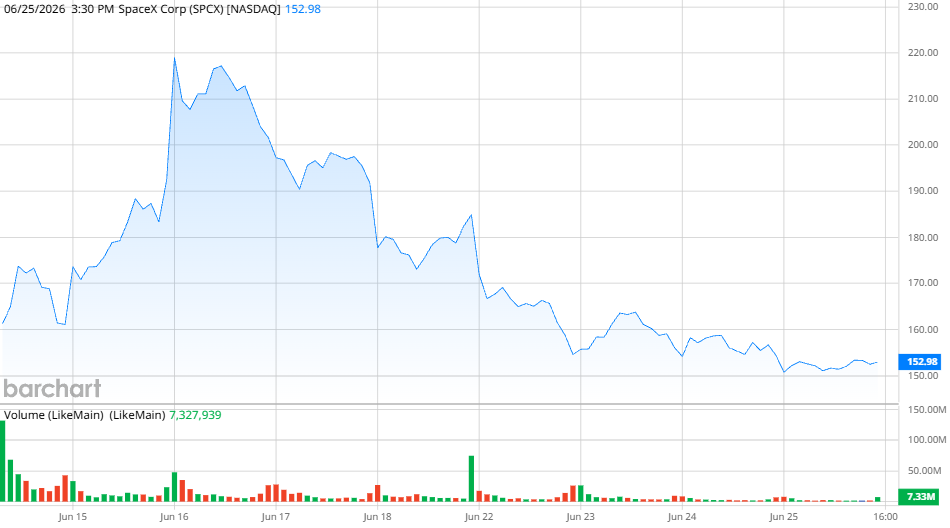
SpaceX’s revenue in the third quarter was $14.6 billion, up 161% from a year ago. Net income was $4.4 billion versus a $1.1 billion loss a year earlier. SPCX stock is trading just under its IPO opening price from June.
But the biggest story in the company’s earnings report was the company's AI business, which Musk has rebranded to “Super Intelligence.” This division includes the company’s AI computing infrastructure, models, and software businesses.
The segment generated approximately $7.6 billion in revenue during the quarter, compared with $813 million a year earlier. That's nearly a tenfold increase, and it now accounts for more than half of SpaceX's total revenue. And it also turned a profit, posting $431 million in operating income versus a loss of $1.7 billion a year ago.
SpaceX is building enormous data centers that can provide the computing power required to train and run advanced AI models. The company ended September with 1.7 gigawatts of installed computing capacity, and demand for that capacity has been strong.
During the earnings call, Musk said the company could rent out its available computing resources several times over if it accepted every request from prospective customers, saying the company is “hounded relentlessly by every hyperscaler and by dozens of smaller companies to rent more of our compute.”
SpaceX is also using some of that computing power for its own AI products, including Grok and the Cursor coding platform it acquired.
Meanwhile, its established businesses continue growing.
SpaceX's Connectivity division, which includes Starlink, generated $5.2 billion in quarterly revenue, up 69% year-over-year (YoY). Starlink ended September with 13.6 million consumer subscribers, while the company's satellite and launch operations remain important parts of its business.
A Tesla Merger Could Be a Catalyst
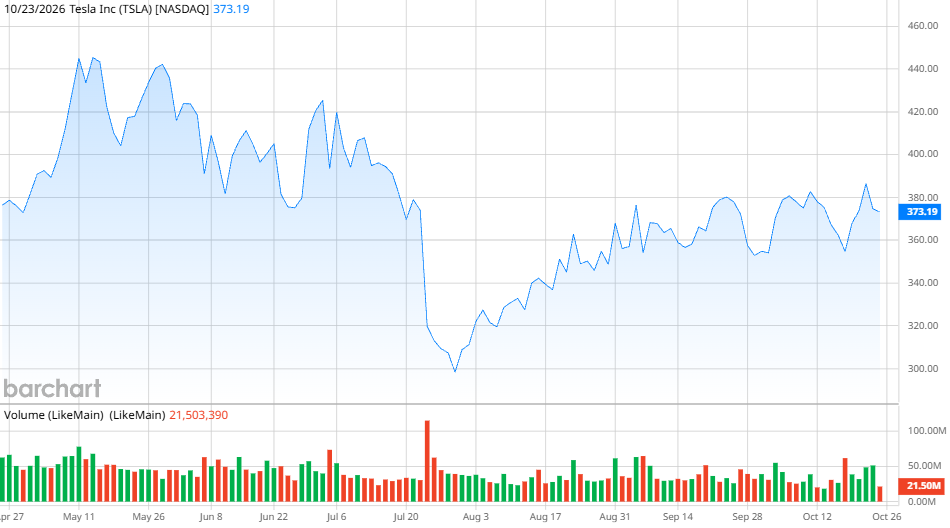
Another development could eventually change SpaceX's valuation. Musk confirmed that SpaceX and Tesla (TSLA) have established independent committees to explore a possible merger. And while the companies haven’t made a decision, a merger seems to make a lot of sense for both SpaceX and Tesla.
The proposed merger could bring Tesla's robotics, autonomous-driving technology, and manufacturing capabilities under the same roof as SpaceX's AI infrastructure and satellite operations, leading to more collaboration.
But there are complications. The companies have different shareholders, substantial capital requirements, and potentially conflicting interests involving Musk. An agreement would have to make financial sense for both groups of investors.
Is $10 Trillion a Realistic Goal for SpaceX?
SpaceX is already showing impressive growth, but to reach a $10 trillion valuation, investors would have to assign the company a value several times its current market capitalization.
There's also a major expense attached to its ambitions. SpaceX expects to spend between $35 billion and $40 billion on capital expenditures during the fourth quarter alone.
SpaceX’s AI spending could support tremendous growth if demand continues. But it also creates risk if computing prices weaken, customers reduce spending, or new capacity takes longer to generate returns.
Diamandis has a financial interest in SpaceX's success, and his $10 trillion prediction, much less $100 trillion, isn't a conventional earnings forecast. Investors shouldn't treat it as one. But the company's third-quarter results show why the idea is attracting attention. SpaceX is already generating substantial AI revenue while its Starlink business continues expanding.
For shareholders, the most important development isn't the possibility of a $10 trillion valuation. It's whether SpaceX can turn its rapidly growing computing business into sustainable earnings without allowing its massive spending plans to get ahead of demand.
On the date of publication, Patrick Sanders did not have (either directly or indirectly) positions in any of the securities mentioned in this article. All information and data in this article is solely for informational purposes. For more information please view the Barchart Disclosure Policy here.