
Brazil Export Stocks Retail Investors May Revisit After Lula’s Election Shock
Lula’s election win has jolted Brazilian markets, with investors rapidly reassessing everything from the real to long-term rates. Sharp swings can punish domestic-focused businesses, yet exporters with foreign-currency inflows might find a rare opening as the BRL weakens. This article walks through three large-cap Brazilian stocks closely tied to that story and explores how this mix of stress and currency moves could reshape their investment appeal for you.
The stocks covered next are only a sample, since the full screen surfaced 7 more Brazilian exporters with equally interesting stories that do not fit into this short list. To see the broader field and identify which ideas line up with your own risk and return preferences, head straight into the Brazilian Export-Oriented Large-Cap Stocks screener to filter and analyze the highest conviction plays.
Klabin (BOVESPA:KLBN11)
Klabin sits in the center of this exporter-heavy screen, with a business model built around selling Brazilian pulp, paper and packaging into global markets where a softer real can make every overseas contract go further in local currency terms.
Klabin produces and exports pulp, paperboard and packaging, supported by its own forestry operations, which positions it directly in the Brazilian export-oriented large-cap theme. Revenue leans on papers at about R$10.96b, packaging at R$7.64b, pulp at R$5.78b and forestry at R$3.30b, against a market value near R$22.42b.
"Ramping up production at Puma II and fully utilizing state-of-the-art assets in Ortigueira and Monte Alegre should lift volumes and operating leverage as commodity prices normalize, supporting EBITDA and earnings."
What could materially change the story is how one less visible pressure ultimately feeds through to pricing power and cash generation.
If that pressure point matters to your thesis, read the full narrative for Klabin to see how currency, capacity and capital choices could be decoupling Klabin’s share story from pulp cycles.

MBRF Global Foods (BOVESPA:MBRF3)
MBRF Global Foods is a focused expression of this exporter theme, turning Brazil’s vast protein supply into products shipped worldwide. Its mix of beef, poultry and processed brands provides meaningful exposure to currency swings and shifts in global food demand.
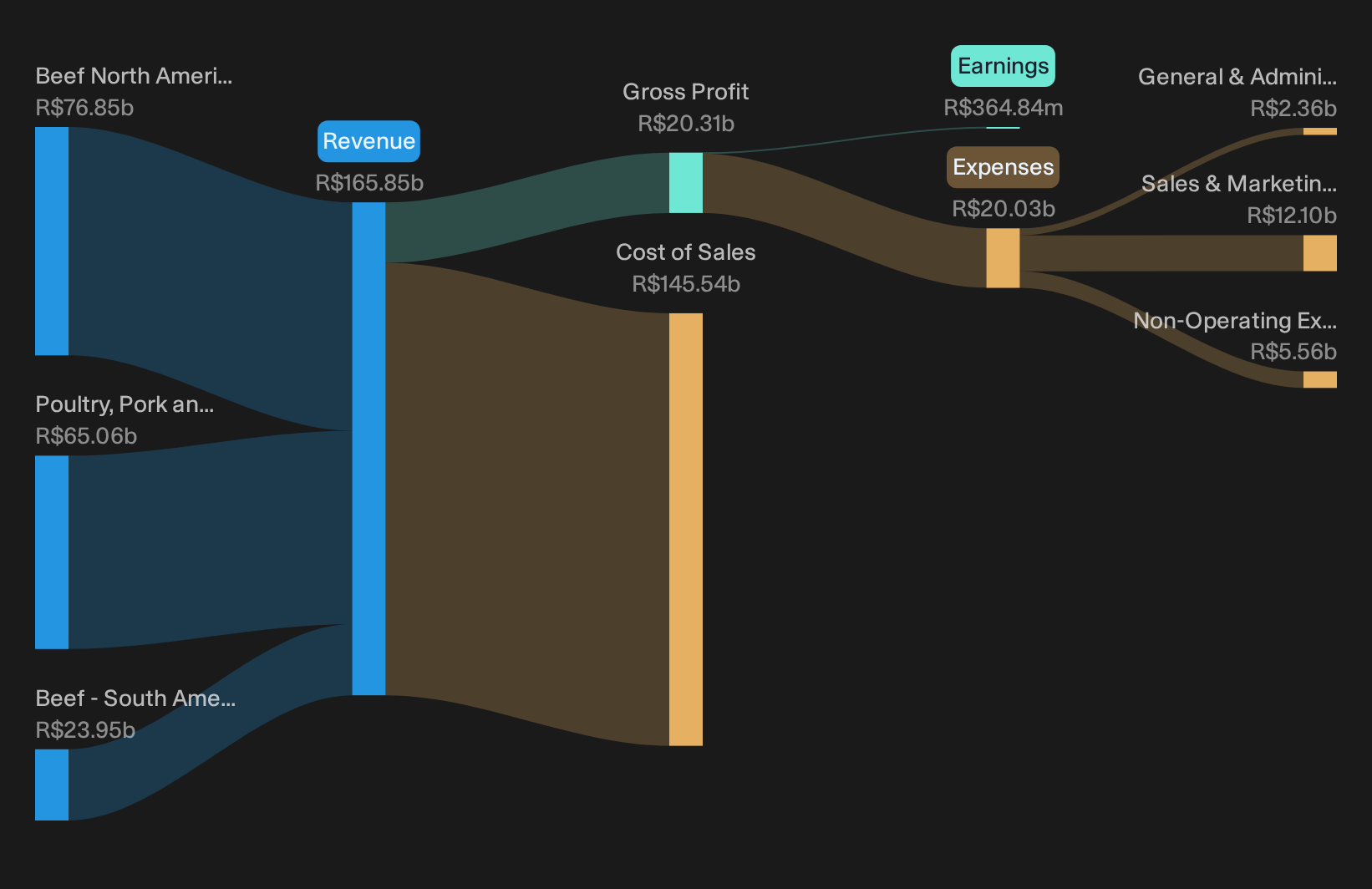
MBRF Global Foods runs a multi protein food platform, with about R$76.8b from Beef North America, R$24.0b from Beef South America and R$65.1b from poultry, pork and processed BRF products, and carries a market value near R$25.7b.
"Anticipated synergies from the ongoing merger with BRF, which management now quantifies at BRL 600 million in 2026 and BRL 1 billion by 2028, and a post merger focus on value added, branded, and processed products are expected to raise EBITDA through a more lucrative sales mix after MBRF Global Foods already captured BRL 126 million of synergies and BRL 296 million of efficiency gains in Q1 2026."
The impact on margins and cash generation, if a single assumption inside that multi protein export engine fails to play out as planned, will matter a lot.
If that dependency on a single export engine feels like a blind spot, the full narrative for MBRF Global Foods explains how MBRF Global Foods’ merger story could accelerate or stall from here.
São Martinho (BOVESPA:SMTO3)
São Martinho is a pure expression of the Brazilian Export-Oriented Large-Cap Stocks theme, turning sugarcane into sugar, ethanol and power that are priced in global markets, so a weaker real can matter a lot for how investors see its export-heavy cash flows.
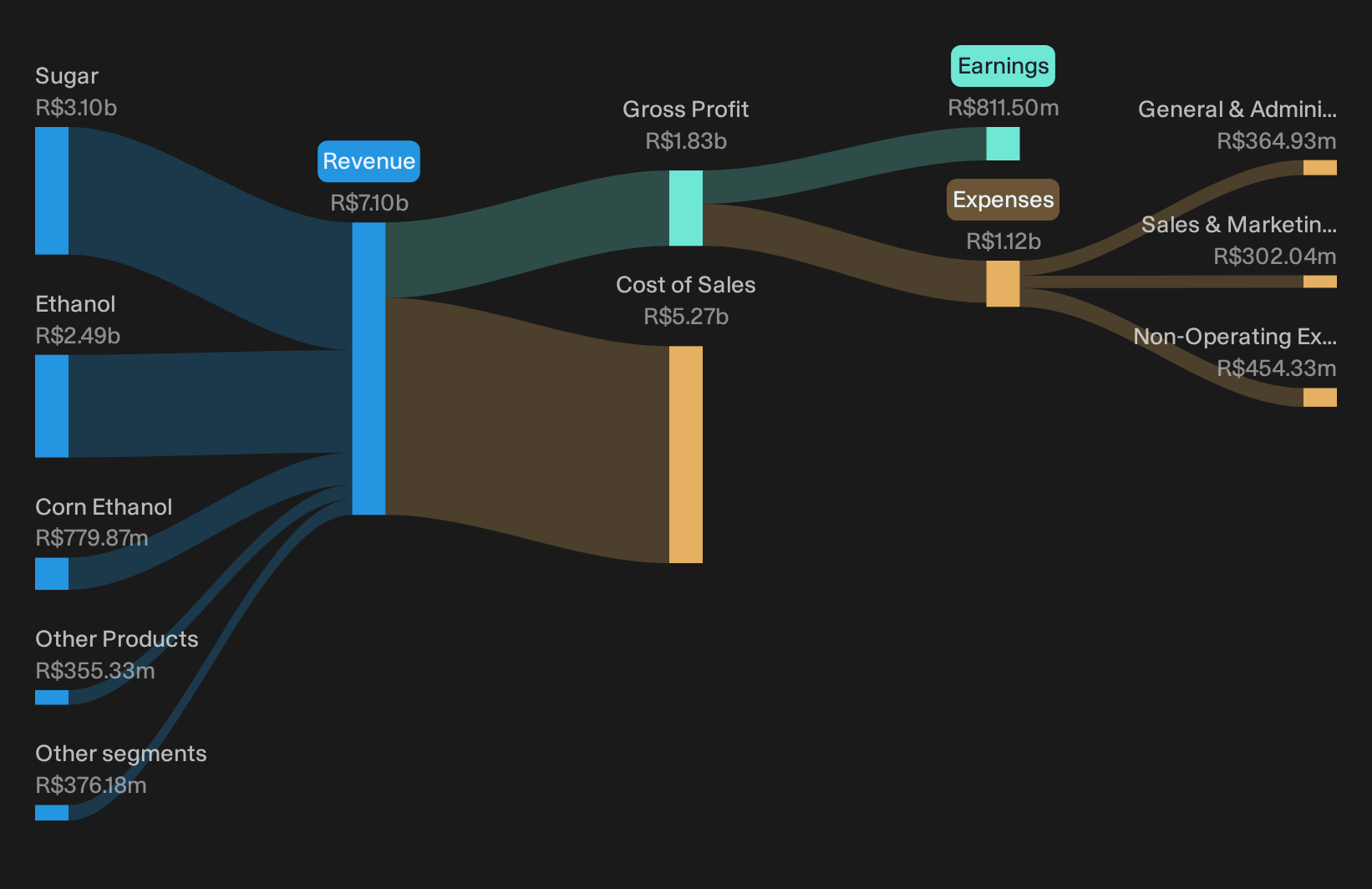
São Martinho runs a sugar and ethanol complex with about R$3.10b from sugar, R$2.49b from ethanol, R$779.9m from corn ethanol and smaller slices from electricity, other products and yeast, and carries a market value near R$6.79b.
For a producer that sells into global sugar and fuel markets, what happens to São Martinho’s export volumes and pricing under a weaker BRL is where the Lula election shock gets interesting.
"Phase 2 of the Boa Vista corn ethanol plant is reported to be on schedule, with ramp up expected around May to June next year and design capacity of about 1 million tonnes of corn processed annually once fully operational, which would extend São Martinho's higher margin corn ethanol and DDG contribution to revenue and EBITDA."
The real swing factor is how one pressure on ethanol pricing and demand plays out just as that extra high margin capacity comes online.
That pricing pressure is exactly why reading the full narrative for São Martinho can help you see whether São Martinho’s corn ethanol expansion is quietly reshaping its risk reward profile.
Seeking Alternatives Before The Crowd Moves
Fresh opportunities can move from quiet to flying once momentum builds, and by the time headlines catch up the best entry often drops away. Scan what is still under the radar for now and consider it early.
- Focus on reliable cash flows with companies that prioritize balance sheet strength and quality earnings by running your filters through the list of solid balance sheet and fundamentals (207 results).
- Look for potential breakout moves in gold producers before sentiment changes, using the curated universe inside the 35 elite gold producer stocks to find miners with leverage to shifting bullion prices.
- Track momentum in robotics and automation as factories and warehouses upgrade by screening the curated 94 robotics and automation stocks for businesses connected to long-term industrial change.
Have feedback on this article? Concerned about the content? Get in touch with us directly. Alternatively, email editorial-team@simplywallst.com