
Taco Bell Deal Renewal Could Be A Game Changer For PepsiCo (PEP)
- PepsiCo and Taco Bell renewed their U.S. beverage partnership for 11 years and extended international agreements, keeping exclusives like Mountain Dew Baja Blast in key markets and supporting co-developed products across crafted, functional and energy drink categories.
- Growth in Gatorade and Propel within functional hydration sits alongside the Taco Bell renewal, which shows PepsiCo leaning into higher value beverage occasions despite margin and cost headwinds.
- This article reviews how PepsiCo's investment narrative is influenced by the Taco Bell renewal and the growth in functional hydration.
Scan the fast-moving world of beverages by comparing PepsiCo with handpicked peers in the 21 high quality undiscovered gems that are also leaning into branded partnerships and higher value drink occasions.
PepsiCo Investment Narrative Recap
To own PepsiCo, you have to believe this is still a resilient global food and beverage platform that can use brands like Gatorade and its Taco Bell beverage lineup to support pricing and mix while cost pressure stays elevated. The short term swing factor is execution on productivity and pricing as input costs and hedges move against the business into early 2027.
The biggest near term risk is that margin pressure and cost cutting intersect in the wrong way. Plant closures, refranchising and aggressive savings could crimp North America beverage capacity just as PepsiCo leans into higher value occasions, muting the benefit of partnerships like Taco Bell and slowing any earnings recovery.
The most relevant recent update for this Taco Bell story sits in functional hydration. In Q3 2026, Gatorade and Propel both recorded volume and net revenue growth, with Gatorade Lower Sugar and Gatorlyte broadening PepsiCo’s reach into performance focused drinks. That is exactly the type of platform Taco Bell can spotlight through premium, crafted offerings.
If PepsiCo executes, the Taco Bell renewal and the functional hydration gains pull in the same direction. They give the business more exposure to higher value beverage occasions while the One North America integration and technology investments aim to contain logistics and operating costs. The risk is that rising input costs and any missteps on capacity or service erode the operational lift from these consumer facing wins.
What The Current PepsiCo Forecasts Assume
PepsiCo's current analyst story ties the Taco Bell renewal and functional hydration push to a relatively measured financial glide path rather than a dramatic reset. Consensus assumptions point to revenue expanding by 2.7% a year over the next few years while profit margins edge from 11.1% today to 11.5% by 2029. That backdrop sets the guardrails for how much the Taco Bell beverage partnership and Gatorade platform are expected to contribute without rewriting the earnings profile.
On earnings, the reference point today is US$10.9b. Analysts on average see that reaching US$12.3b by 2029, with the more cautious forecasts down at US$10.1b. The move from US$10.9b to US$12.3b implies an earnings increase of roughly US$1.4b, which is the uplift embedded in the consensus narrative for PepsiCo as productivity measures and higher value drink occasions line up.
Those profit expectations sit alongside an implied P/E of 19.2x on the 2029 consensus earnings, compared with 16.8x today and a higher current industry multiple of 28.1x for GB beverages. For anyone trying to connect the Taco Bell news to the longer term model, the key question is whether PepsiCo can support that modest multiple expansion through disciplined cost work, stable pricing and continued mix into functional and crafted beverages without over tightening capacity.
PepsiCo's narrative projects US$106.4b revenue and US$12.3b earnings by 2029. This assumes 2.7% yearly revenue growth and an earnings increase of about US$1.4b from US$10.9b today.
Uncover how PepsiCo's fair value indicates a 4% potential upside to its current price before the market closes the discount.
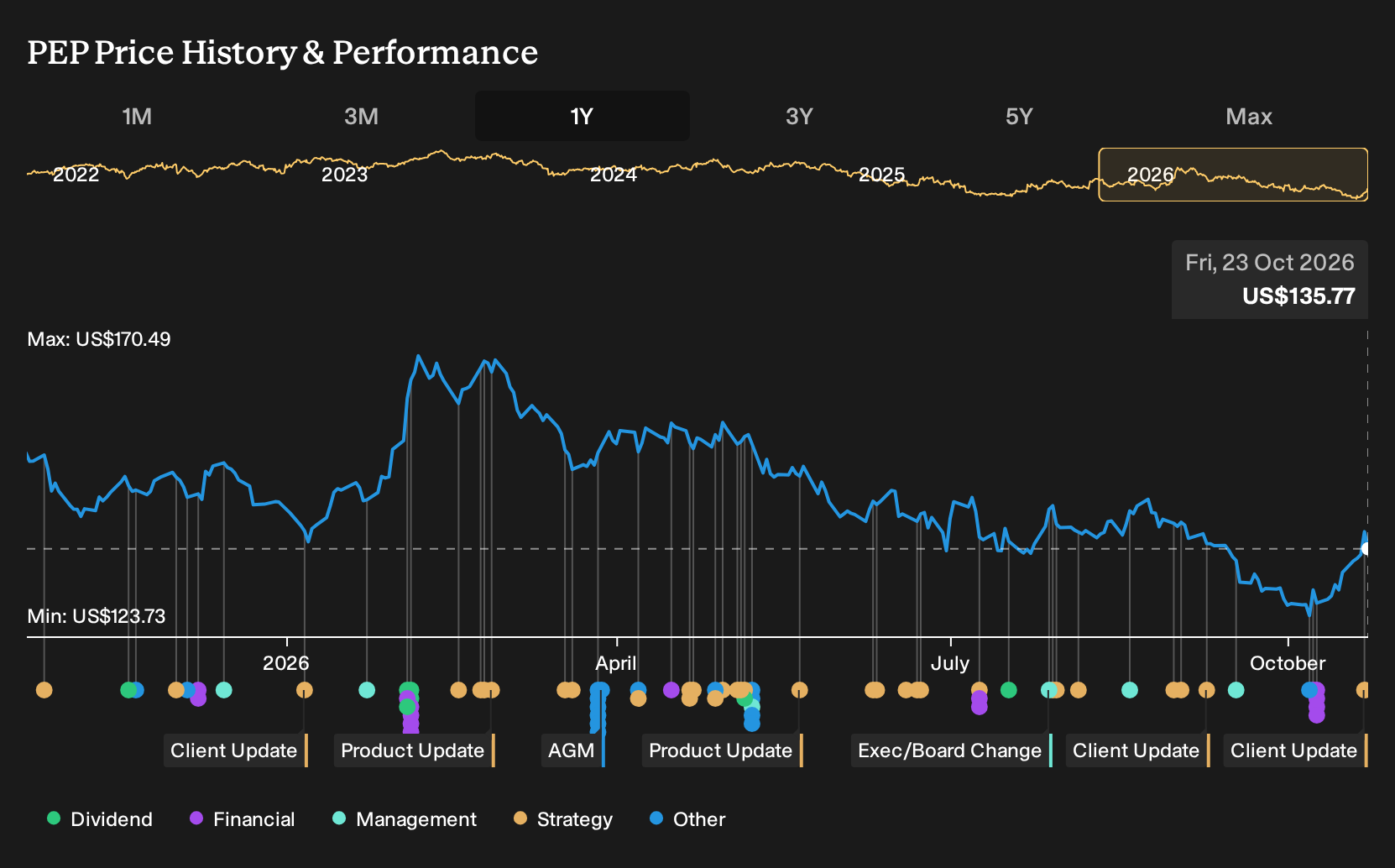
Exploring Other Perspectives
The Simply Wall St Community has 14 fair value estimates on PepsiCo, ranging from US$116.35 to US$272.83, which highlights how far apart private investors can be in their views. You are weighing those views against margin pressure, productivity moves and the Taco Bell renewal, all of which could influence how future performance is judged. Explore the full range of opinions before deciding how this story fits your own portfolio.
Explore 13 other PepsiCo fair value estimates, including one that suggests as much as 101% upside from the current price!
Decide For Yourself
Disagree with existing narratives? Extraordinary investment returns rarely come from following the herd, so consider trusting your own analysis and instincts.
- A great starting point for your PepsiCo research is our analysis highlighting 3 key rewards and 1 important warning sign that could impact your investment decision.
- See our latest analysis for PepsiCo. The report includes a comprehensive fundamental analysis summarized in a single visual, the Snowflake, making it easy to evaluate PepsiCo's overall financial health at a glance.
Looking For More Investment Ideas Beyond PepsiCo?
If the PepsiCo story has sharpened your thinking about brands, pricing power and risk, it can be useful to line it up against other businesses with very different profiles. The Simply Wall St Screener lets you move from one stock to a broader watchlist in a few minutes, so you can test your thesis across multiple types of opportunities rather than staying anchored to a single ticker.
- For investors who want income to feel more predictable, consider screening for companies that look like potential “dividend fortresses” using the 5 dividend fortresses and see which ones match your return and risk preferences.
- If capital preservation sits near the top of your priority list, filter for sturdier balance sheets and steadier fundamentals by running a list of solid balance sheet and fundamentals (24 results) and compare how those businesses stack up against PepsiCo on financial strength.
- When you want ideas that are less crowded, broaden your opportunity set by scanning a 21 high quality undiscovered gems and identify stocks where the story is not yet heavily debated by the market.
Have feedback on this article? Concerned about the content? Get in touch with us directly. Alternatively, email editorial-team@simplywallst.com