
3 Logistics Stocks Positioned for Energy Supply Chain Shifts
Energy supply routes are being repriced almost in real time, and the quiet winners and losers may not be the producers but the companies that store, ship, and hold the fuel that keeps trade moving. For investors, that creates a rare moment when infrastructure tied to energy security and inventories could reshape risk and opportunity. This article breaks down three stocks from our Global Energy-Storage and Logistics Infrastructure screener that appear especially exposed to these cross-currents.
The stocks covered next are just a sample, and the full screen surfaced 20 more energy-storage and logistics infrastructure companies with similarly detailed narratives that are not included below. To identify and analyze the highest-conviction opportunities in this space, go straight to the Global Energy-Storage and Logistics Infrastructure Stocks screener.
SAL Saudi Logistics Services (SASE:4263)
Overview: SAL Saudi Logistics Services runs air cargo handling, warehousing, and end to end logistics across Saudi Arabia, supporting energy-linked trade flows.
Operations: The group generated about SAR 1.6b from Ground Handling and SAR 270 million from Logistics in 2026, almost entirely within Saudi Arabia.
Market Cap: SAR 11.98b
SAL Saudi Logistics Services taps directly into Saudi Arabia’s role as an energy hub, running cargo handling, bonded zones, and warehousing that support energy-related traffic. With strong profitability and a sizeable new SAR 2.5b credit facility backing logistics zone expansion, investors are essentially watching how this build out of midstream-style infrastructure affects returns as any single unseen pressure on project economics shifts direction.
That makes the next question simple: how do those logistics projects stack up when you run the analysis report for SAL Saudi Logistics Services and stress test the return profile?

International Container Terminal Services (PSE:ICT)
Overview: International Container Terminal Services runs a global network of container ports and terminals that handle, store, and move containerized trade across 20 countries.
Operations: ICT generates about US$3.6b from cargo handling and related services, with revenue spread across Asia, the Americas, and EMEA.
Market Cap: ₱1.69t
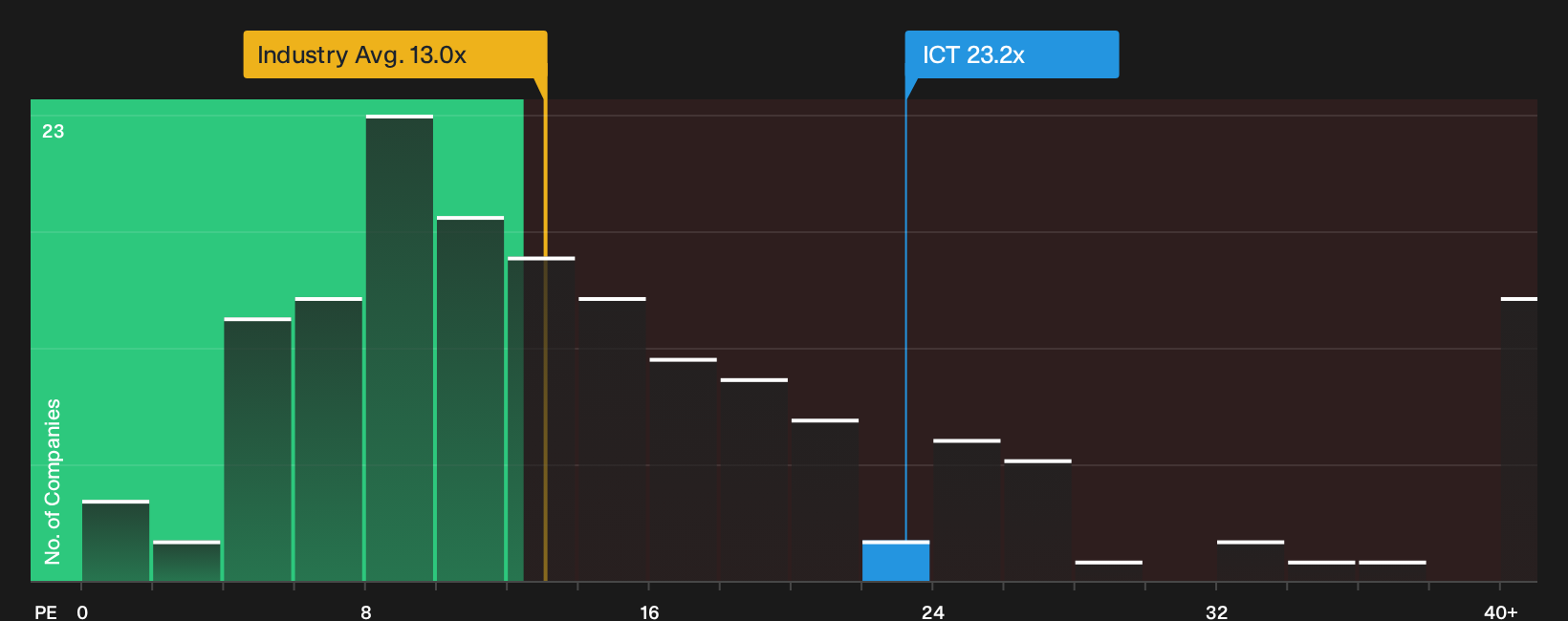
International Container Terminal Services gives you exposure to port infrastructure that sits where energy related goods, parts, and equipment actually move and wait. Earnings growth of 27.1% and a P/E of 23.2x indicate that investors already rate the business highly. However, its heavy debt load means cash flows depend on what happens when one unseen pressure on funding costs shifts direction.
That reliance on funding costs puts the spotlight on how resilient International Container Terminal Services really is. This is where the International Container Terminal Services financial health report could reveal what the headline numbers miss.
Pangaea Logistics Solutions (PANL)
Overview: Pangaea Logistics Solutions moves dry bulk commodities worldwide through its own vessels, terminals, and stevedoring services, linking industrial trade to global supply routes.
Operations: Pangaea Logistics Solutions generates about US$692 million from shipping and US$19 million from other services across diversified global trade routes.
Market Cap: US$520 million
For investors tracking how energy security and rerouted trade are reshaping infrastructure, Pangaea Logistics Solutions adds a dry bulk twist, connecting ports, terminals, and cargo flows that can change quickly when supply lines are redrawn.
Expansion of port and logistics infrastructure in Tampa and newer terminal operations in Texas and Louisiana continues to build out Pangaea Logistics Solutions' integrated model. This structure can allow a greater share of cargo flows to generate recurring terminal and stevedoring EBITDA and support more stable revenue and earnings.
The real test is what happens if a single unseen pressure on trade routes shifts direction just as this integrated setup scales further.
If that pressure shift is what you are watching, full narrative for Pangaea Logistics Solutions explains how Pangaea Logistics Solutions could potentially translate trade volatility into compounding terminal economics.

Seeking Fresh Alternatives Before Others Do
Markets move fast and the next breakout list will not stay quiet for long. Consider identifying momentum while it is still under the radar.
- Look for potential turnarounds by scanning 194 high quality undervalued stocks that still trade as if the broader market has not reacted yet.
- Identify ideas that may continue generating income while prices fluctuate by checking the curated 224 dividend fortresses built around resilience and steady cash returns.
- Explore the build out of future infrastructure by reviewing the hand picked 55 AI infrastructure stocks while the story is still developing and liquidity is building.
Have feedback on this article? Concerned about the content? Get in touch with us directly. Alternatively, email editorial-team@simplywallst.com