
3 U.S. High Dividend Stocks Built For Sticky Inflation
Inflation is showing up in more corners of the U.S. economy, and that raises the stakes for anyone relying on stocks for both returns and income. Higher for longer interest rates can pressure richly priced growth shares, yet that same backdrop can shine a light on large, steadier companies that pay investors to wait. This article walks through 3 U.S. large-cap value and high-dividend stocks exposed to this inflation story and explains why each deserves a closer look now.
The three stocks covered below are just a handpicked sample of this idea, and the full screen surfaced 13 more large U.S. companies with similar income-and-value profiles that are not discussed in this article. To see the wider opportunity set, head straight into the U.S. Large-Cap Value & High-Dividend Stocks screener to identify, filter, and analyze the highest conviction plays for your watchlist.
PPG Industries (PPG)
PPG Industries brings an old fashioned dividend habit to a very modern problem set, giving this income focused screen some industrial ballast as investors weigh inflation, higher rates, and the value on offer in durable cash generators.
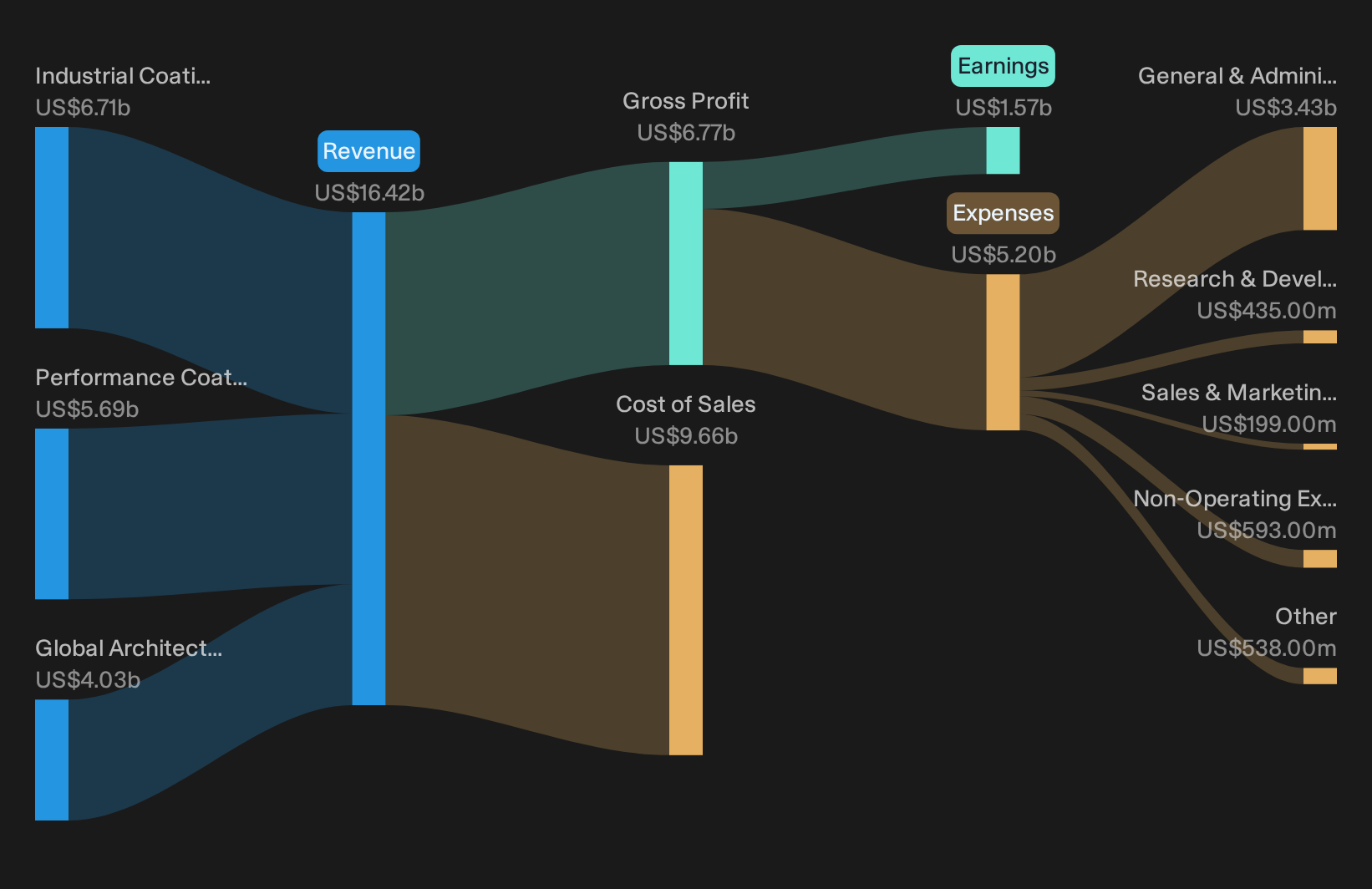
PPG Industries manufactures paints, coatings, and specialty materials worldwide, fitting the screener’s tilt toward large, cash generative dividend payers. It generates about US$6.7b from Industrial Coatings, US$5.7b from Performance Coatings, and US$4.0b from Global Architectural Coatings, with an equity value around US$24.6b.
"PPG Industries is building out its aerospace and protective and marine coatings capacity, supported by a roughly US$300 million aerospace backlog and more than US$0.5 billion of related investments."
What happens to margins and pricing power if one unseen cost pressure shifts just as this next wave of capacity comes online?
If that change in cost is important to you, read the full narrative for PPG Industries to see how the next phase of capacity for PPG Industries could affect both risk and potential upside.
Gaming and Leisure Properties (GLPI)
Gaming and Leisure Properties fits this income focused screen as a US casino REIT that collects long term rent while handing much of the inflation and operating risk to its tenants. This makes what it builds and who it partners with especially important when rates stay higher for longer.
Gaming and Leisure Properties is a US based REIT that owns gaming real estate and leases it out on triple net terms. It earns about US$1.7b from investments in real estate, all from the United States, with an equity value around US$11.8b.
"The ongoing development and deployment of committed capital into projects such as Bally’s Chicago, Penn’s Aurora, Bally’s Lincoln and Live! Virginia is now backed by about US$1.8b of future funding expected to be deployed by year end 2027. Significant financial exposure to Bally's, a tenant with a downgraded credit profile and ongoing cash flow and leverage concerns, remains a concentration risk for Gaming and Leisure Properties."
What happens to that carefully built rent stream if one pressure point inside the tenant base pushes just a little harder than expected?
When a single tenant risk can ripple through everything, the full narrative for Gaming and Leisure Properties shows where Gaming and Leisure Properties might be quietly decoupling risk from long term opportunity.

Omega Healthcare Investors (OHI)
Omega Healthcare Investors gives this income focused screen a healthcare twist, combining long term leases on care facilities with a high dividend profile that many investors look for when inflation and higher rates put a premium on predictable cash flows.
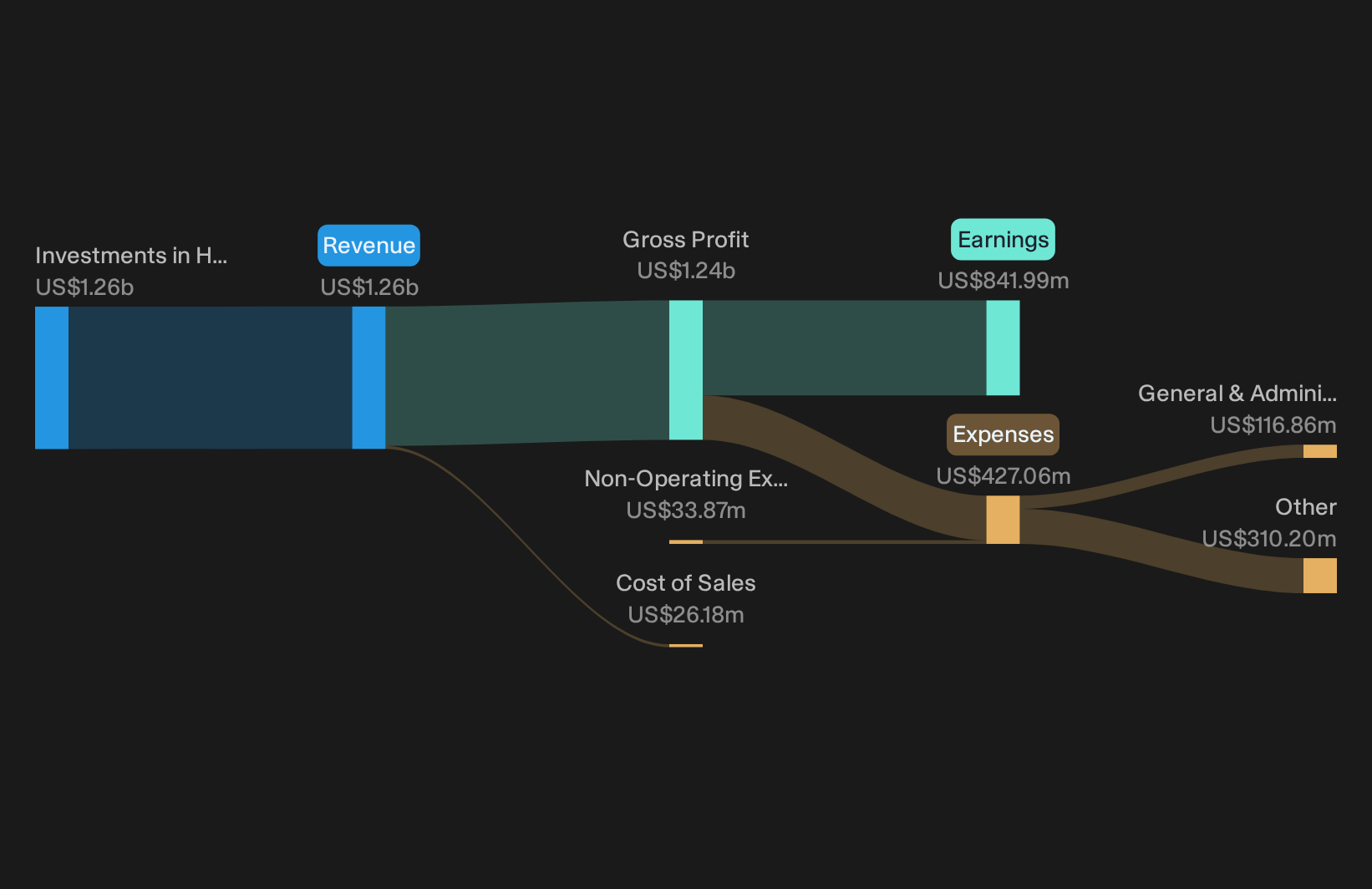
Omega Healthcare Investors is a healthcare focused REIT that owns skilled nursing and assisted living facilities, mainly under triple net leases, aligning with the screener’s search for large, income oriented U.S. stocks. It generated about US$1.3b from investments in healthcare related real estate properties and has a market value around US$14.7b.
In a world where inflation looks stickier and growth stocks feel more rate sensitive, Omega Healthcare Investors presents a different kind of profile built around contracted rent, operator coverage, and the ability to keep paying investors while others focus on multiple compression.
"Ongoing aging of the baby boomer population, together with limited new skilled nursing facility construction in many states, is expected to keep demand firm for Omega Healthcare Investors’ properties and support occupancy and rent coverage, which can feed through to revenue and earnings over time."
The key issue is how much of that steady demand can still flow through to margins if one unseen pressure inside the operator base shifts course.
If that unseen pressure matters to you, the full narrative for Omega Healthcare Investors explains how Omega Healthcare Investors could potentially turn operator stress into stronger cash flow resilience and more durable dividend coverage.
Seeking Alternatives Before Others Catch On
Fresh ideas do not stay under the radar for long. Momentum builds, prices move, and the cleanest entry points get caught by faster money. Act now.
- Spot income workhorses before yields start dropping by scanning a curated pool of potential 5 dividend fortresses, built to keep distributions front and center.
- Hunt for resilient operators while fear still misprices quality through a tight shortlist drawn from the 30 resilient stocks with low risk scores, which filters out weak balance sheets early.
- Ride the next wave of infrastructure spend by zeroing in on under-the-radar builders, sourced from the hand picked 42 power grid technology and infrastructure stocks powering tomorrow’s energy backbone.
Have feedback on this article? Concerned about the content? Get in touch with us directly. Alternatively, email editorial-team@simplywallst.com