
Is Consolidated Edison (ED) Fully Valued Following Its Dividend Affirmation?
Consolidated Edison (ED) just affirmed a quarterly dividend of US$0.8875 per share, payable on December 15, 2026. This decision is keeping the stock focused on income considerations as the next earnings release approaches.
Consolidated Edison shares trade at US$115.03. That price sits on top of a 30-day share price return of 11.57% and a year-to-date share price gain of 15.04%. The 1-year total shareholder return of 20.59% points to momentum that has built over a longer stretch rather than just the recent dividend affirmation.
Scan beyond Consolidated Edison and compare its recent income-focused run with a curated set of 5 dividend fortresses built around resilient payouts and higher yields.
Consolidated Edison has delivered strong recent gains for a utility, which raises a simple question. Does that move reflect improving fundamentals, or a sentiment swing that has pushed the valuation too far ahead?
Most Popular Narrative: 7% Overvalued
Consolidated Edison last closed at $115.03, which sits above the most followed fair value estimate of $107.44 that is based on a 7.24% discount rate and analyst cash flow assumptions.
Planned infrastructure investment of about US$38b over the next five years and US$72b over the next decade at CECONY is expected to expand Consolidated Edison’s regulated asset base, which can support future revenue and earnings tied to that growing rate base.
See why 1 investors see Consolidated Edison as 7% overvalued.
Result: Fair Value of $107.44 (OVERVALUED)
Still, the Consolidated Edison narrative leans heavily on regulators approving large capital plans, and on extreme weather not forcing materially higher unplanned reliability spending.
Find out about the key risks to this Consolidated Edison narrative.
Another View On Consolidated Edison’s Valuation
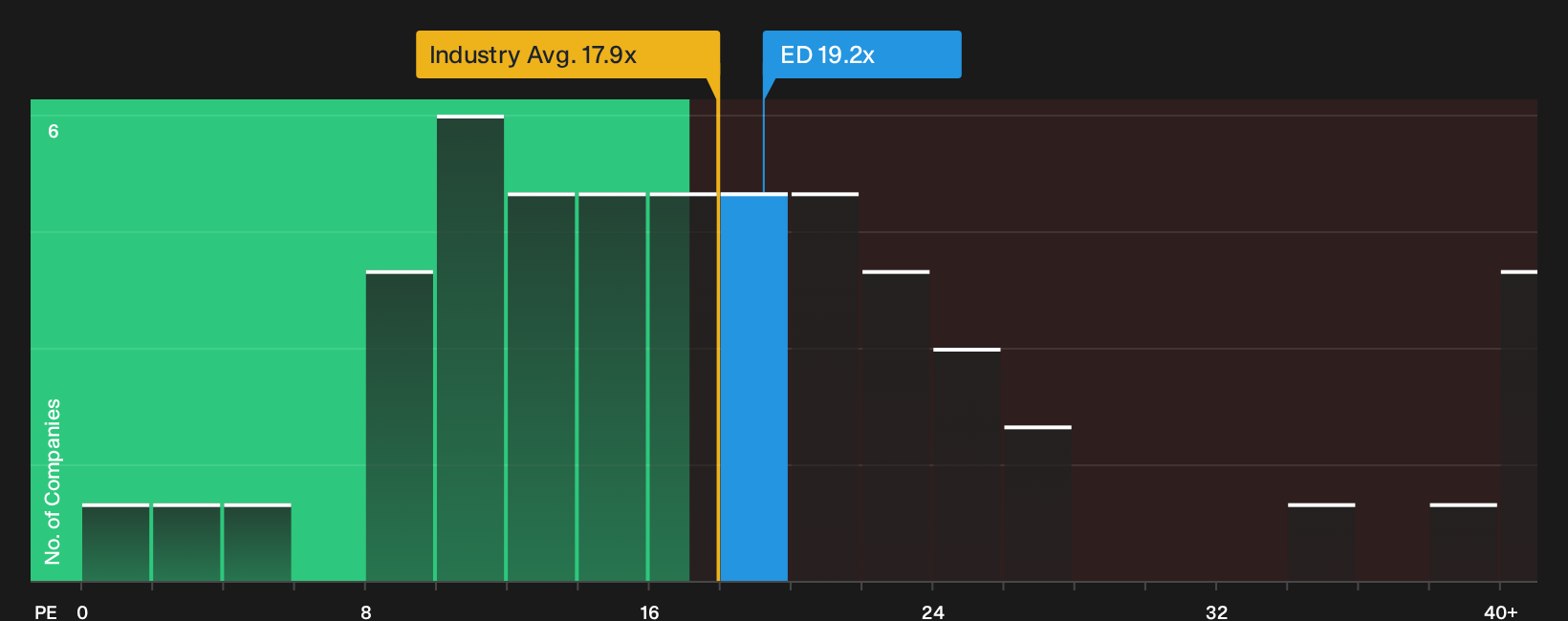
That 7% premium to fair value from the SWS DCF model clashes with how the market is pricing Consolidated Edison on earnings. The stock trades on a P/E of 19.2x, below the Integrated Utilities industry on 21.4x and under a fair ratio of 20.3x, which points to less valuation stretch than the cash flow work implies. Which signal do you trust more when growth is steady but not rapid?
To pressure test that P/E gap and see what the numbers imply for future upside or downside risk, take a look at the See what the numbers say about this price — find out in our valuation breakdown..
Next Steps
Mixed messages on Consolidated Edison’s value story so far. If you want to move quickly and base your call on the underlying data, consider the 3 key rewards and 2 important warning signs to help weigh the balance of risks and rewards.
Looking for more investment ideas beyond Consolidated Edison?
If Consolidated Edison has your attention, do not stop there. Broader idea hunting can help you balance risk, income, and long term growth potential.
- Target resilience first by scanning a 30 resilient stocks with low risk scores that focuses on businesses with stronger balance sheets and lower overall risk scores.
- Hunt for value opportunities by checking a 29 high quality undervalued stocks that blends quality fundamentals with potentially mispriced share prices.
- Spot potential future leaders early through a 21 high quality undiscovered gems packed with under-the-radar companies backed by robust financial profiles.
Have feedback on this article? Concerned about the content? Get in touch with us directly. Alternatively, email editorial-team@simplywallst.com