
Should Grid Upgrade Plan Require Action From National Grid (LSE:NG.) Investors?
- National Grid has outlined plans to invest at least £70b between now and FY31 to reinforce its UK and US electricity networks for renewables, while targeting 8 to 10% underlying EPS growth and dividends that move in line with UK CPIH.
- The enlarged capital programme concentrates spend in UK and Northeast US grids, signalling a heavier tilt toward regulated asset growth tied to renewable connections and rising power demand from data centers and AI loads.
- We will now look at how National Grid's larger £70b investment plan could reshape the existing investment narrative for the group.
Scan other companies plugged into the grid upgrade theme and compare National Grid's plan with a handpicked set of 44 power grid technology and infrastructure stocks
National Grid Investment Narrative Recap
For an investor in National Grid, the core belief is that a heavily regulated electricity and gas network can keep turning large, predictable capital spend into allowed returns over time. The new plan of at least £70b to FY31 leans into that idea, but also raises the operational bar, because delivery risk and execution complexity both increase as the pipeline grows.
In the near term, the main swing factor is how regulators in the UK and US treat that higher capex in upcoming frameworks and rate cases. The key risk is that affordability pressure leads to tougher allowed returns or slower cost recovery, which would matter more than the headline size of the investment plan.
The most relevant recent development is the upgrade of National Grid's capex ambition from around £60b to at least £70b through FY31. That puts UK and Northeast US grids at the centre of the story, where management is pointing to around 10% annual asset growth as the backbone of future earnings and dividend progress.
That kind of capital intensity only works if funding, regulation and operations stay aligned. You should watch how the group manages debt that is not fully covered by operating cash flow, how RIIO T3 decisions land against the 5.7% baseline return, and whether demand from data centers and renewables actually converts into timely, remunerated grid projects.
Analysts looking at National Grid currently assume revenue growth of 9.0% a year, with earnings today of £3.2 billion projected to reach £5.4 billion by 2029. This implies an earnings increase of about £2.2 billion by that forecast year and sits alongside revenue expectations of £22.9 billion in 2029.
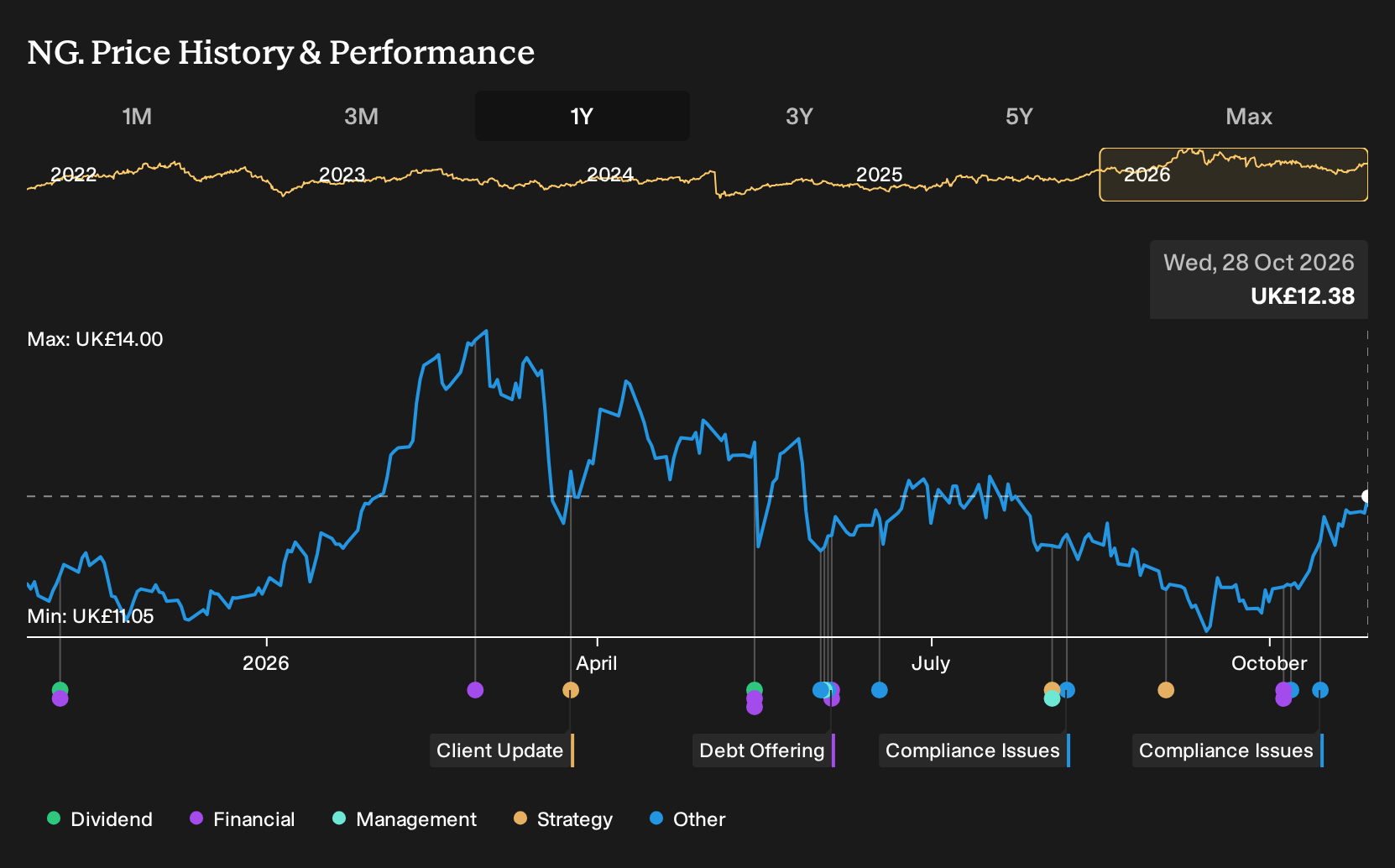
Discover why National Grid's fair value points to a 7% potential upside from its current price, which could materialize sooner than many investors anticipate.
Exploring Other Perspectives
Fair value estimates for National Grid from four private investors in the Simply Wall St Community cluster tightly between £13.04 and £13.18 per share, so you are not seeing extreme bargain or bubble calls here. Those views also pre date the £70b plan, so evolving RIIO T3 outcomes and bill affordability debates could push future community opinions further apart. If you want a fuller picture, compare these crowd views with several alternative perspectives before leaning on any single number.
Explore 3 other National Grid fair value estimates, including one that suggests up to 7% upside from the current price.
Form Your Own Verdict
Disagree with existing narratives? Extraordinary investment returns rarely come from following the herd, so consider developing your own view.
- A great starting point for your National Grid research is our analysis highlighting 3 key rewards and 2 important warning signs that could impact your investment decision.
- See our latest analysis for National Grid. The report includes a comprehensive fundamental analysis summarized in a single visual, the Snowflake, making it easy to evaluate National Grid's overall financial health at a glance.
Looking for more investment ideas beyond National Grid?
If you want to stress test your National Grid view against other opportunities, a quick pass through the Simply Wall St Screener can surface very different types of companies that might suit your risk tolerance and income goals.
- If capital protection is front of mind, focus on resilience first and return second by scanning a curated set of 5 resilient stocks with low risk scores.
- If future upside is your priority, compare National Grid with a carefully filtered pool of 5 high quality undiscovered gems that have solid underlying fundamentals.
- If balance sheet strength matters most to you, build a watchlist starting with a targeted list of solid balance sheet and fundamentals (10 results).
Have feedback on this article? Concerned about the content? Get in touch with us directly. Alternatively, email editorial-team@simplywallst.com