
Does UK Sales Tactics Fine Change The Bull Case For Wayfair (W)?
- Wayfair was fined £4.8 million by the UK Competition and Markets Authority after the regulator found that some "Daily Deals" and "Flash Deals" used urgency tactics that did not match actual pricing timelines, with affected customers due refunds.
- The enforcement under the Digital Markets, Competition and Consumers Act 2024 highlights compliance and reputational pressures for Wayfair. It also adds potential cost and operational scrutiny around how promotions are designed and communicated on its platform.
- We will now examine how this CMA penalty for misleading time limited offers could influence Wayfair's longer term investment narrative.
Compare Wayfair's regulatory setback with peers that currently screen well on compliance and balance sheet strength by scanning our hand picked 32 resilient stocks with low risk scores in similar consumer facing sectors.
Wayfair Investment Narrative Recap
To own Wayfair, you need to believe the online furniture model can convert traffic into profitable orders despite a tough housing and big ticket demand backdrop. The key near term catalyst is execution on efficiency, including logistics, marketing spend and cost control, in the face of macro pressure on home goods. The CMA fine adds compliance expense and scrutiny but does not change this core operating debate.
The bigger risk is that heavy investment in advertising, technology and CastleGate logistics takes longer to translate into sustained margins while the housing market and international operations stay challenging. The regulatory decision mostly raises reputational and process risks, rather than fundamentally shifting those operating hurdles.
The upcoming September quarter earnings report on 4 November is the event most tightly linked to this CMA ruling. Investors will be watching whether Wayfair comments on changes to its promotional tooling, countdown timers and other urgency messaging, because these areas connect directly to conversion, basket size and refund liabilities.
Regulators are now using the Digital Markets, Competition and Consumers Act to police time limited offers, which puts Wayfair’s merchandising tests such as personalized promotions under a brighter spotlight. Any operational update on customer trust measures, refund handling and promotion design will factor into how you weigh the earnings catalyst against the risk of further compliance costs.
Wayfair Earnings Assumptions Behind The Story
Wayfair's narrative projects US$16.1b revenue and US$555.9m earnings by 2029. This rests on analysts using a 7.5% yearly revenue growth assumption and an earnings swing of about US$877m from a loss of US$321.0m today to the 2029 consensus figure.
Uncover why Wayfair's fair value indicates an 8% potential upside to its current price that could narrow quickly.
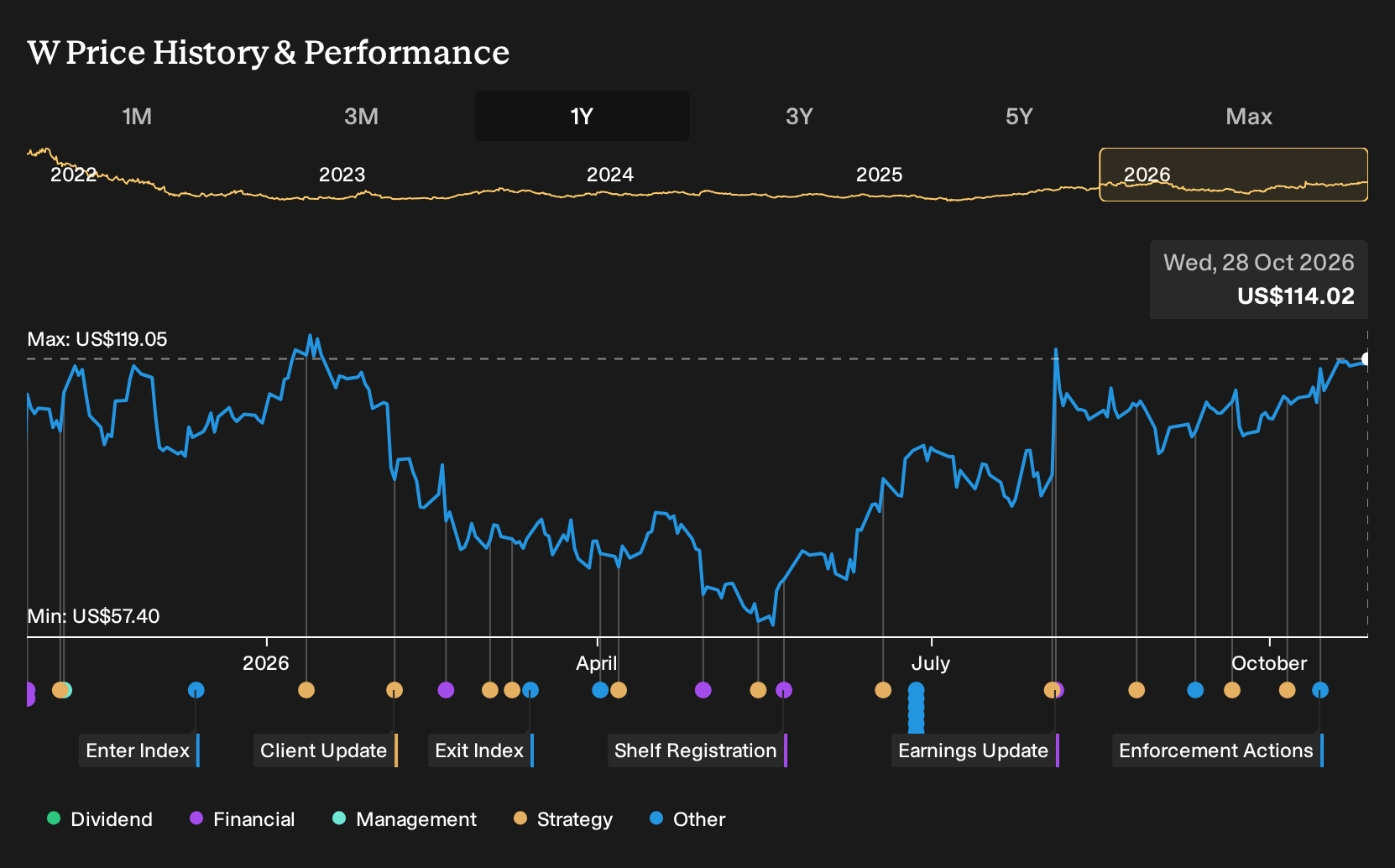
Exploring Other Perspectives
You might look at this CMA penalty and focus on trust risk, while the most optimistic Wayfair narrative still leans on store rollouts and premium banners. Those bullish analysts were pencilling in US$17.2b of revenue and US$1.0b of earnings by 2029. Both views came before this ruling, so assumptions may shift from here.
Explore 3 other Wayfair fair value estimates, including one that suggests as much as 87% upside from the current price!
Decide For Yourself
Disagree with existing narratives? Extraordinary investment returns rarely come from following the herd, so trust your instincts while relying on thorough research.
- A great starting point for your Wayfair research is our analysis highlighting 2 key rewards and 3 important warning signs that could impact your investment decision.
- See our latest analysis for Wayfair. The report includes a comprehensive fundamental analysis summarized in a single visual, the Snowflake, making it easy to evaluate Wayfair's overall financial health at a glance.
Looking For More Ideas Beyond Wayfair?
Wayfair may be central to this story, yet your portfolio decisions improve when you compare it with other businesses that pass different quality and risk filters. The Simply Wall St Screener can help you quickly surface stocks that match the kind of financial traits you want to focus on next.
- If capital preservation matters most, start with resilient candidates using our 32 resilient stocks with low risk scores to see which businesses currently show lower risk scores.
- For investors hunting for mispriced quality, scan our 26 high quality undervalued stocks to find companies that combine stronger balance sheets with more appealing valuations.
- If income is your priority, use the 6 dividend fortresses to zero in on businesses offering higher yields with a focus on durability.
Have feedback on this article? Concerned about the content? Get in touch with us directly. Alternatively, email editorial-team@simplywallst.com