
Norwegian Cruise Line’s (NYSE:NCLH) Q3 2026 sales beat estimates, stock jumps 10.9%

Cruise company Norwegian Cruise Line (NYSE:NCLH) reported revenue ahead of Wall Street’s expectations in Q3 2026, but revenue was flat year on year at $2.95 billion. Its GAAP profit of $1.07 per share was 20.2% above analysts’ consensus estimates.
For more on Norwegian Cruise Line, read the full research report for free.
Norwegian Cruise Line (NCLH) Q3 2026 highlights:
- Revenue $2.95 billion vs S&P analysts’ consensus estimates of $2.88 billion (flat year on year, 2.3% beat)
- EPS (GAAP) $1.07 vs analysts’ consensus estimates of $0.89 (20.2% beat)
- Adjusted EBITDA $936.8 million vs analysts’ consensus estimates of $898 million (31.8% margin, 4.3% beat)
- EBITDA guidance $2.55 billio for the full year, above analysts’ consensus estimates of $2.52 billion
- Operating margin 21.2%, down from 25.5% in the same quarter last year
- Free cash flow -$105.4 million compared to -$726.5 million in the same quarter last year
- Passenger cruise days increased 376,695 year on year
- Market capitalization $7.37 billion
“We delivered third quarter results that came in above guidance, all while continuing to strengthen our commercial capabilities, improve operating efficiency and enhance the guest experience,” said John W. Chidsey, Chairperson and Chief Executive Officer of Norwegian Cruise Line Holdings Ltd. “As we implement the next phase of our turnaround, we are focused on sharpening Norwegian Cruise Line’s brand positioning, improving marketing effectiveness and taking a more disciplined approach to revenue management as well as a prudent base-loading strategy. We are seeing the early signs of progress and expect Net Yield growth of 1% to 2% in 2027, with a meaningful acceleration in the back half of the year.”
Revenue growth
A company’s long-term revenue performance is one signal of its overall quality. Any business can deliver a good quarter or two, but the best consistently grow over the long haul. Over the last five years, Norwegian Cruise Line grew its revenue at a 127% compounded annual growth rate. Its growth beat the average consumer discretionary company and shows its offerings resonate with customers.
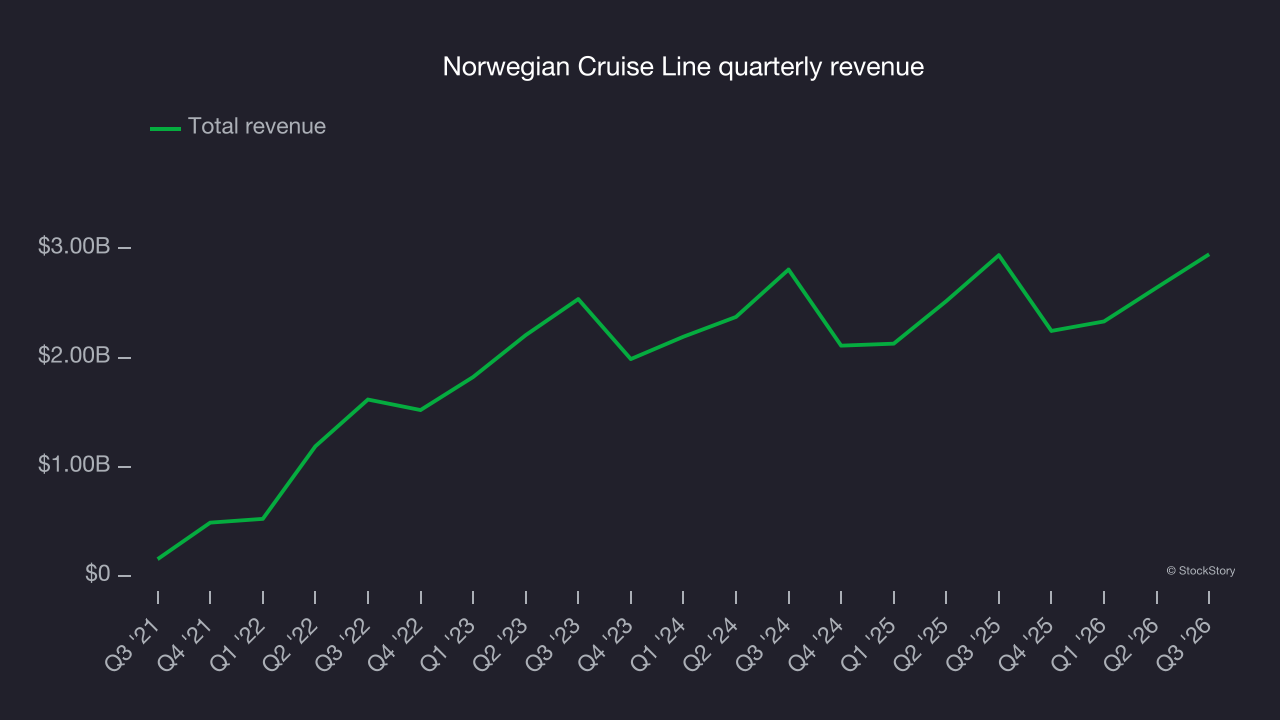
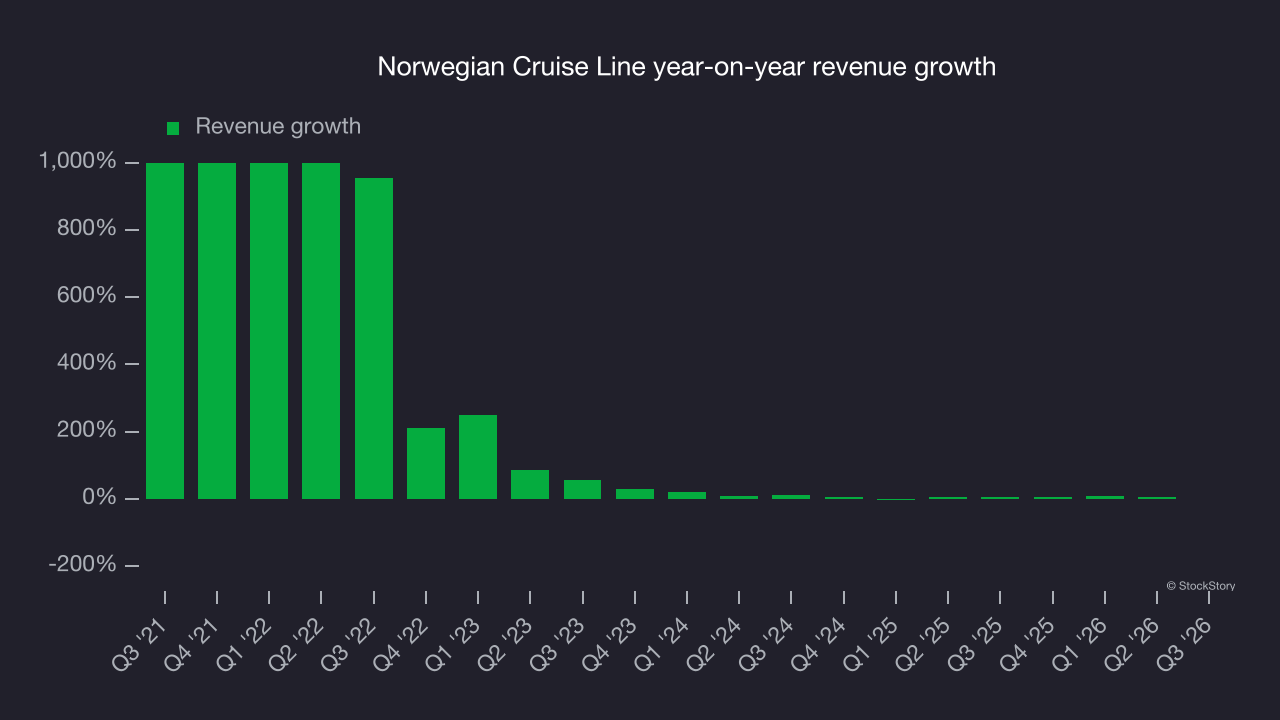
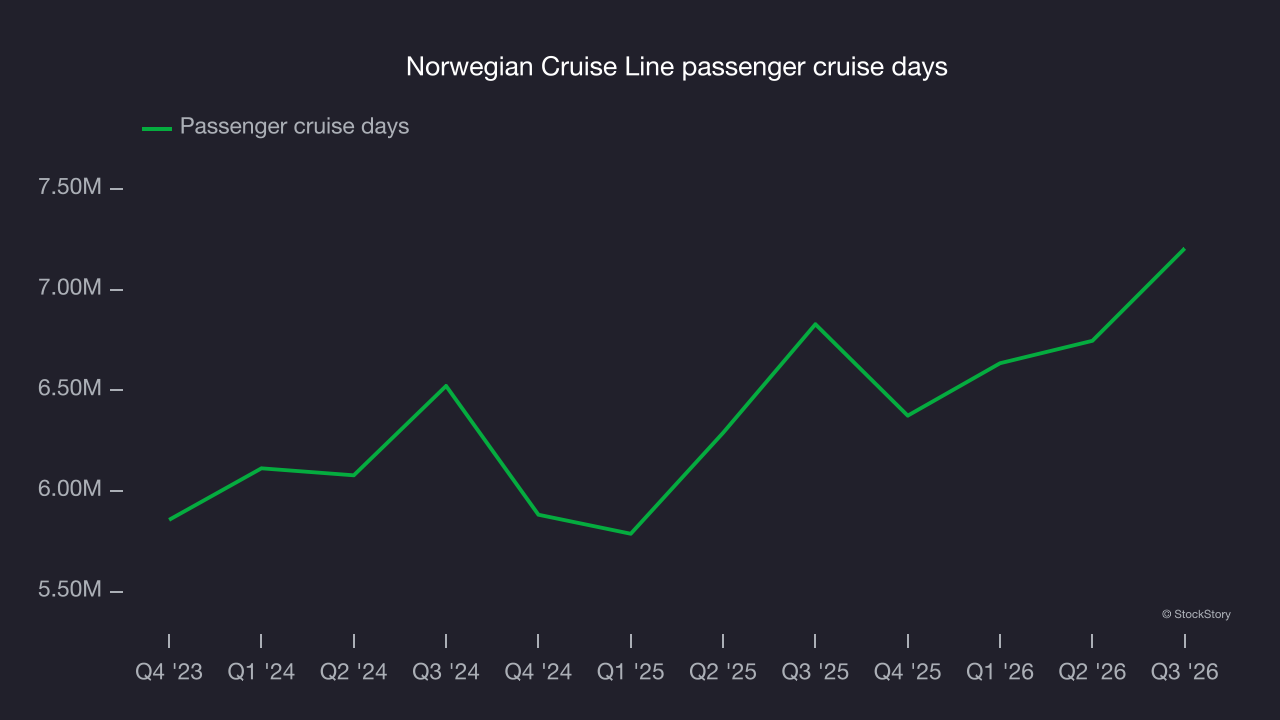
This quarter, Norwegian Cruise Line’s $2.95 billion of revenue was flat year on year but beat Wall Street’s consensus estimates by 2.3%.
Looking ahead, sell-side analysts expect revenue to grow 2.1% over the next 12 months, according to S&P, a slight deceleration versus the last two years. This underwhelming projection implies its products and services will see some demand headwinds.
Operating margin
Norwegian Cruise Line’s operating margin has shrunk over the last 12 months and averaged 15.1% over the last two years. Although this is a weak result, the company’s strong historical revenue growth suggests it increased investments to capture market share. It remains to be seen whether this strategy pays off.
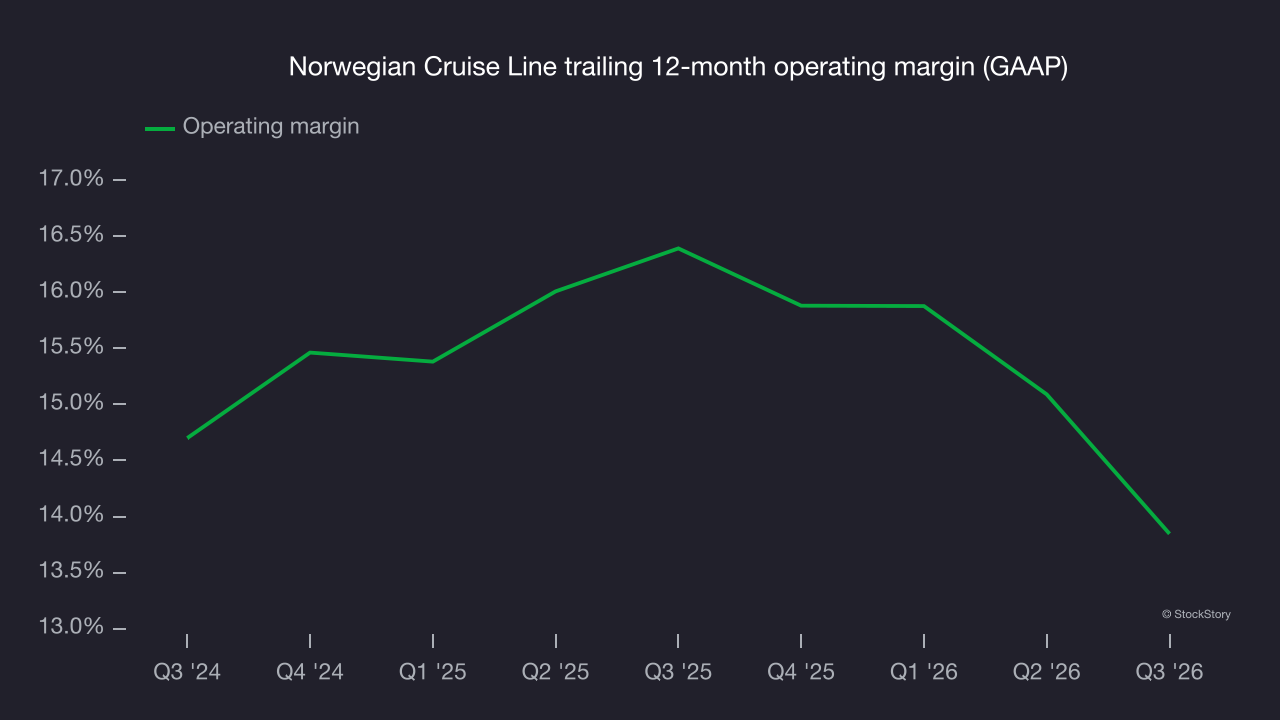
This quarter, Norwegian Cruise Line generated an operating margin of 21.2%, down 4.3 percentage points year on year. This contraction shows it was less efficient because its expenses increased relative to its revenue.
Earnings per share
Revenue trends explain a company’s historical growth, but the long-term change in earnings per share (EPS) points to the profitability of that growth. For example, a company could inflate its revenue through excessive spending on advertising and promotions.
Norwegian Cruise Line’s full-year EPS flipped from negative to positive over the last five years. The shift is a positive sign and marks a critical juncture for the company.
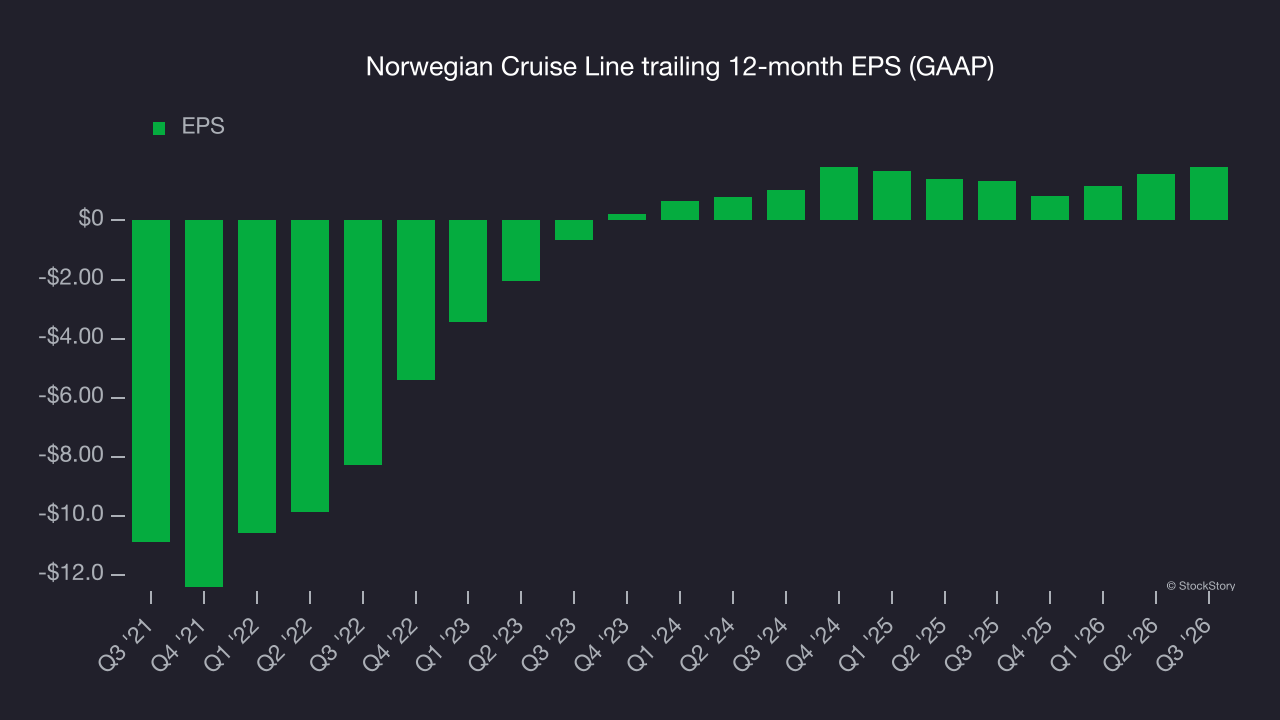
In Q3, Norwegian Cruise Line reported EPS of $1.07, up from $0.85 in the same quarter last year. The result comfortably beat analysts’ consensus estimates and should satisfy shareholders. Over the next 12 months, Wall Street expects Norwegian Cruise Line’s full-year EPS to shrink by 37.1% from $1.80 to $1.14, according to S&P.
Key takeaways from Norwegian Cruise Line’s Q3 results
Norwegian Cruise Line delivered some key positives in Q3, with EPS and revenue topping analysts’ consensus estimates. Next-quarter EBITDA guidance, however, fell short of expectations. Shares soared 10.9% to $17.80 immediately after the report.
Norwegian Cruise Line may have had a good quarter, but that alone doesn’t make the stock a good investment. The latest quarter matters, but not as much as longer-term business quality and valuation when deciding whether to invest in the stock. For more on Norwegian Cruise Line, read the full research report here (it’s free).