
Wall Street Says Micron Stock Could Climb 73% in a Year
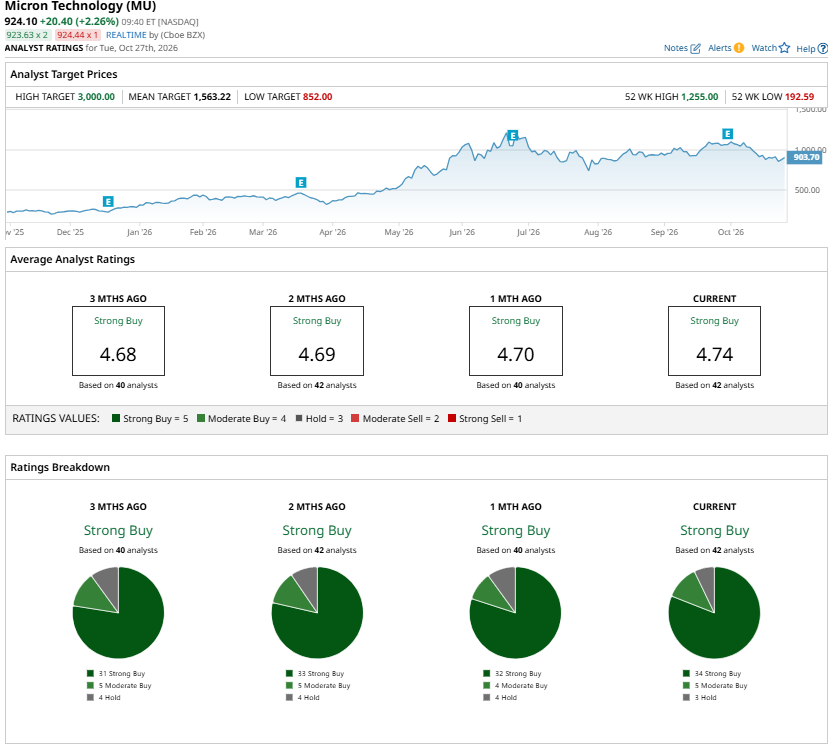
After a significant rally, Micron (MU) stock has cooled a bit. It has pulled back around 28% from its high. The decline comes amid growing investor concerns about demand durability, sustainable memory-chip pricing, and intensifying industry competition. However, analysts remain optimistic, suggesting the recent correction offers a buying opportunity.
Based on the analysts’ average price target of $1,563.22, Micron shares could gain approximately 73% over the next 12 months from their October 26 closing price of $903.70. Here are the factors that could push Micron stock higher.
Micron to Deliver Record Growth in FY2027
Micron delivered an exceptional performance in fiscal 2026, supported by strong demand for memory products, favorable pricing dynamics, and accelerating investment in AI infrastructure. Revenue reached $133.2 billion, up from $37.4 billion in fiscal 2025, while data center revenue rose fourfold. Annual DRAM revenue exceeded $100 billion, and earnings per share (EPS) rose 811%, reflecting the substantial impact of higher memory prices amid constrained industry supply.
Looking ahead, Micron appears well positioned to sustain its growth trajectory in fiscal 2027, with the potential for further improvement in fiscal 2028. Demand for high-performance memory and storage is strengthening. At the same time, supply constraints are expected to persist, creating a favorable pricing environment.
The data center segment is expected to remain a key growth driver, supported by higher shipment volumes and improved pricing. Micron is expanding its high-bandwidth memory (HBM) business across a broader customer base. The company has secured agreements covering most of its HBM bit supply for calendar 2027, with substantial year-over-year price increases. These agreements provide greater revenue visibility and indicate strong customer demand. Furthermore, higher HBM pricing is helping narrow the gross margin differential between HBM and conventional DRAM. Continued execution on the HBM4 production ramp, alongside a developed pipeline of next-generation products, strengthens Micron’s competitive position and supports longer-term growth.
In NAND, expanding AI-related workloads are creating additional demand for enterprise solid-state drives (SSDs). Micron’s data center SSD revenue reached nearly $10 billion in the fourth quarter of fiscal 2026, more than 10 times the year-ago level and accounting for over two-thirds of total company NAND revenue. This shift suggests that enterprise storage is becoming an increasingly important contributor to Micron’s NAND business, and this momentum will continue into fiscal 2027.
Overall, Micron is set to deliver another record fiscal 2027, with revenue expected to increase each quarter sequentially. Gross margins are projected to hit their lowest point in the first quarter before improving for the rest of the fiscal year.
Micron’s Strategic Customer Agreements (SCAs) to Support Growth
Micron’s SCAs are a key strategic advantage, improving revenue visibility, demand planning, and predictability in long-term financial performance. By incorporating multi-year, take-or-pay commitments, these agreements give Micron greater certainty about future demand and supply requirements, potentially reducing revenue volatility and strengthening its investment appeal.
Micron has signed 26 SCAs, which the company currently estimates will account for more than 35% of its revenue through 2030. Predefined pricing frameworks cover approximately 75% of the anticipated revenue from these agreements. The remaining 25% is subject to periodic price negotiations linked to prevailing market prices, allowing Micron to participate more in changes in industry pricing.
Importantly, new SCA pricing negotiations are occurring at higher levels, reflecting current market conditions. This suggests that Micron could benefit from improved pricing economics as new agreements are established or existing arrangements evolve.
Micron’s Valuation Supports Further Upside
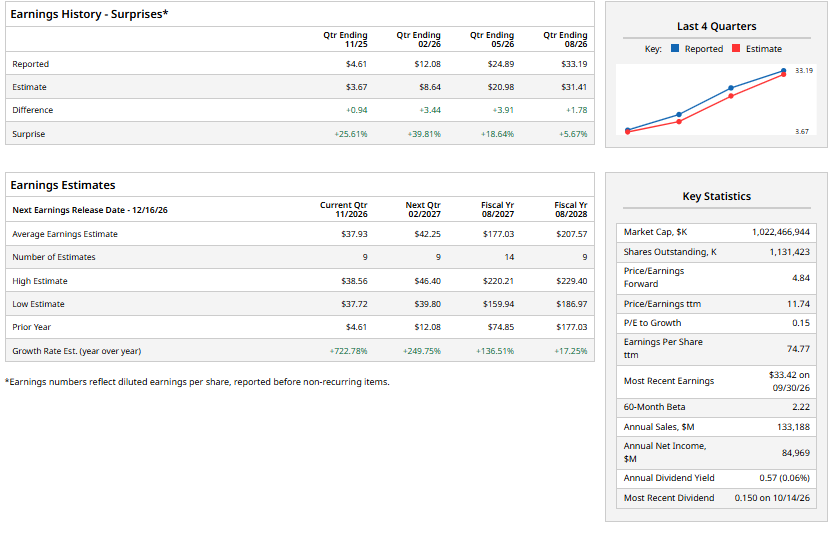
Despite Micron's substantial share price appreciation over the past year, its valuation still suggests meaningful upside potential. MU trades at 4.8 times forward earnings, a relatively low multiple given its solid projected earnings trajectory. Analyst consensus estimates point to a 136.5% increase in fiscal 2027 EPS, highlighting significant earnings expansion even against a strong year-over-year comparison.
Robust earnings growth expectations and a low forward P/E multiple present a compelling investment case.
The Bottom Line: Micron Stock to Rise Higher
Micron’s growth prospects remain compelling, supported by strong AI-driven memory demand, constrained supply, rising HBM adoption, and SCAs that improve revenue visibility. Combined with robust earnings growth expectations and a relatively low forward valuation, these factors could drive Micron stock higher over the next 12 months.
On the date of publication, Sneha Nahata did not directly have a position in any of the securities mentioned in this article. All information and data in this article is solely for informational purposes. For more information please view the Barchart Disclosure Policy here.