
Seventeen days of a chip, a group of veterans of Zheku's reverse journey
At 15:00 on October 29, the Suzhou International Conference Hotel was 19 degrees. The air was cool. The XHEART Xinchip X7 Ultra model chip press conference was underway.
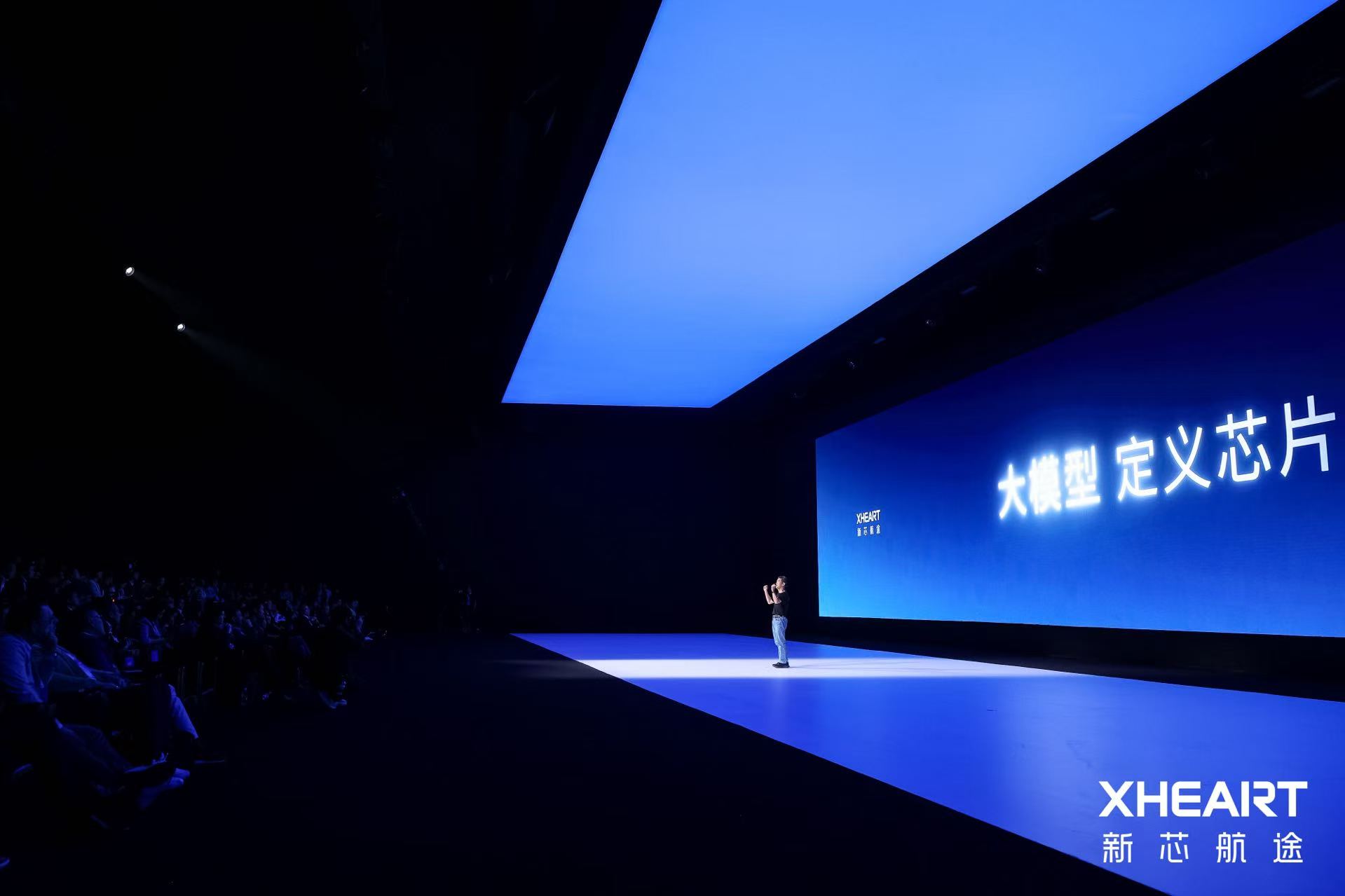
On stage, CEO Lee Tsung-lin — wearing a denim jacket and a black T-shirt with the “XHEART” logo on it — slowed down when talking about a detail.
“That colleague from the XHEART team was asked by HR when he would return before he left. “I don't know either,” he said. So I bought a one-way ticket first.”
The stage was quiet for a moment, then applause erupted. These include Turing Award winner Jack Dongarra, TSMC Deputy General Manager Chen Ping, SAIC Motor Chief Engineer Zu Sijie, and Momenta CEO Cao Xudong.
That ticket with no return date was the first footnote after a group of chip veterans made their choice in the winter of 2023.
1. People who left
The story goes back to three years ago.
OPPO Zheku disbanded, and after an 18-minute full meeting, Li Zonglin stood in front of the stage and left a phrase that was later quoted over and over again: “The past three years have been the most colorful experience in my life.”
He is the COO of Zheku. Earlier, he was the general manager of MediaTek's wireless communications division. He led the Helio processor and Tianji chip series — one of the best teams in the mobile phone chip industry. In four years, there were nearly 3,000 people, and the 4nm flagship SoC just released. Under one order, all the staff scattered.
But the veteran didn't quit. In the summer of 2023, Li Zonglin brought more than 10 cores, including software director Jia Mingjun and SoC senior director Yu Guojun, along with nearly 100 engineers, to the Momenta (06880) system as a whole; in December of the same year, the chip project became independent, and Xinchip Hangtu was registered and established in Suzhou.
First a team, then a company. This order determined that it was able to run at an abnormal speed later.
“Starting over made us more careful. What exactly are you going to do this time? Will chips be made in a few years what the market needs?” Lee Chong-lin said.
The fate came very quickly. They met Momenta CEO Cao Xudong. “Let's talk about technology, about the market, and about how intelligent driving will change in the next few years.”
After a few long discussions, the two judgments gradually became clear.
First, the big model will change intelligent driving, and will also change the way chips are designed. In the past, intelligent driving systems were pieced together by many small models — sensing one, predicting one, and planning after another, and a lot of information was lost in transmission.” In the age of small models, it was essentially a human brain-driven system.” Lee Chong-lin said. The large end-to-end model allows massive data to be used effectively, but what about chips?
“Can computing power be used in a real system? Can the chips designed today keep up with tomorrow's models and obtain the required capabilities with reasonable energy consumption?”
The three questions must be answered together. The answer is six words: big models define chips. Instead of the model migrating to the hardware, the hardware is backwards - the model tells you where the calculation time is spent, and the chip buries the transistor.
Second, automobiles are the starting point for this transformation to first benefit more users.
The idea is sexy, and it's painful to do — with a cold winter of capital, small teams, and long-term investment in chips, every trade-off is a matter of life and death. They still followed this path that few people follow. The idea was only one sentence: first understand the big model, then design the chip.
2. 17 days
A mobile phone chip and a car chip are two opposite sets of muscle memory.
Mobile phones are used for general use, and hundreds of millions of units a year reduce the cost, and iteration is as fast as fashion; the car rules are the opposite — a single model sells 100,000 vehicles a year, one chip takes ten years to carry, and verification is measured on an annual basis, and the failure rate is close to zero.
MediaTek and Zheku left this group of people not a specific technology, but a schedule: which steps will stay stuck for how long, who holds them, and which steps must be buffered. Advanced manufacturing processes from 6nm to 4nm, low power consumption, and software and hardware collaboration are all in the same set of efforts.
As a result, the X7 Ultra has developed an “unconventional” look: ultra-large core NPU, TB-grade internal interconnection; specially designed hardware accelerators for Linear, Softmax, and Transpose; zero copies of the entire network. The measured NPU utilization rate was 98.7%, bandwidth consumption was reduced by 80%, and energy efficiency was doubled.
The results were surprising.
“We successfully lit the chip in less than 24 hours.” Lee Chong-lin said.
But lighting is just the first step. “What we want to deliver is a chip that can actually work stably and reliably on real vehicles.”
The first test car was on the road within a few days, but the team decided to use stricter mass production standards to redefine “getting on the car” — a complete system composed of a chip, underlying software, and a self-driving model, which must perform close to mass production on the real road.
“Detailed to every turn at every intersection, the driving trajectory planned by the model must be consistent with mass production standards.”
This standard is extremely strict for a chip that has just been born. But the team fought day and night. The system withstood the test until the test car drove steadily for several hours on urban roads, with no controls at all — day, night, and torrential rain.
It only took 17 days from the birth of the chip until the whole vehicle closed the loop.
On the 21st day, the test car entered the actual traffic flow and opened up the experience to customers.
“In other words, I'm skeptical.” The speaker was Chen Ping, the deputy manager of TSMC. He recalled the scene three years ago when he first heard Li Zonglin and Cao Xudong talk about their vision.
“He talked about the big model chip architecture, and Xudong talked about L3 and L4. At the time, I thought this was like something out of a sci-fi movie.”
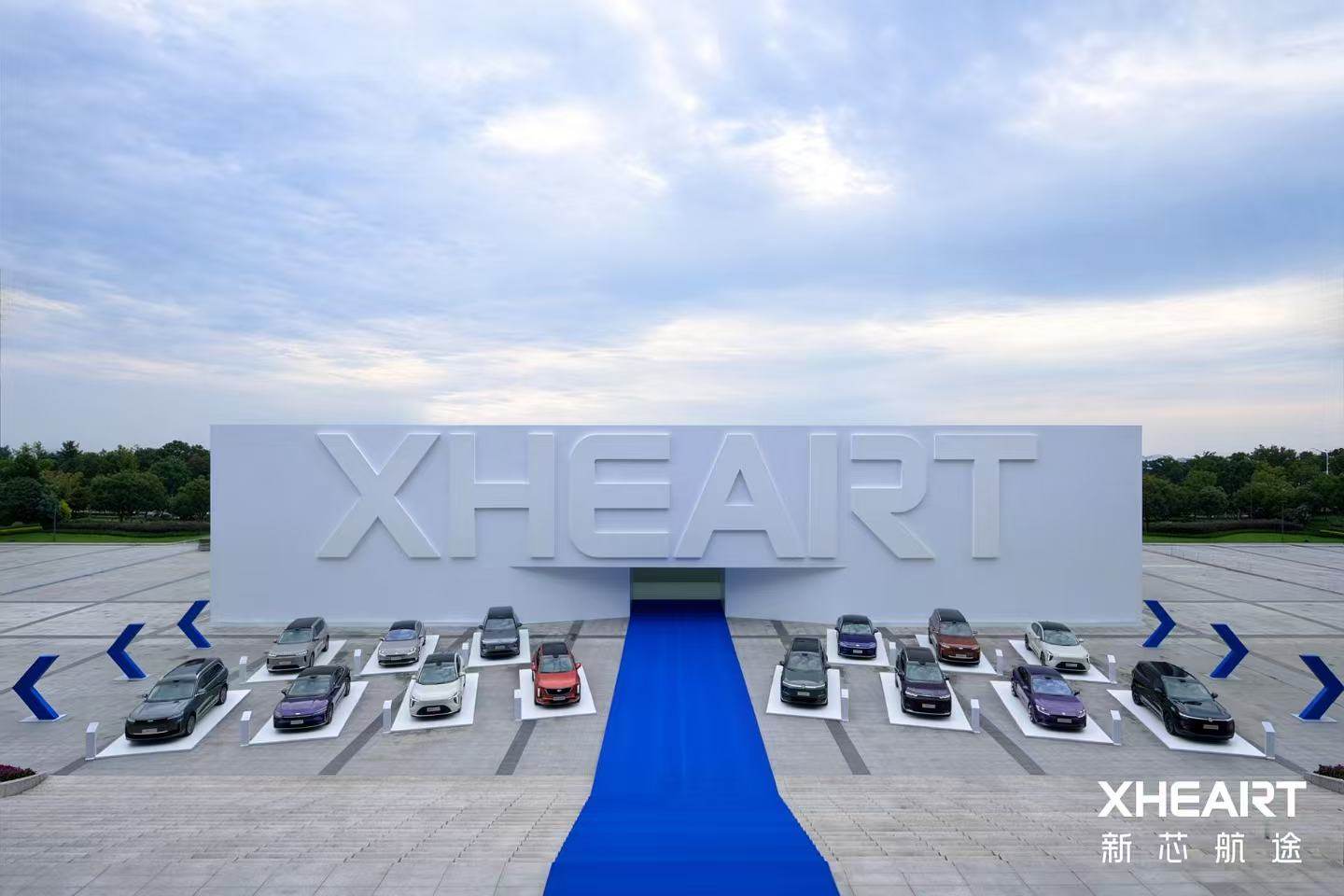
But today, Chen Ping walked into the venue and saw the models that had already been mass-produced at the entrance of the temporary XHEART Hall.
“In three years, one of the most advanced chips has been installed on so many models. Told me three years ago that I don't believe it anyway.” He paused and smiled, “So I must congratulate our partner.”
Data is the best footnote.
The chip was mass-produced for 8 months, and more than 200,000 units were shipped. It was installed in 10 mass-produced models, and orders were received for 40+ models. Momenta's cumulative mass production has exceeded 1.4 million units, with a mileage of 20 billion kilometers — equivalent to 25,000 trips to the Apollo moon.
This is the first time that the smart driving industry has experienced an inflection point where “data flywheel speed exceeds chip iteration”:
Based on the X7 Ultra, the R7 Ultra parameter scale of the Momenta world model has been increased by 5 times, the safety has been increased by 5 times, and the trend is moving from “understanding the world” to “deducing everything”.
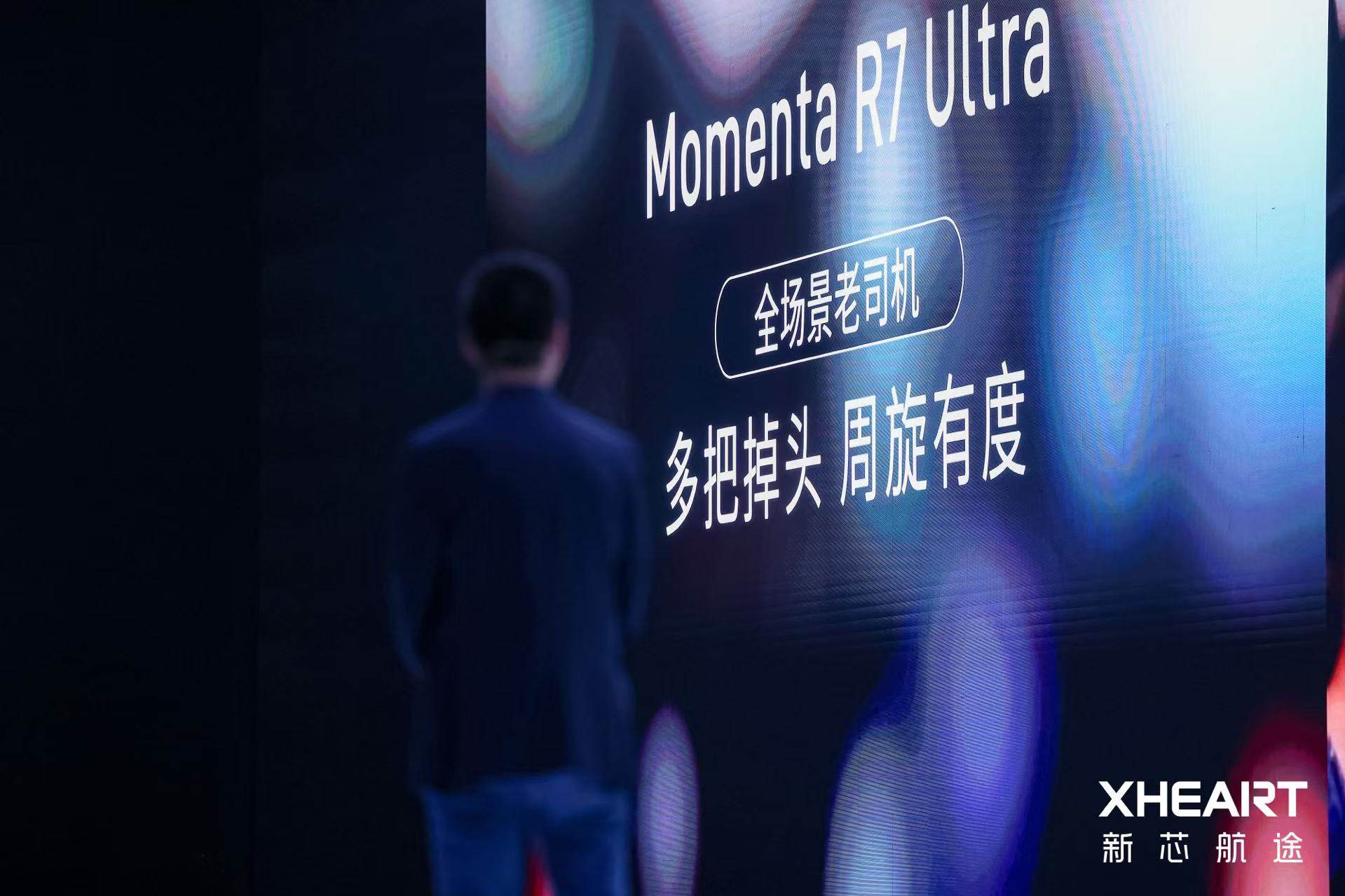
A video of actual media measurements was shown at the press conference: An autonomous vehicle was reversing and evading in a narrow section of the road, and waited patiently after sensing the opposite vehicle. The battery car started instantaneously after passing by, and the steering wheel was running while running, and the whole process was silky.
“From making lots of U-turns and car games to reversing and giving way and extreme parking — our feeling is that top notch can even surpass old human drivers.” Cao Xudong said.
SAIC Zusijie put it bluntly: “What consumers buy is not a numerical value of computing power; it is an actual experience.” Roewe, which costs 119,800 yuan, can also handle six-way intersections and 20 cm extreme parking.
3. Sci-fi reflected in reality
Following Li Zonglin, Cao Xudong also took the stage to express his feelings.
He quoted a quote from Kevin Kelly's “The Future of Artificial Intelligence”: “The brain uses large amounts of memory to construct a model of the world... The brain uses a model of memory to continuously predict future events.”
“The ability to predict the future is the key to intelligence.”
And big model chips are moving this predictive ability from the digital world to the physical world.
At the end of the round table, the host asked, “In the age of big models, what kind of chip do we need?”
Turing Award winner Jack Dongarra answered, “It's not the one with the highest peak; it's the one that gives the right answers on time, within the limits of power consumption, cost, and latency.” Zu Sijie added four words — “hexagon warrior.” Cao Xudong added two dimensions: “bigger, safer.”
XHEART revealed its bottom card on the spot: the next-generation X9, which targets 3000 TOPS and a single-chip bandwidth of 700 Gb/s, will be launched in 2027.
Cao Xudong pinned the timeline on the blackboard: from 2022 to 2026, smart driving capabilities will increase tenfold every two years; after the big model defines the chip, it will accelerate to 10 times per year; 2028, L3/L4 tipping point; by 2030, the safety will reach 100 times that of humans.
At the end of the press conference, Li Zonglin did not discuss the valuation. He only said, “This is not just a chip breakthrough; it's a form of a smart driving experience.”
Looking back, the one-way ticket I bought 3 years ago wasn't a success for a certain product; it was also a paradigm revolution.
In the past, chip companies compared computing power, algorithm companies compared models, and each ran on different tracks. XHeart and Momenta have welded them into one: the model pulls the chip, the chip holds the model, the mass-produced car returns data, and the data retrains the model.
A few days ago, XHEART promoted the financing of nearly 5 billion dollars. Changxin made an exception, Renault placed its first bet, and the shareholder list was crowded with automakers, storage leaders, and the national team. What they bought was not a silicon wafer, but a team that went through the entire process of the flagship big chip.
On the day that Daeku left, Li Zonglin said “the most colorful part” was over. No one could have imagined that the same group of people spent more than two years rewriting the engineering mass production discipline they had saved from failure into a large-scale car model chip.
There are stars scattered all over the sky, and the gathering is a cloud of fire. When a one-way plane falls, and when a chip begins to be created to “predict the world,” this group of veterans also re-wrote themselves into the beginning story of the end of smart driving.