
Will Raised Guidance Change Eli Lilly Stock Narrative
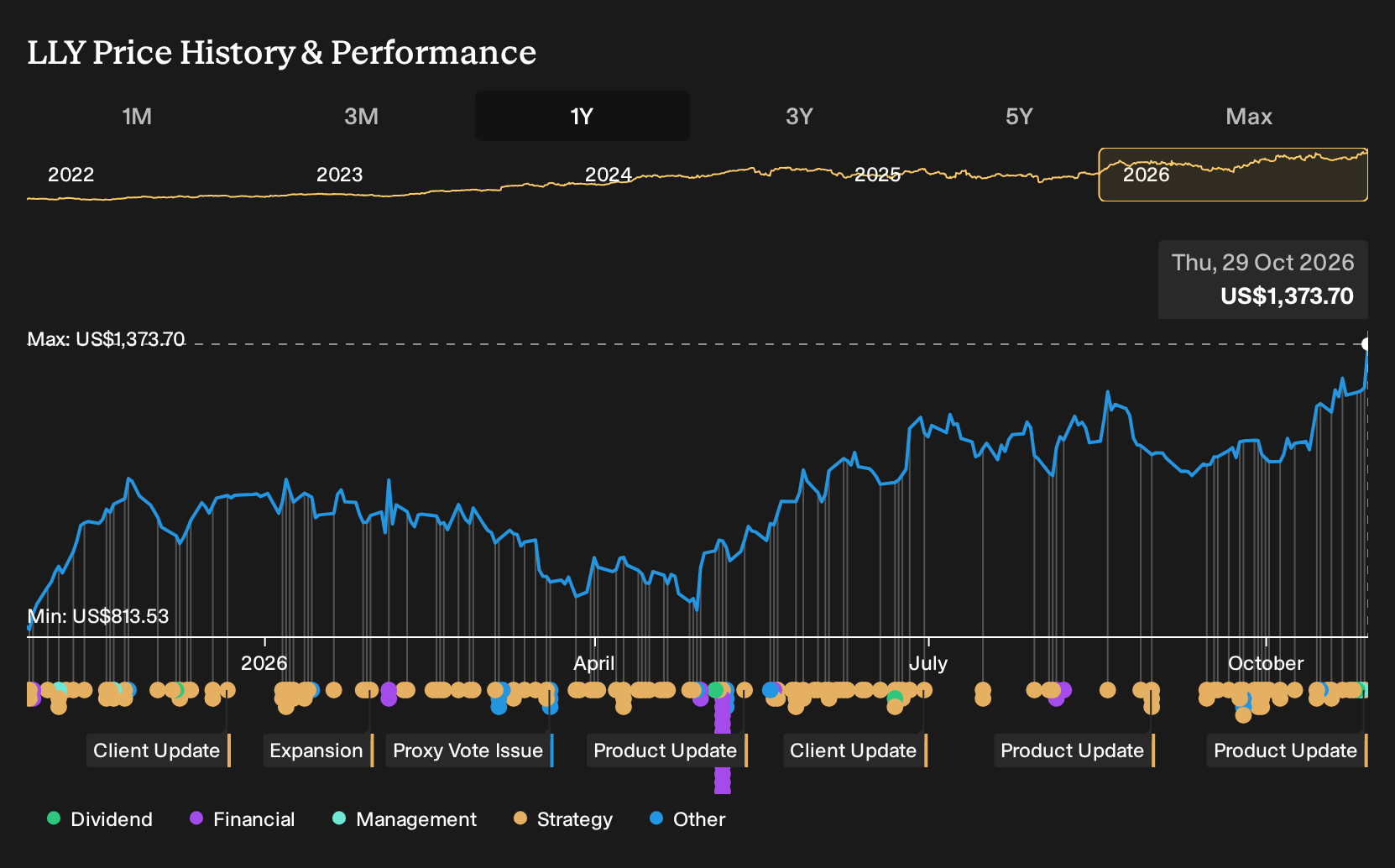
- Eli Lilly lifted its 2026 revenue outlook to US$91b to US$92b after third quarter sales of US$24.4b and net income of US$6.45b, supported by strong demand for Mounjaro and Zepbound.
- Positive Phase 3 data showing retatrutide delivered greater A1C reduction and more than double the weight loss of Ozempic strengthens Eli Lilly's broader cardiometabolic franchise beyond current GLP-1 leaders.
- We will now look at how Eli Lilly's raised 2026 revenue guidance reshapes the investment narrative around its cardiometabolic engine.
Scan Eli Lilly's cardiometabolic story alongside other potential breakout health names by checking the hand picked 36 healthcare AI stocks while this GLP-1 momentum is front of mind.
Eli Lilly Investment Narrative Recap
For an investor to stay in Eli Lilly today, the core belief is that the cardiometabolic engine around Mounjaro, Zepbound and future incretins can keep translating strong prescription demand into sustained access and reimbursement. The raised 2026 revenue outlook to US$91b to US$92b leans into that view and makes volume the key short term catalyst.
The flip side is that pricing pressure and legal exposure around GLP 1 drugs are already live issues, not background noise. Higher guidance does not remove those risks. It does amplify the importance of keeping net pricing declines contained and avoiding disruptions from lawsuits that could dent earnings quality or future cash generation.
The most relevant fresh datapoint for that thesis is the TRANSCEND T2D 2 Phase 3 readout. Retatrutide showed larger A1C reductions and more than double the weight loss of injectable Ozempic 2 mg at 80 weeks, with additional cardiometabolic markers moving in the right direction and tolerability that regulators will scrutinise closely.
If retatrutide eventually joins Mounjaro and Zepbound, Eli Lilly gains another flagship incretin agent that could matter for both revenue concentration risk and long term capacity planning. For now it remains investigational, so the real operational test is whether Lilly can execute on trials, filings and manufacturing build out without overextending balance sheet flexibility or product supply.
How Eli Lilly's Consensus Forecasts Frame The GLP 1 Story
Eli Lilly's narrative projects US$118.9b of revenue and US$50.1b of earnings by 2029, based on analyst models that tie together the cardiometabolic pipeline, manufacturing build out and current product momentum. This is based on an assumption of 14.3% yearly revenue growth and an earnings increase of about US$23.4b from US$26.7b today to the 2029 consensus level.
Uncover why Eli Lilly's fair value indicates a 3% potential downside to its current price, which leaves little room for error.
Exploring Other Perspectives
One angle the lowest Eli Lilly analysts focus on is capacity risk. They worry that more than US$50b of manufacturing projects and a US$6.5b Houston site could weigh on profitability if pricing pressure bites harder. Before this guidance hike, that group was modelling about US$110.2b of 2029 revenue and US$44.7b of earnings. The raised 2026 outlook could push those expectations higher or convince you to compare several narratives yourself.
Explore 12 other Eli Lilly fair value estimates, including one that suggests as much as 13% downside from the current price.
Reach Your Own Conclusion
Don't just follow the ticker. Dig into the data and build a conviction that's truly your own.
- A great starting point for your Eli Lilly research is our analysis highlighting 3 key rewards and 1 important warning sign that could impact your investment decision.
- See our latest analysis for Eli Lilly. The report includes a comprehensive fundamental analysis summarized in a single visual, the Snowflake, making it easy to evaluate Eli Lilly's overall financial health at a glance.
Looking For More Ideas Beyond Eli Lilly?
Once you have a view on Eli Lilly, it often helps to compare that conviction with a few very different opportunities that still meet your quality bar. The Simply Wall St Screener lets you scan for stocks that match specific traits, so you can put Eli Lilly in context rather than assessing it in isolation.
- If you want potential value with support from fundamentals, start with a curated 30 high quality undervalued stocks that filter for quality alongside price.
- For income focused investing, consider companies that combine higher yields with resilience by reviewing a focused 7 dividend fortresses that prioritise stability as much as payouts.
- When capital preservation is your priority, narrow the field to a 30 resilient stocks with low risk scores that score well on balance sheet strength and volatility.
Have feedback on this article? Concerned about the content? Get in touch with us directly. Alternatively, email editorial-team@simplywallst.com