
How $6b Automation Rollout Will Impact Walmart (WMT) Investors
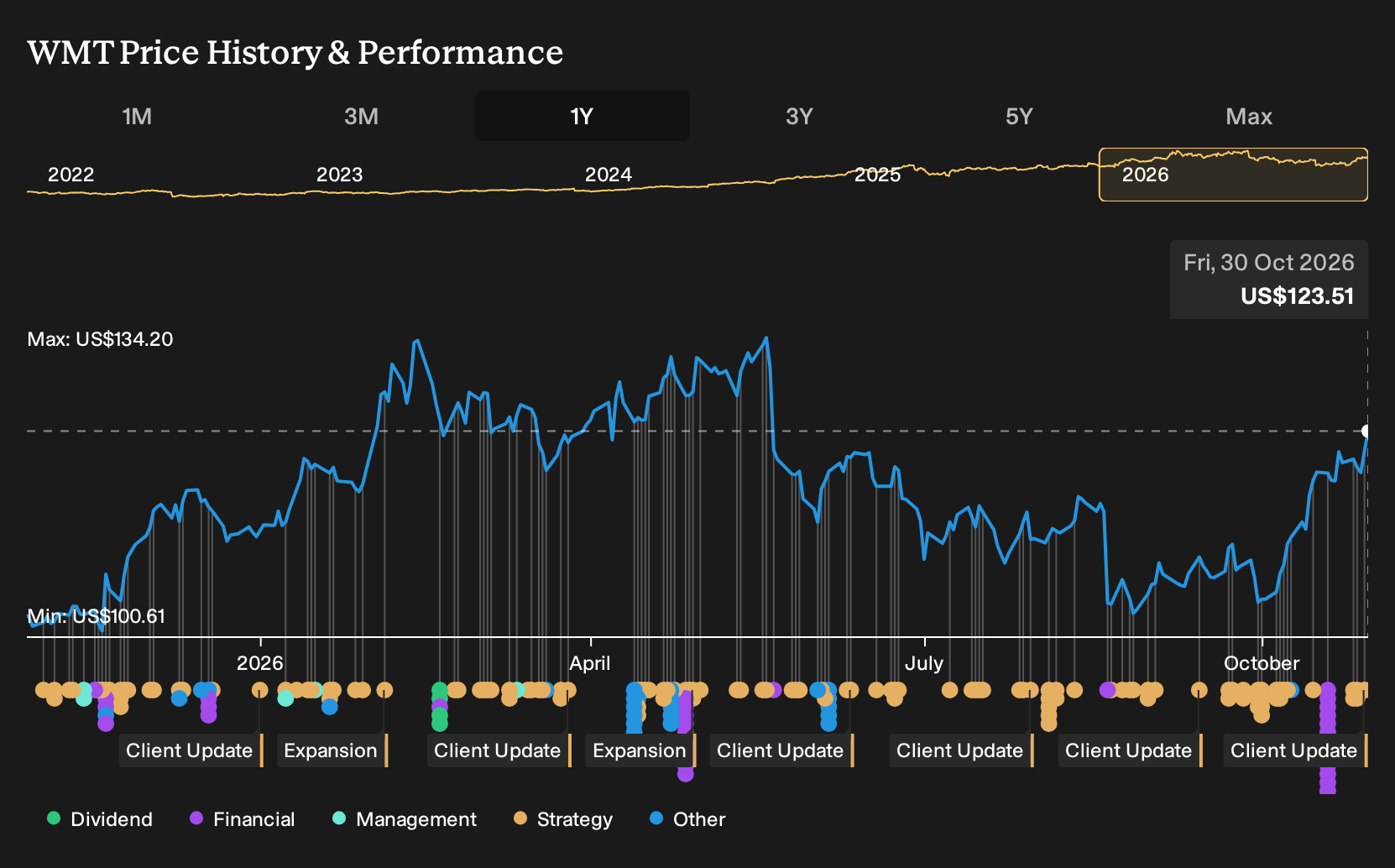
- Walmart expanded its agreement with Symbotic in October 2026, committing about US$6b to automate 25 U.S. regional distribution centers and to support wider supply chain projects over several years.
- The push into large scale warehouse robotics, new distribution facilities and home energy partnerships with Base Power suggests that Walmart is placing greater emphasis on cost efficiency and service reliability rather than focusing only on front end retail changes.
- The key question now is how Walmart's heavier automation spend, particularly the US$6b Symbotic rollout, could reshape the existing investment narrative.
Scan Walmart's push into automation and energy, then compare it with other companies pursuing similar capital intensive upgrades using the hand picked 54 AI infrastructure stocks
Walmart Investment Narrative Recap
To stay comfortable owning Walmart, you need to think its higher margin profit pools, such as advertising, marketplace services, membership and now supply chain automation, can gradually outweigh the drag from low margin grocery and international e-commerce. The near term focus is simple. Investors are watching whether e-commerce and fulfillment stay solidly profitable while the retailer pours money into automation.
The biggest risk right now is that delivery and logistics costs on grocery, plus loss making international e-commerce, keep pressing on a slim 3% net margin just as Walmart steps up capital commitments like the US$6b Symbotic rollout. These headlines do not change that risk. They just raise the execution bar on automation paying off.
The Base Power partnership is the clearest link between Walmart's automation theme and a fresh commercial opportunity. It pulls the retailer into home energy services in Texas, offering customers discounted installation on Base's home battery systems and, in some areas, linked electricity plans. That keeps Walmart close to households on a daily utility expense instead of only at the checkout.
For you as a shareholder, the interest lies in how this kind of offering feeds existing catalysts like Walmart+ membership, marketplace engagement and higher value digital interactions. Execution risk is real. Energy products bring regulatory and operational complexity. If Walmart integrates these services cleanly into Better Care style marketplaces and in store journeys, it could deepen loyalty and support the broader omni channel thesis investors already focus on.
Walmart's narrative projects US$839.4b revenue and US$29.5b earnings by 2029. This assumes 4.5% yearly revenue growth and an earnings increase of about US$7.4b from US$22.1b today.
Uncover how Walmart's fair value indicates a 3% potential upside to its current price before the market closes that gap.
Exploring Other Perspectives
The Simply Wall St Community has 13 fair value estimates for Walmart that stretch from about US$65.80 to US$154.58, so private investors are clearly seeing very different futures in the same set of numbers. Those views sit beside fresh catalysts such as the US$6b Symbotic automation rollout and the Base Power tie up, which could affect how you think about risk, capital intensity and long term profitability. If you want a fuller picture, compare these contrasting opinions before deciding where your own conviction really lies.
Explore 12 other Walmart fair value estimates, including one that suggests as much as 47% downside from the current price.
Decide For Yourself
Don't just follow the ticker. Dig into the data and build a conviction that's truly your own.
- A great starting point for your Walmart research is our analysis highlighting 2 key rewards that could impact your investment decision.
- See our latest analysis for Walmart. The report includes a comprehensive fundamental analysis summarized in a single visual, the Snowflake, making it easy to evaluate Walmart's overall financial health at a glance.
Looking for more investment ideas beyond Walmart?
Once you have a view on Walmart, it can help to line it up against other opportunities that fit very different risk and income profiles. The Simply Wall St Screener is built for exactly that kind of comparison, so you can see how this retailer stacks up against a wider watchlist before committing fresh capital.
- If you want income to play a bigger role in your portfolio, scan a curated set of high yield payers using the 5 dividend fortresses
- For a focus on resilience and capital preservation, filter for companies with steadier risk characteristics through the 30 resilient stocks with low risk scores
- When you are hunting for future leaders that fewer investors are watching, cast a wider net with the 18 high quality undiscovered gems
Have feedback on this article? Concerned about the content? Get in touch with us directly. Alternatively, email editorial-team@simplywallst.com