
We Think Annexon (NASDAQ:ANNX) Needs To Drive Business Growth Carefully
Even when a business is losing money, it's possible for shareholders to make money if they buy a good business at the right price. For example, biotech and mining exploration companies often lose money for years before finding success with a new treatment or mineral discovery. But while the successes are well known, investors should not ignore the very many unprofitable companies that simply burn through all their cash and collapse.
So, the natural question for Annexon (NASDAQ:ANNX) shareholders is whether they should be concerned by its rate of cash burn. For the purpose of this article, we'll define cash burn as the amount of cash the company is spending each year to fund its growth (also called its negative free cash flow). Let's start with an examination of the business' cash, relative to its cash burn.
Does Annexon Have A Long Cash Runway?
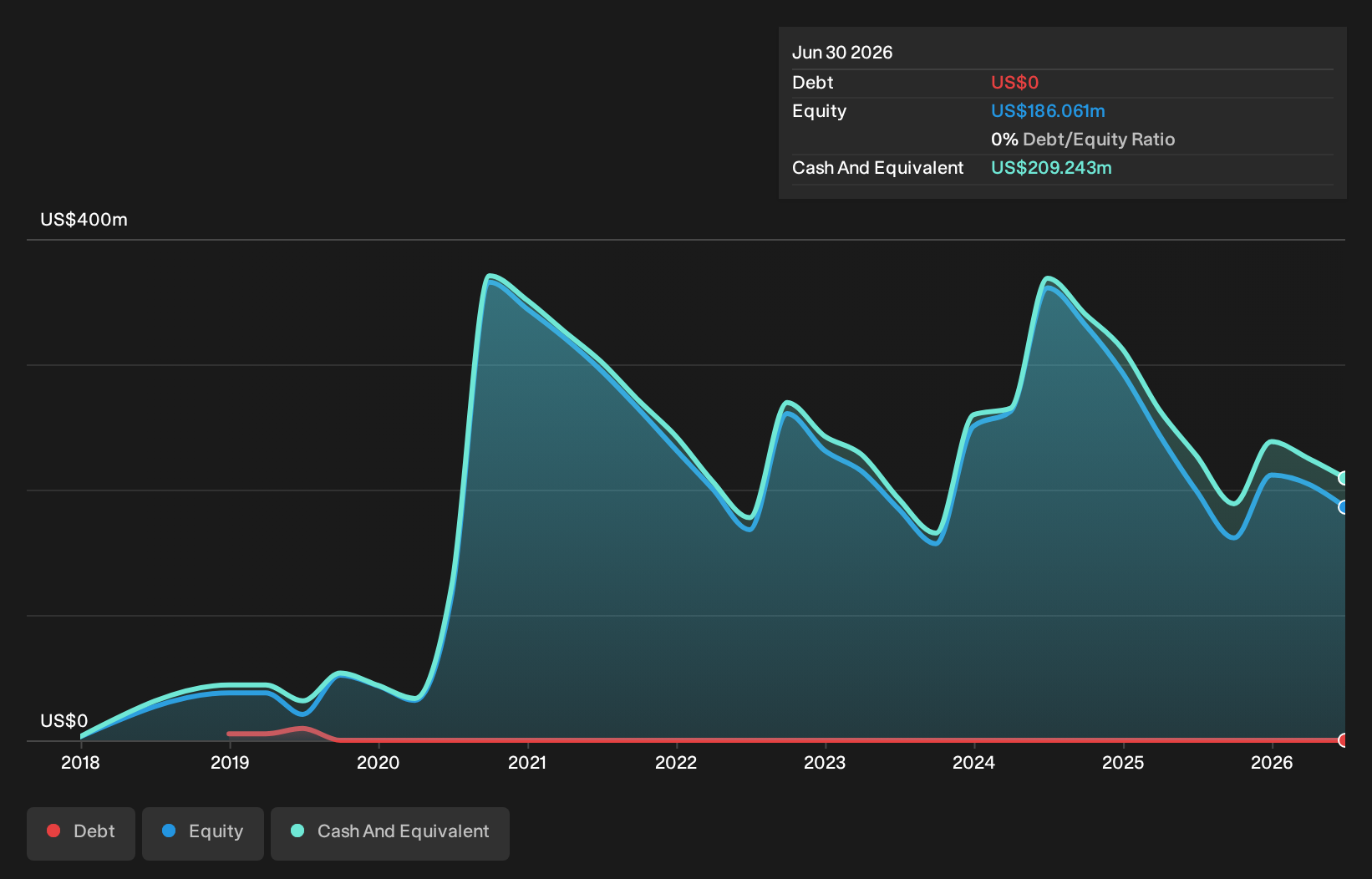
A company's cash runway is calculated by dividing its cash hoard by its cash burn. As at June 2026, Annexon had cash of US$209m and no debt. Looking at the last year, the company burnt through US$193m. That means it had a cash runway of around 13 months as of June 2026. Importantly, analysts think that Annexon will reach cashflow breakeven in 4 years. That means unless the company reduces its cash burn quickly, it may well look to raise more cash. Depicted below, you can see how its cash holdings have changed over time.
See our latest analysis for Annexon
How Is Annexon's Cash Burn Changing Over Time?
Annexon didn't record any revenue over the last year, indicating that it's an early stage company still developing its business. So while we can't look to sales to understand growth, we can look at how the cash burn is changing to understand how expenditure is trending over time. Over the last year its cash burn actually increased by 24%, which suggests that management are increasing investment in future growth, but not too quickly. However, the company's true cash runway will therefore be shorter than suggested above, if spending continues to increase. Clearly, however, the crucial factor is whether the company will grow its business going forward. For that reason, it makes a lot of sense to take a look at our analyst forecasts for the company.
How Hard Would It Be For Annexon To Raise More Cash For Growth?
While Annexon does have a solid cash runway, its cash burn trajectory may have some shareholders thinking ahead to when the company may need to raise more cash. Issuing new shares, or taking on debt, are the most common ways for a listed company to raise more money for its business. Commonly, a business will sell new shares in itself to raise cash and drive growth. We can compare a company's cash burn to its market capitalisation to get a sense for how many new shares a company would have to issue to fund one year's operations.
Annexon's cash burn of US$193m is about 25% of its US$768m market capitalisation. That's fairly notable cash burn, so if the company had to sell shares to cover the cost of another year's operations, shareholders would suffer some costly dilution.
Is Annexon's Cash Burn A Worry?
On this analysis of Annexon's cash burn, we think its cash runway was reassuring, while its increasing cash burn has us a bit worried. Shareholders can take heart from the fact that analysts are forecasting it will reach breakeven. Summing up, we think the Annexon's cash burn is a risk, based on the factors we mentioned in this article. Its important for readers to be cognizant of the risks that can affect the company's operations, and we've picked out 2 warning signs for Annexon that investors should know when investing in the stock.
Of course Annexon may not be the best stock to buy. So you may wish to see this free collection of companies boasting high return on equity, or this list of stocks with high insider ownership.
Have feedback on this article? Concerned about the content? Get in touch with us directly. Alternatively, email editorial-team (at) simplywallst.com.