
How Investors Are Reacting To Apple (AAPL) New Product Launches
- Apple has rolled out a wave of high-end hardware and software, including the iPhone Duo foldable, OLED MacBook Pro with touch, M6 iMac and MacBook Pro, and major Creator Studio upgrades, all centered on on-device AI and premium displays.
- This cluster of launches concentrates heavy chip, memory, and display requirements into the same product cycle. This sharpens Apple’s balancing act between pushing richer features and managing component costs, execution risk, and demand for higher priced devices.
- We will now look at how Apple’s AI heavy MacBook Pro and iPhone Duo cycle could reshape its longer term investment narrative.
Apple Investment Narrative Recap
To own Apple here, you need to believe the hardware plus services flywheel can keep spinning even as devices push deeper into on device AI and high end components. The biggest short term swing factor is still how the business handles extreme memory costs while rolling out more compute heavy products like iPhone Duo and the new MacBook Pro. That pressure on gross margin is already visible in guidance, and it puts a hard spotlight on pricing discipline.
The largest risk in the near term is simple: memory inflation and higher flagship prices collide with consumers who feel no urgency to upgrade. If buyers decide to stretch device cycles instead of paying up, the premium valuation and earnings expectations quickly feel tight. Supply constraints on advanced chips and foldable displays also limit how much any hit product can offset that risk over the next few quarters.
Among the recent headlines, the new MacBook Pro with PROLED XDR and M5 Pro or M5 Max feels central to the Apple story right now. It packs heavy AI compute, expensive OLED and touch, all of which lean directly into the same cost pressures that are squeezing margins. That is exactly where the short term catalyst and risk intersect. Either users accept higher price points for this kind of machine, or the business faces tougher trade offs between profitability and unit volumes.
This launch matters because it broadens Apple’s AI capable installed base beyond the iPhone and supports the thesis that Mac can be a larger contributor to long term earnings. At the same time, the model highlights execution risk. Tandem OLED quality, touch ergonomics and early reviewer pushback will influence how quickly creative pros and enterprises adopt the device. Strong uptake would help absorb high component costs, while a slower ramp would leave the company wrestling with that 100 year flood in memory pricing with fewer levers to pull.
Apple's current analyst narrative points to forecast revenue of US$618.2b and earnings of US$164.4b by 2029, built on expected annual top line growth of 9.8% and an earnings increase of about US$35.5b from current earnings of US$128.9b.
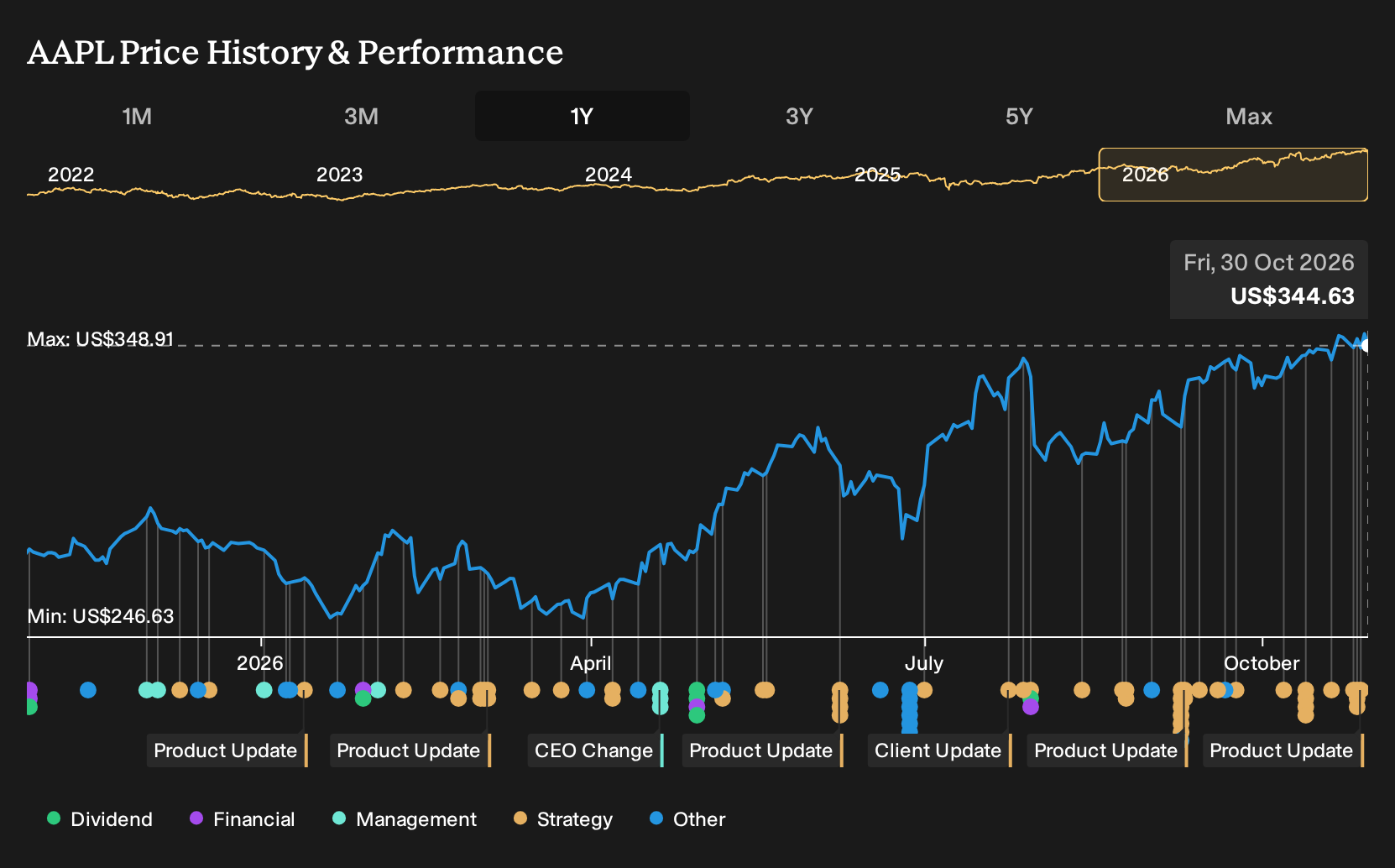
Uncover why Apple's fair value indicates a 5% potential downside to its current price, suggesting that this premium may not hold.
Exploring Other Perspectives
Some of the most bullish Apple analysts lean hard into the ultra premium iPhone Duo story instead. They were penciling in US$648.2b of revenue and US$180.2b of earnings by 2029, far above the baseline view. That is a much more optimistic script, and this MacBook Pro launch could easily reshape both narratives.
Explore 43 other Apple fair value estimates, including one that suggests up to 18% upside from the current price.
Decide For Yourself
Disagree with existing narratives? Extraordinary investment returns rarely come from following the herd, so consider trusting your own analysis.
- A great starting point for your Apple research is our analysis highlighting 2 key rewards that could impact your investment decision.
- See our latest analysis for Apple. The report includes a comprehensive fundamental analysis summarized in a single visual, the Snowflake, making it easy to evaluate Apple's overall financial health at a glance.
Looking For More Investment Ideas Beyond Apple?
If the Apple story has you thinking about where AI heavy hardware and strong fundamentals might show up next, the Simply Wall St Screener can help you scan a much wider opportunity set in a structured way.
- For readers who want potential value combined with quality fundamentals, start with companies that screen as financially strong and potentially mispriced through our 33 high quality undervalued stocks.
- If reliability and balance sheet strength matter most to you, focus on businesses that clear conservative debt and liquidity filters using the list of solid balance sheet and fundamentals (24 results).
- Those who prefer overlooked opportunities can zero in on companies with cleaner finances that receive less attention using the 19 high quality undiscovered gems.
Have feedback on this article? Concerned about the content? Get in touch with us directly. Alternatively, email editorial-team@simplywallst.com