
Kioxia's latest guidelines suggest that AI demand growth is stabilizing, and the stock price once plummeted 15%
The Zhitong Finance App learned that Kioxia Holdings (Kioxia)'s stock price in Japan fell the deepest 15% on Monday. Previously, the Japanese storage manufacturer's cautious outlook disappointed investors, once again igniting concerns that explosive growth driven by artificial intelligence may be stabilizing.
The Tokyo-based company said on Friday that it expects operating profit of 2 trillion yen ($12.7 billion) for the December quarter, lower than analysts' unanimous estimate of 2.35 trillion yen. The forecast meant little increase compared to the September quarter — the latter recorded 1.99 trillion yen. In previous quarters, Kioxia's operating profit had been on a steep upward trajectory.
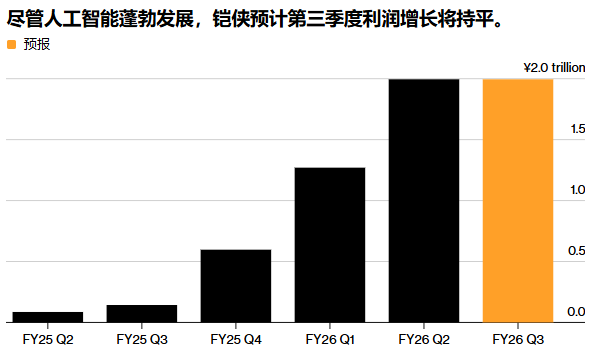
As a competitor to Samsung Electronics, SK Hynix, and Micron Technology, Kioxia attributed this lackluster growth mainly to shipping arrangements rather than deteriorating demand. Some of the orders originally scheduled to be delivered this quarter were brought forward to the September quarter at the customer's request; others were postponed to the March quarter next year — due to the increase in the share of enterprise-grade storage in the product structure, and such products require a longer production and delivery cycle.
Chief Financial Officer Yoshihiko Kawamura said in a conference call last week that the company is expected to resume rapid growth in the March quarter, and demand from AI data center operators remains strong. He said that the company's planned production capacity for next year has been sold out, and more than half of the production for the following year has already been distributed. Some major customers have also begun negotiations on contracts covering 2029 and beyond.
But investors are increasingly skeptical about the growth story the company is portraying, as executives repeatedly take a cautious tone about their outlook. Kioxia's potential disadvantage may stem from its positioning as a pure NAND manufacturer — in contrast, South Korean competitors also sell DRAM chips (another key component in AI computers), so they have greater bargaining power.