
A weak Indian Monsoon & global economic worries hit silver prices
“A weak Indian Monsoon & global economic worries hit silver prices”
Jim Roemer
Meteorologist - Commodity Trading Advisor - Principal, Best Weather Inc. & Climate Predict - Publisher, Weather Wealth Newsletter and Co-Producer of Climatelligence
Edited by Scott Mathews: Co-Producer, Climatelligence
- November 2, 2026
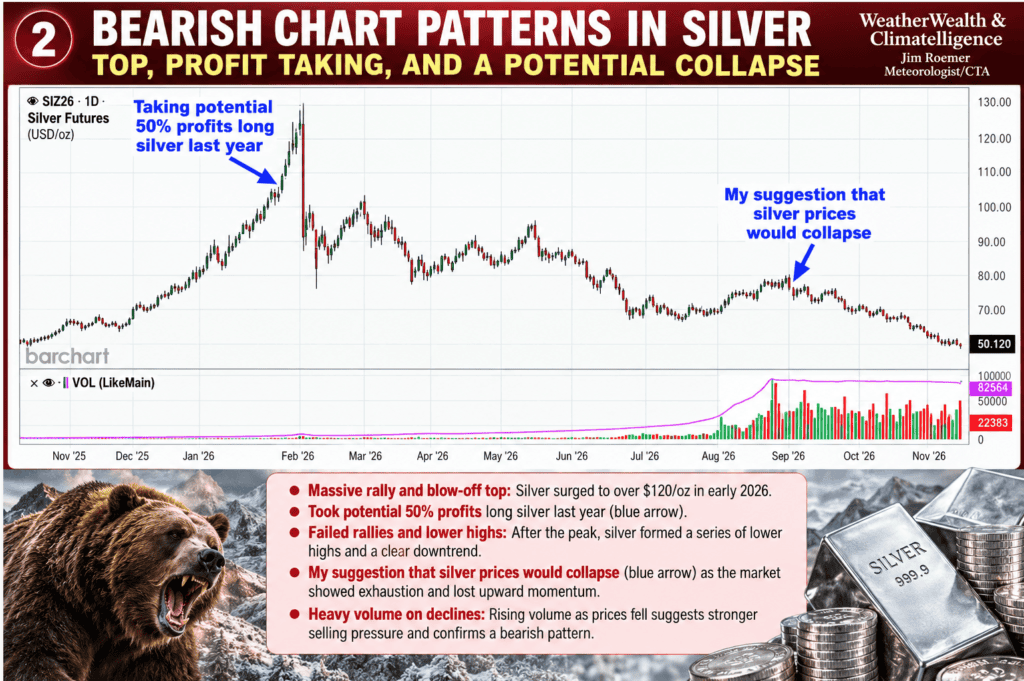
After catching the bull silver market in 2025 for WeatherWealth clients, I warned this year that a weak Indian monsoon, bearish technical patterns, rising interest-rate expectations, and excessive speculative buying signaled a major silver selloff.
Normally, I don’t advise markets outside weather-related Ag and natural gas commodities. However, I have had a great “feel” for this market for the last couple of years.
Silver is often considered a precious metal that benefits from inflation fears, geopolitical uncertainty, and strong investment demand. However, even a fundamentally attractive market can become dangerously overbought.
My bearish silver outlook was based on four warning signals that suggested the market was vulnerable to a significant correction.
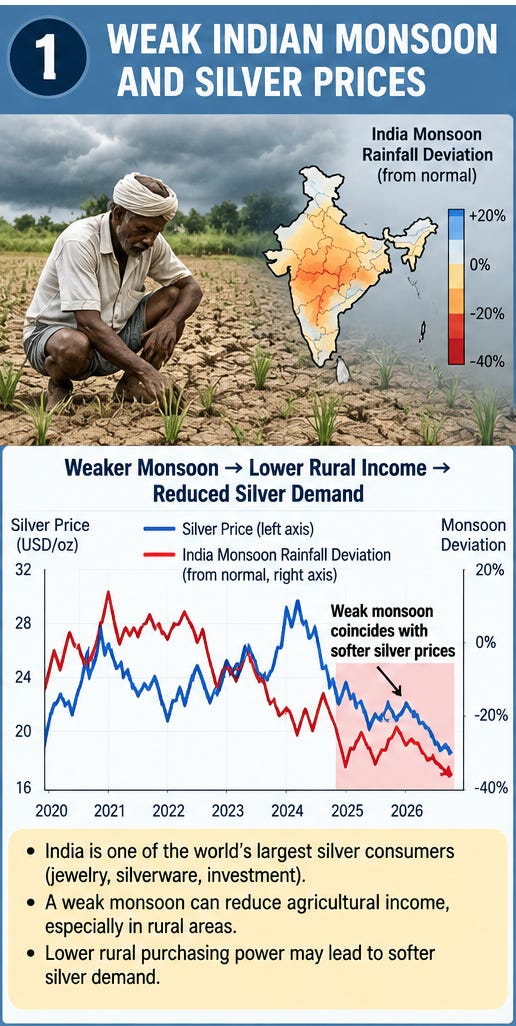
1. The weak Indian monsoon threatened physical silver demand
India is one of the world’s largest consumers of silver, particularly for jewelry, silverware, and investment.
A disappointing monsoon can reduce agricultural incomes, especially in rural communities where farmers rely on seasonal rainfall. With less disposable income, rural consumers may postpone purchases of silver jewelry, coins, and other precious-metal products.
The connection: Weak monsoon → reduced farm income → weaker rural purchasing power → potential pressure on Indian silver demand. I expressed this concern two to three months ago.
2. Bearish chart patterns warned that the rally was exhausting itself
Silver’s technical picture grew more concerning as upward momentum weakened and prices threatened key support levels. There was also too big a spec long position.
3. Rising interest-rate expectations created another bearish force
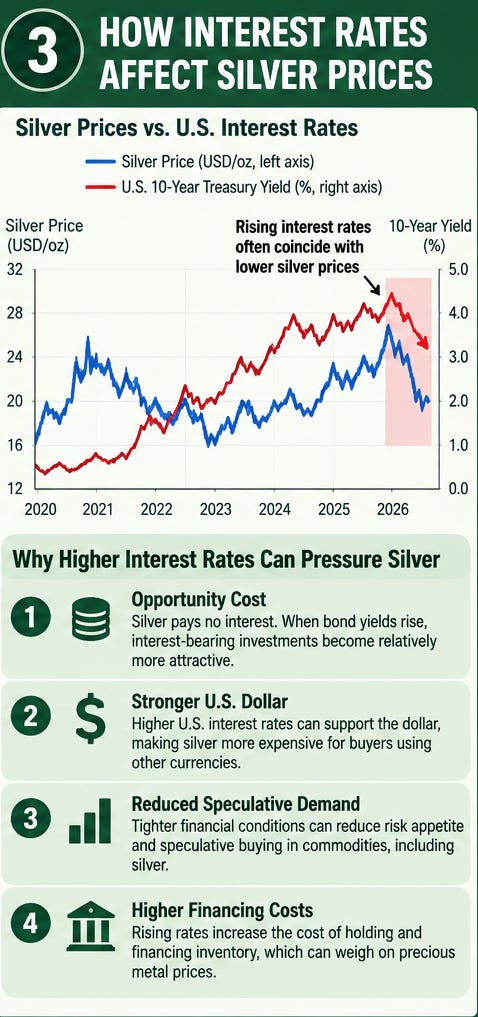
Silver pays no interest. When bond yields rise, interest-bearing investments become relatively more attractive.
Higher U.S. interest rates can also support the dollar, making silver more expensive for buyers using other currencies.
The combination of higher yields and a stronger dollar can create powerful headwinds for precious metals.
4. Excessive speculative long positions made silver vulnerable
Perhaps the biggest danger was the crowded bullish trade.
When hedge funds and other speculators have accumulated large long positions, the market becomes susceptible to sudden liquidation. A technical breakdown can force traders to sell simultaneously, accelerating a correction.
The critical insight: I felt this a few months ago: Silver did not need a collapse in industrial demand to fall sharply. It simply needed enough bullish investors to head for the exits at the same time.
What the October 2026 Selloff Confirmed
Recent reports reinforce several of these concerns. Silver fell about 13% over the past month, with analysts citing higher real yields, crowded speculative positioning, and weakening industrial demand as contributing factors. Reuters also reported on October 22 that demand for Indian silver jewelry and investment remained weak despite the festive season. This supports the demand-risk argument, although it does not establish that the weak monsoon was the primary cause.
My warning was not simply that silver had risen too far. It was that a weakening Indian demand outlook, bearish technical signals, rising interest-rate expectations, and an overcrowded long trade were converging at the same time. How low can prices go?
Receive frequent updates and trading ideas at our WeatherWealth newsletter. Request a free trial subscription HERE
ORGet occasional free updates and Climatepredict forecasts at our new Climatelligence newsletter here >>> climatelligence.substack.com
Jim Roemer, Scott Mathews, and the BestWeather Team
Mr. Roemer owns Best Weather Inc., offering weather-related blogs for commodity traders and farmers. He is also a co-founder of Climate Predict, a detailed long-range global weather forecast tool. As one of the first meteorologists to become an NFA-registered Commodity Trading Advisor, he has worked with major hedge funds, Midwest farmers, and individual traders for over 35 years. With a special emphasis on interpreting market psychology, coupled with his short-term and long-term trend forecasting in grains, softs, and energy markets, he holds a unique standing among advisors in the commodity risk management industry.
disclaimer