
What Ralph Lauren Doubters Missed
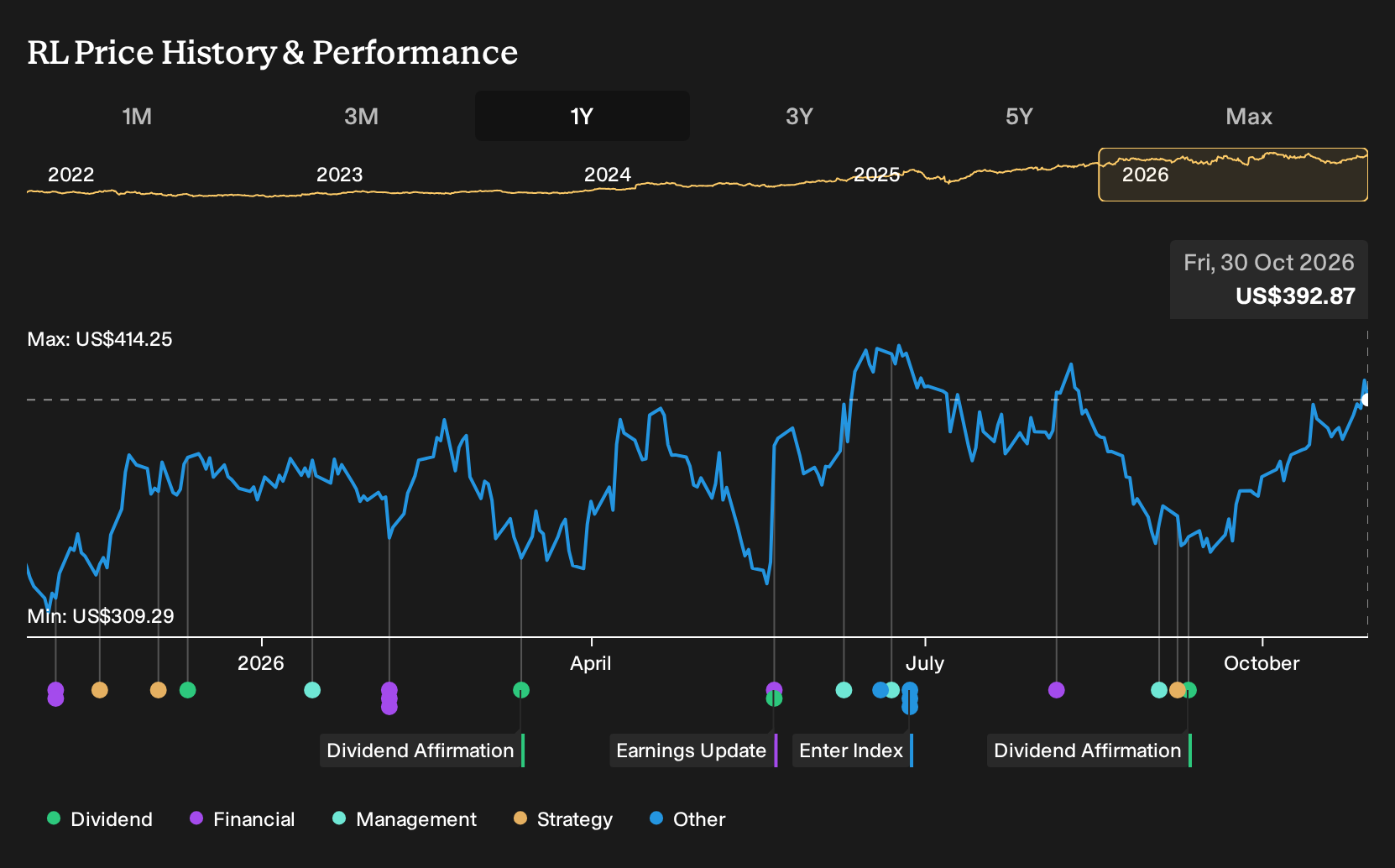
Ralph Lauren’s latest move was concrete enough to show up in cash flows, with a higher quarterly dividend that followed record revenue above US$8b and strong demand in Asia. Investors who held Ralph Lauren over the past year are up 27.6%, including dividends. If you were deciding on 2 November 2025 whether to buy, what conviction about sustained brand elevation and direct to consumer demand would you have needed before any of this was reported?
Narratives are how investors here put a case on the record, with explicit assumptions about revenue, margins and the multiple. Those assumptions imply an estimated Fair Value.
Ralph Lauren has already moved. See which of 33 high quality undervalued stocks still trade below our estimates.
The Two Ralph Lauren Narratives Investors Had To Weigh
The shares cost US$320 at the start of the period, which forced anyone looking at Ralph Lauren to decide how much faith to place in brand elevation and direct to consumer momentum.
The bullish narrative put fair value at US$346, 8% above the start price, based on 5.0% annual revenue growth and profit margins reaching 12.3% with a future P/E of 24.1x over three years.
The bearish view set fair value at US$175, 45% below the start price, and focused on digital competition, fast fashion pressure and wholesale dependency as key risks to luxury margins.
What The Results Changed For The Ralph Lauren Debate
Ralph Lauren’s Q1 2027 report showed revenue of US$1,959.8m and net income of US$262.2m, with net margin moving from 12.8% to 13.4%. That shift in profitability leans toward the bullish case that assumed better economics from brand elevation and direct to consumer growth, although earlier articles flag valuation concerns and insider selling that kept the cautious narrative alive.
The useful takeaway is clear. When a story hinges on premium positioning and channel mix, track net margin and direct to consumer metrics, not just headline revenue, to see whether the quality of each extra dollar of sales is really improving.
What Ralph Lauren’s Current Price Already Assumes
Ralph Lauren now trades at US$398, with the selected Narrative’s Fair Value sitting below that level even after a 27.6% gain over the past year from US$320.
The Narrative leans on solid brand momentum but questions how wholesale credit exposure and rich P/E multiples interact. Anyone paying today is assuming premium pricing, along with Asia and direct to consumer growth staying firm. This raises the question of how bad debt risks and only moderate cash generation affect that belief.
"Although Ralph Lauren reports higher AUR and gross margin, the exposure to bad-debt risk from being a major unsecured creditor to Harvey Nichols' administration in the U.K. luxury channel raises the possibility of lost wholesale revenue and weaker collection outcomes, which could pressure regional sales and earnings if similar counterparties falter."
That disagreement has a full argument behind it. → Uncover the lower Fair Value this Narrative argues for
Where Ralph Lauren’s Story Echoes
Ralph Lauren leans into lifestyle, aspiration and emotional pull. That same instinct can send you toward sport focused brands woven into daily routines.
Think about your gym bag or weekend kit. Performance gear there does more than function, it signals identity like a logoed polo.
One athletic business pushes hard on that link between training and everyday wear. It mixes footwear and apparel with digital services and events built around sport.
The result is a different route to the same customer impulse. When loyalty follows people from workout to street, it can reframe how you view long term brand power.
The case is on the record, with the assumptions it rests on. → See the Narrative that values this company 23% above its price
Have feedback on this article? Concerned about the content? Get in touch with us directly. Alternatively, email editorial-team@simplywallst.com