
Huachuang Securities: Continuing to be optimistic about upward opportunities for all types of ships in the shipping industry, three-quarter report, high performance, and additional certification logic
The Zhitong Finance App learned that Huachuang Securities released a research report saying that in 2026Q3, the four major shipping sectors of oil transportation, bulk transportation, and special transportation remained high, and the performance of major shipping companies increased significantly over the same period last year. In terms of oil transportation, the average Q3 freight rate for the VLCC Oman route reached 175,000 US dollars/day, a sharp increase of 394% over the previous year. The net profit of China Merchants Shipping (601872.SH) and COSCO Haining (01138) reached 5.02 billion yuan and 2.84 billion yuan respectively in a single season, setting new record highs. Q4 freight rate flexibility is expected to be greater. The average BDI for bulk transportation was +54% year-on-year, and the bulk cargo business performance of Haitong Development (603162.SH) and China Merchants Shipping continued to increase. The average CCFI value of shipping was +55% year-on-year, and COSCO Marine Control (01919)'s Q3 net profit was 17.23 billion yuan, +80.7% year-on-year. Special Transport benefited from the boom in automobile exports, and COSCO Haite (600428.SH)'s net profit for Q3 was +147% year-on-year. Continue to be optimistic about upward opportunities for all ship types.
The original text of Huachuang Securities is as follows:
Oil Transportation: Haineng's Q3 performance reached a new high, and Q4 is expected to release more flexibility
Market review
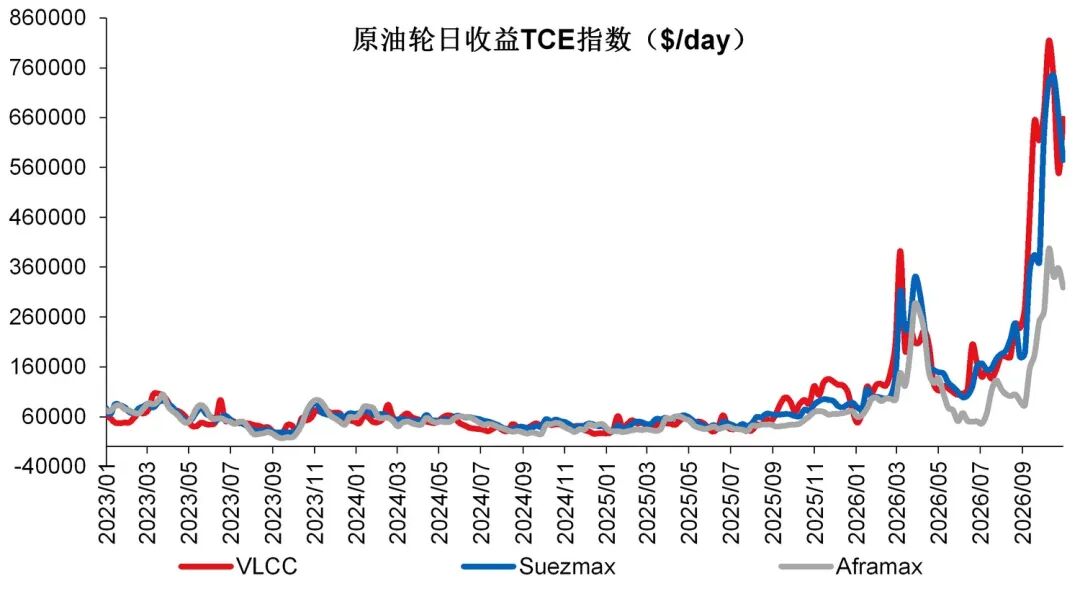
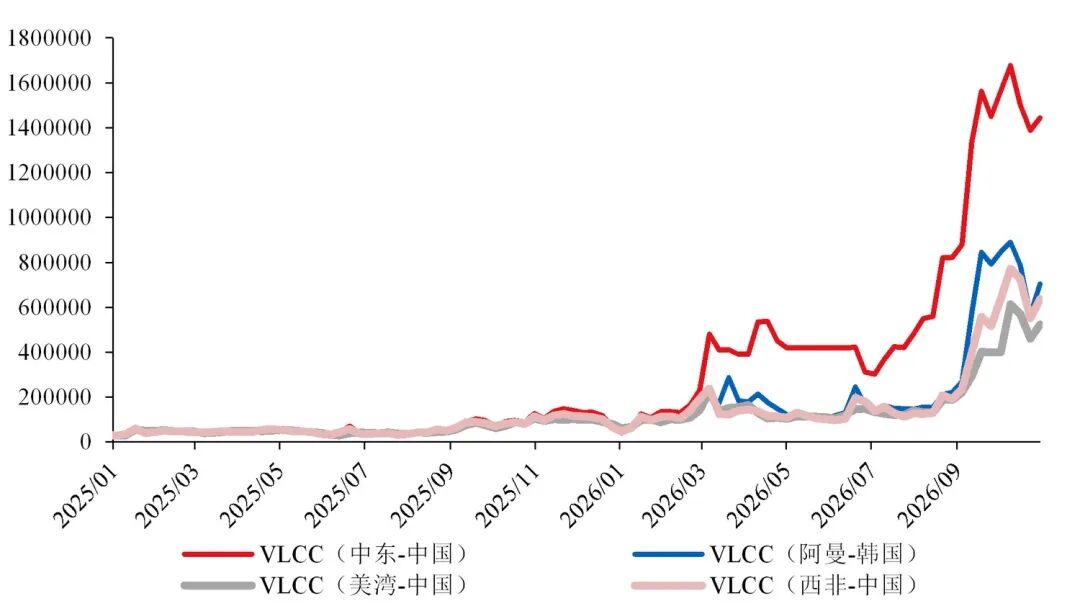
Since this year, the oil transportation market has been affected by a combination of factors such as geographical conflicts, changes in the structure of supply and demand, declining oil transportation efficiency due to trade changes, concessions from oil exporters to promote exports, and insufficient global effective energy refining, and freight rates have risen sharply to historically high levels. The average freight rate for the 2026Q3 VLCC Oman route was 175,000 US dollars/day, +394% month-on-month (YoY and month-on-month growth rates were calculated using the Middle East and Red Sea routes respectively), and the average freight rates for the US Gulf and West Africa routes were 12.3 and 128,000 US dollars/day, +253%, 250% YoY, +1.1%, and 1.8% month-on-month (taking into account revenue confirmation freight delays of one month, corresponding to June-August freight rates). Middle Eastern crude oil shipments in the third quarter increased as STS shipments increased, and Atlantic shipments also increased. Combined with further tension in the Red Sea, VLCC freight rates rose steadily and slightly.
Chart 1 Crude Oil Daily Earnings TCE Index ($/day)
Source: Clarksons, Huachuang Securities
Chart 2 VLCC-TCE branch route ($/day)
Source: Clarksons, Huachuang Securities
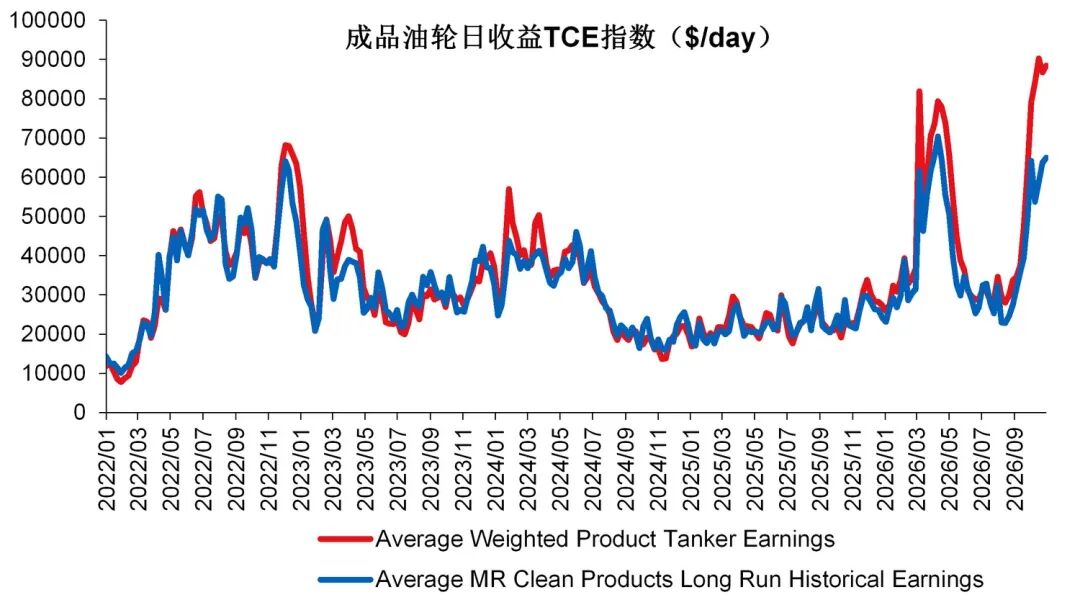
The rise in freight rates for small and medium crude oil tankers lags behind VLCC: 2026Q3 Suezmax, Aframax, and finished product tankers were 16.6, 8.3, and 30,000 US dollars/day, respectively, +242%, +116%, +31% year-on-year, and -21%, -47%, and -53% month-on-month. (Considering revenue recognition freight rate lag of one month)
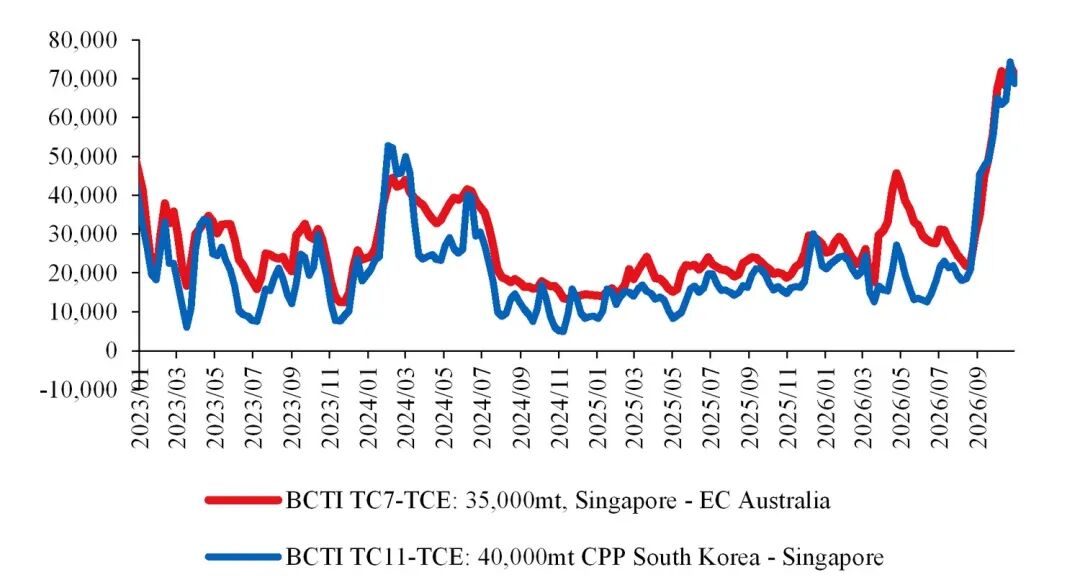
The average TCE value of the 26Q3 MR TC7 was 29,000 US dollars/day, +31.9% year over month (taking into account the revenue confirmation rate lag for two weeks); specifically, the July and August freight rates in the MR market fell from the second quarter, and the freight rate rose rapidly in September and hit a new high during the year. The high rate range fell more limited in Q3, and more fell in Q4.
Chart 3 Daily Revenue TCE Index for Refined Tankers ($/day)
Source: Clarksons, Huachuang Securities
Chart 4 TC7 and TC11-TCE indices for finished tankers ($/day)
Source: Clarksons, Huachuang Securities
Performance performance
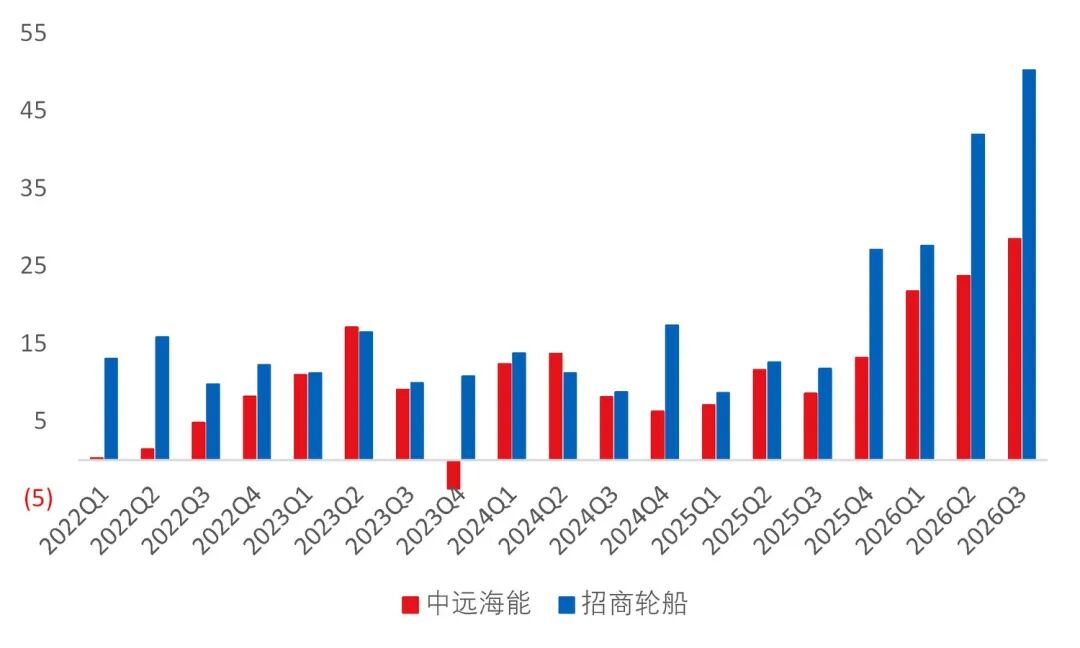
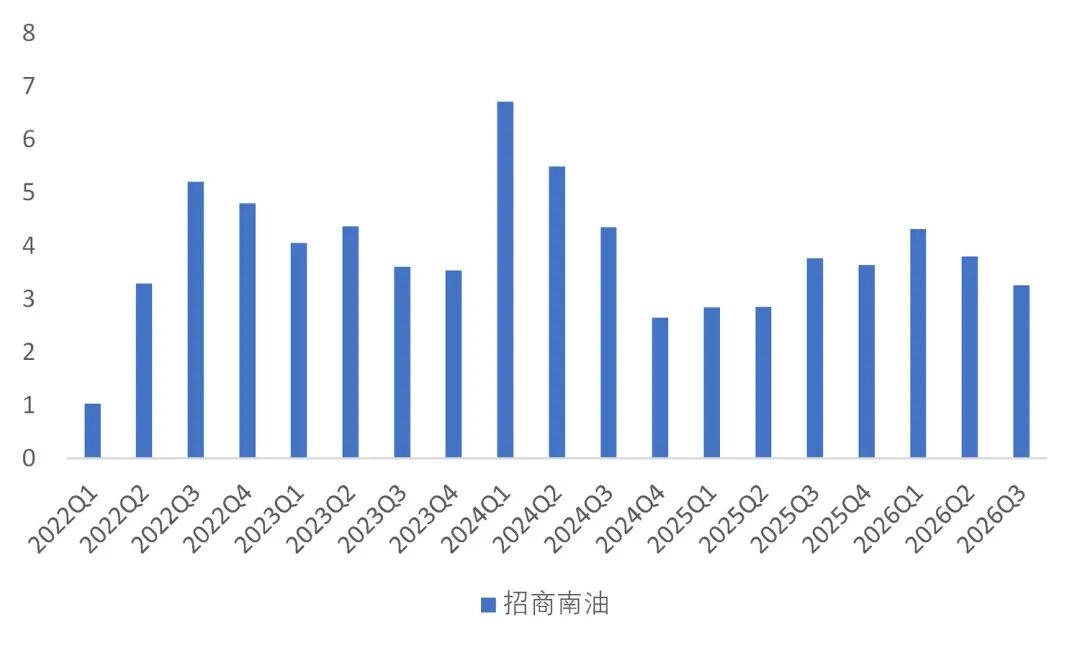
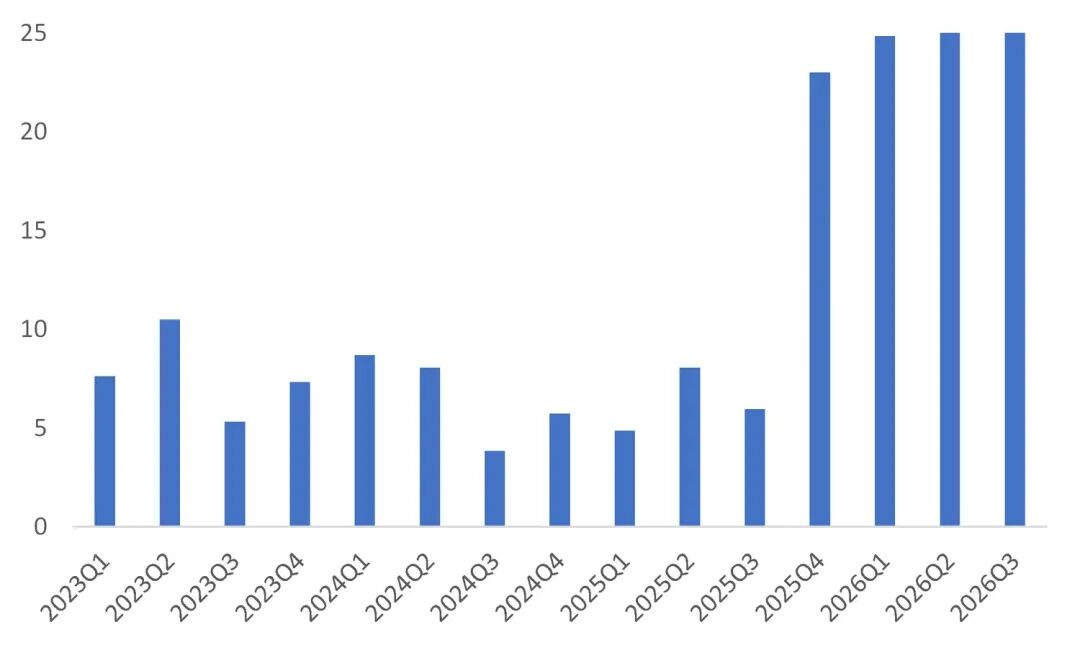
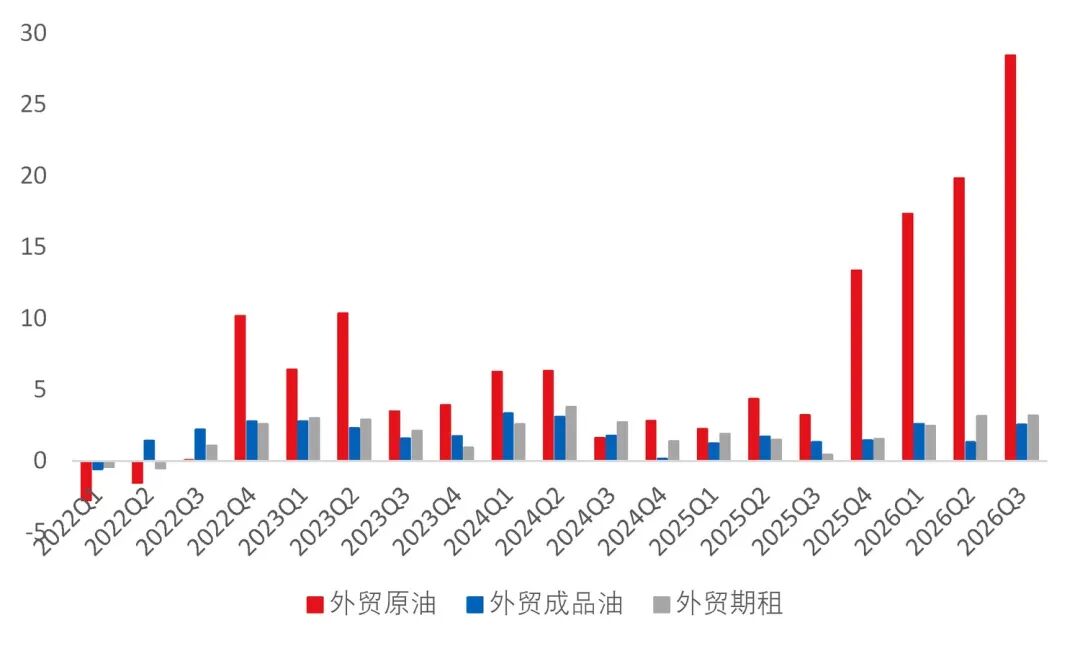
Net profit returned to mother for the first three quarters of 2026: CMB 12 billion, +263% YoY; COSCO Haineng $7.39 billion, +172% YoY; CMB 1.14 billion, +20.1% YoY. The net profit of China Merchants Shipping's tanker division was 9.93 billion yuan, +426% year on year; COSCO Haineng's gross profit of foreign trade oil transportation business was 8.03 billion yuan, +353% year over year. Among them, gross profit for crude oil, refined oil products, and leases was 65.6 billion yuan, 6.4 billion yuan, and 880 million yuan respectively, +570%, +51%, and +133% year-on-year.
2026Q3 net profit to mother: China Merchants Shipping: 5.02 billion yuan, +327%, +19.7% month on month; COSCO Marine Energy 2.84 billion, +235% year on month, +20% month on month; China Merchants South Oil 330 million, -13.5% year on month, -14.3% month on month. The gross profit of COSCO Haineng's foreign trade oil transportation business was 3.41 billion yuan, +590% year-on-year, +40.3% month-on-month; the net profit of China Merchants Shipping's tanker division was 3,745 billion yuan, +528% year-on-year, +1% month-on-month.
Overall, due to strong performance on the freight side, the performance of the three oil transportation companies achieved year-on-year high increases in the third quarter, and the net profit returned to mother by China Merchants Shipping and COSCO Haineng in a single quarter reached a record high. China Merchants Shipping confirmed asset disposal income of 230 million yuan and investment income of 380 million yuan due to the sale of elderly Ro-Ro ships and the acquisition of Antong, contributing the main increase in Q3 results. As a result of the stranded ships leaving the bay, COSCO Marine's oil transportation business performance increased more significantly from month to month. At the same time, the Q3 income tax rate was 24% higher (24-25 tax rate 16-17%, 26H1 tax rate about 19%), resulting in net profit growth less than gross profit. China Merchants CNPC's performance was weaker than the previous two due to weak freight rates for the July-August MR Eastern route and pressure on domestic trade fuel costs.
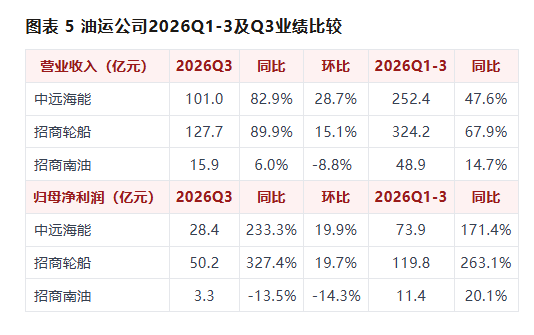
Chart 6 Net profit returns of China Merchants Shipping and COSCO Hainan by quarter (100 million yuan)
Source: Company Announcements, Huachuang Securities
Chart 7 Net profit from CMB quarterly returns to mother (100 million yuan)
Source: Company Announcements, Huachuang Securities
Chart 8 Net profit of China Merchants Shipping's tanker sector (100 million yuan)
Source: Company Announcements, Wind, Huachuang Securities
Chart 9. Gross profit of COSCO Haineng's foreign trade oil transportation business (100 million yuan)
Source: Company Announcements, Huachuang Securities
Future market outlook
Middle East oil exports gradually recovered in September, and high cracking price spreads drove oil companies' willingness to prepare goods and transport, compounding factors such as detours and the STS transit mode's consumption of effective capacity, causing freight rates to rise rapidly and maintain high operation levels. Since September, the average freight rates for VLCC Oman, US Gulf, and West Africa routes have been 720,000 US dollars/day, respectively. The average freight rate for the MR TC7 route is about 65,000 US dollars/day from mid-September to now, and it is expected that the fourth quarter results will also increase significantly.
We continue to be optimistic about the boom in the oil transportation industry: in the short term, the core contradiction between large consumption of global oil stocks and export demand from upstream oil producers has not changed. Combined with high cracking price differences, refinery import demand is driven. At the same time, in the context of continuing geographical risks, dark flights and detours have caused efficiency losses, bottlenecks in crude oil transportation are prominent, and the trend of rising freight rates is clear. In the medium to long term, inventory replenishment+potential possibility of Iranian oil shifting to a compliant market+expansion of stocks and import decentralization constitute three major demand-side increases. The elimination of old supply capacity is expected to hedge against new ship deliveries. Changjin Merchant Marine's VLCC is a pattern logic that cannot be ignored in the market.
Distribution: The Q3 boom operated at a high level, and the performance continued to increase year-on-year
Market review
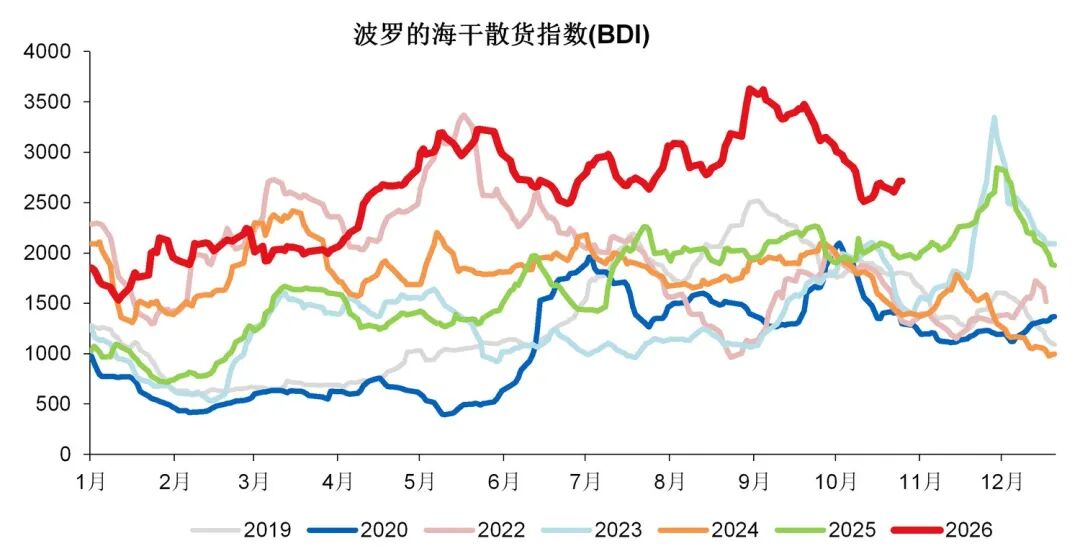
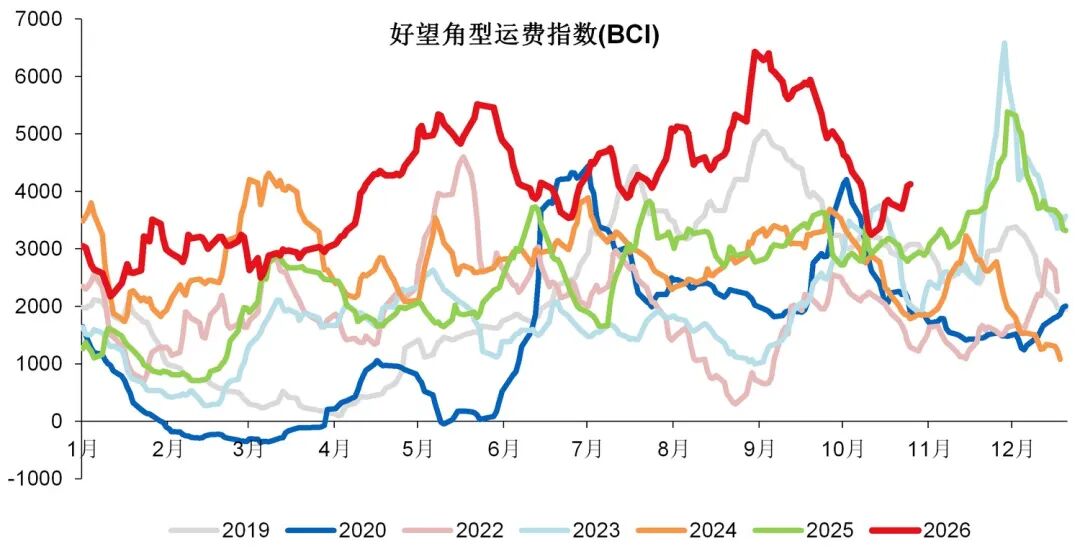
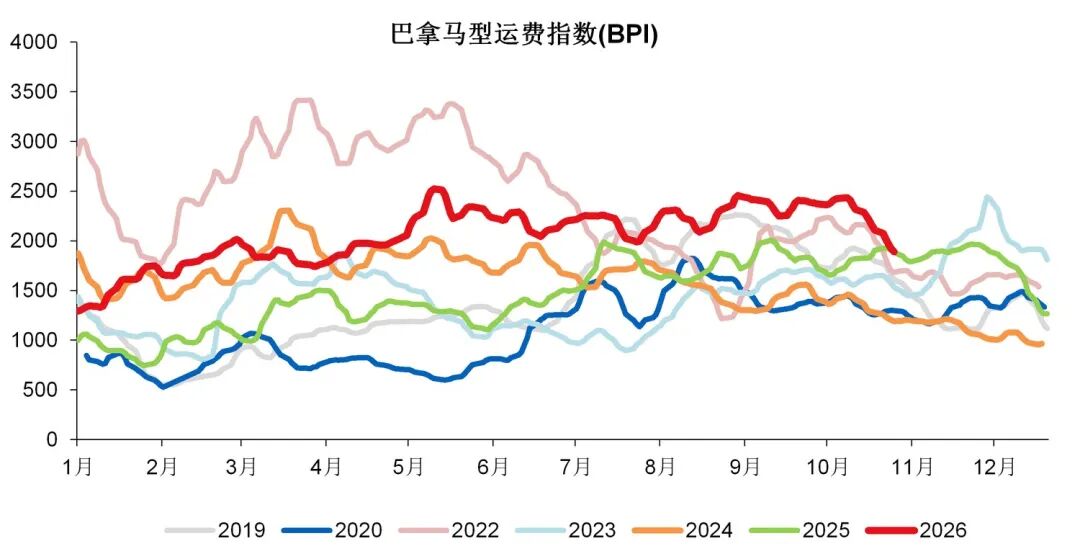
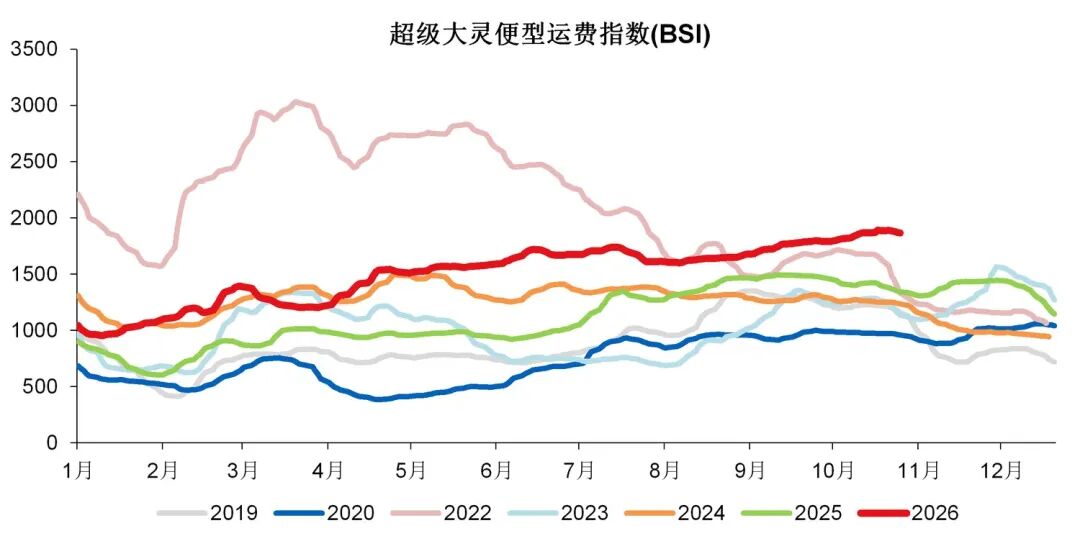
The 2026Q3 dry bulk shipping market continued to be high, with an average BDI of 3041 points, +54% year over year and +11% month over month. Looking at ship types, Cape of Good Hope ships continued to rely on long-line demand for iron ore and bauxite, rising and falling back at the beginning of the season; Panama-type ships remained volatile at a relatively high level due to strong demand for food and typhoon disturbances; and the portable ship market continued to rise after consolidation.
Chart 10 Baltic Dry Bulk Index (BDI)
Source: Wind, Huachuang Securities
Chart 11 Cape of Good Hope Freight Index (BCI)
Source: Wind, Huachuang Securities
Chart 12 Panamanian Freight Index (BPI)
Source: Wind, Huachuang Securities
Chart 13 Super Easy Shipping Index (BSI)
Source: Wind, Huachuang Securities
Performance performance
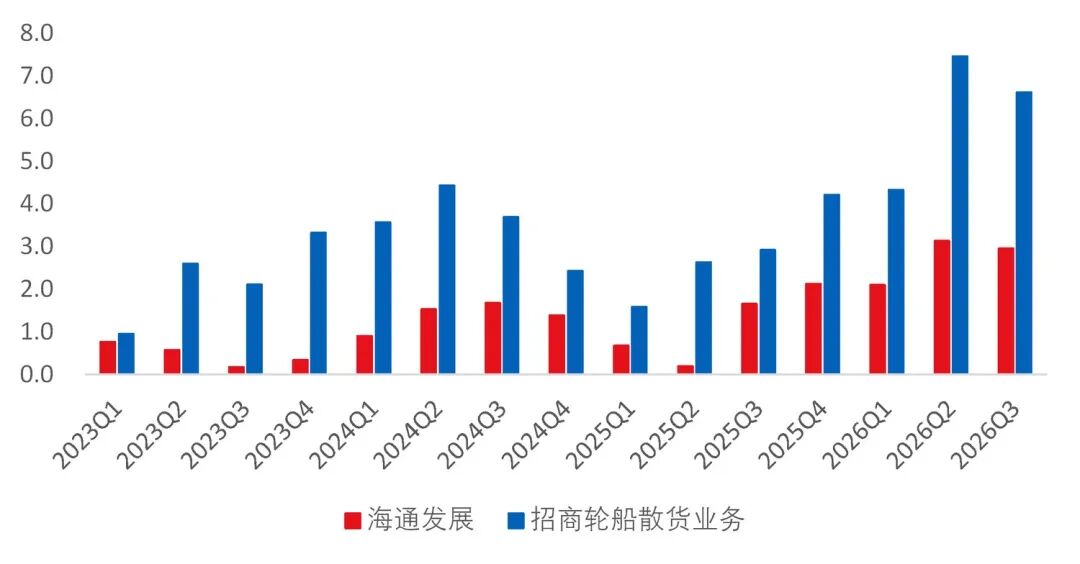
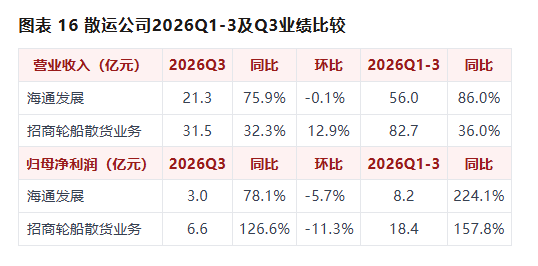
In the first three quarters of 2026, Haitong Development's net profit was 820 million yuan, +224% year on year; net profit from China Merchants Shipping's bulk business was 1.84 billion yuan, +158% year over year.
2026Q3: Net profit from Haitong Development was 295 million yuan, +78% year over month, -5.7% month on month; net profit of China Merchants Shipping bulk business was 660 million yuan, +127% year over year, and -11% month on month.
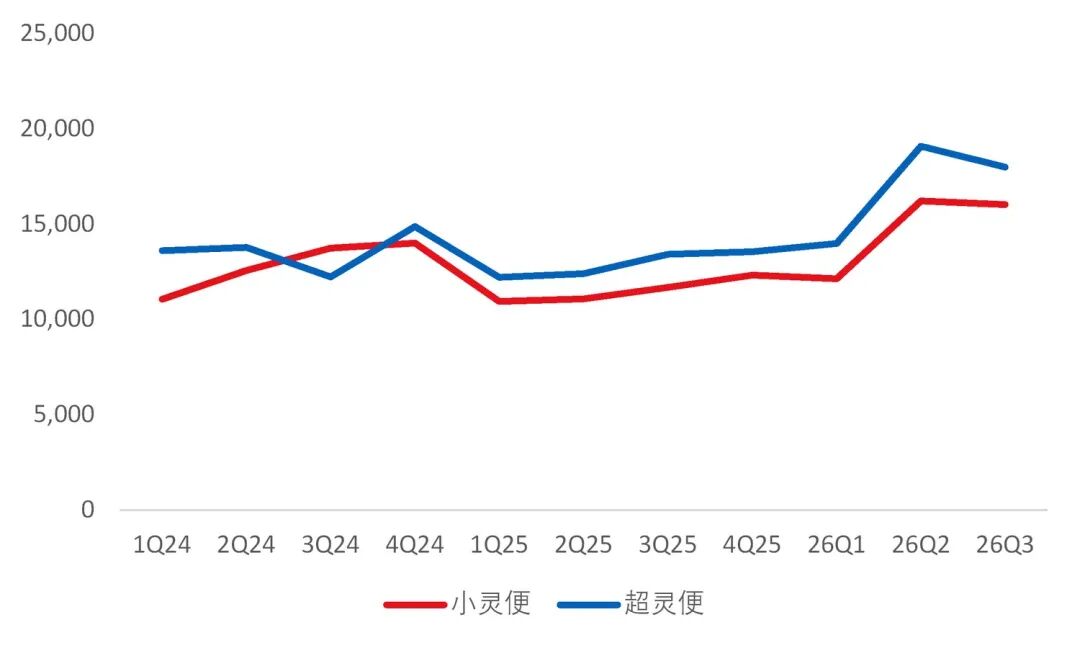
Pacific Shipping 26Q3 Xiaolingbian and Chaolingbian bulk carriers had TCEs of 1.6 and 18,000 US dollars/day, respectively, +37%, +34%, -1.2% month-on-month, and -5.7%, and the excess was 9% and -2%, respectively; the reason for the Q3 Super Flexible Bulk Carrier Running Index was that there were cross-ocean price differences between the Atlantic and Pacific freight rates. The company took the initiative to arrange for the ship to the high-freight Atlantic region, sacrificing short-term Q3 spot earnings and advance card slots for the traditional Q4 Atlantic market.
Overall, bulk freight prices continued to be high in 2026Q3, and the performance of bulk carriers continued to increase year over year, and there was a slight slowdown from month to month. It is speculated that some voyages may have been settled at the wrong time, or that Q2 overruns may be even more obvious.
Chart 14 Net profit of China Merchants Shipping's bulk cargo business and Haitong Development by quarter (100 million yuan)
Source: Company Announcements, Wind, Huachuang Securities
Chart 15 Quarterly TCE (USD/day) for Pacific Shipping's Small and Super Flexible Bulk Carriers
Future market outlook
Since late September, the BDI index has continued to decline due to the contraction of iron ore shipments, and freight rates for the Cape of Good Hope ship have declined significantly, reflecting that demand for small and medium bulk goods remains stable; the BDI pullback has stabilized for a short period of time, and from a seasonal perspective, it is expected that mid-late November will enter the peak shipping season at the end of the year; at the same time, the World Meteorological Organization expects the El Niño phenomenon to continue to increase and peak in December.
We continue to be optimistic about the market potential of the dry distribution market: 1) The supply-side growth rate is limited. Clarksons expects the industry's capacity growth rate to be 3.9%, 4.3%, and 4.1% in 26-28; against the backdrop of stricter environmental policies, the continued decline in bulk carrier speed and the increase in the number of special inspection vessels will affect effective capacity. 2) The commissioning of the Simandou iron ore forms the core catalyst. The Simandou iron ore is a super iron ore project in which Chinese companies are deeply involved, and it is expected to break the current pattern of iron ore supply dominated by Australia and Pakistan. At the end of '25, the Simandou iron ore project was officially put into operation. The transit distance to China was three times that of Australia. If it were to replace Australian imports, production could be achieved in 2030 or a total boost of 9.4% of global iron ore shipping demand.
Transportation: Q3 freight rates continued to rise, and performance growth was impressive
Market review
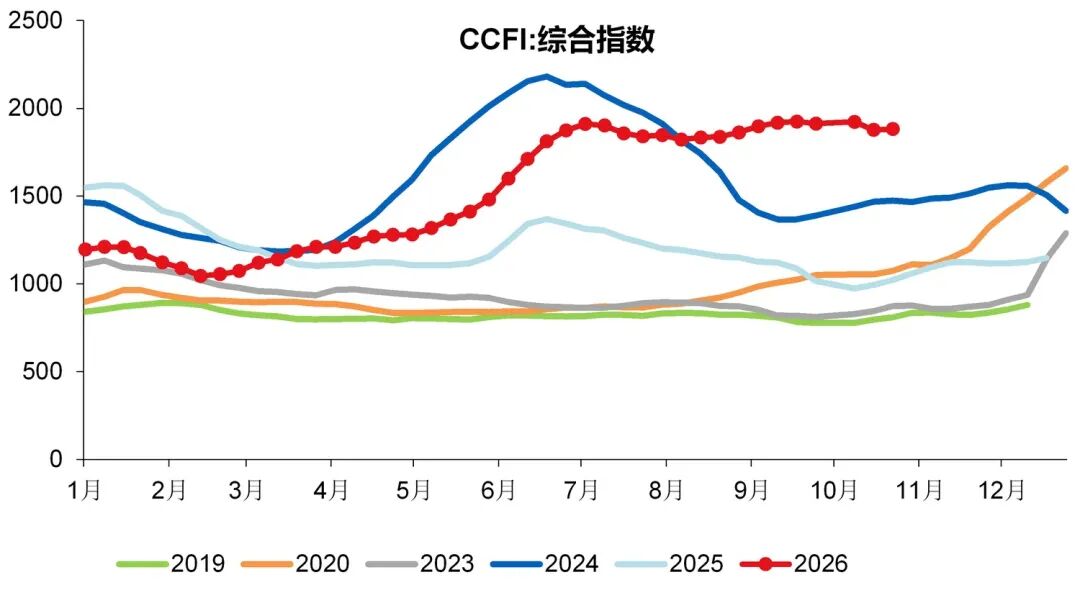
Foreign trade shipping market: Demand from Europe and the US is resilient. Combined with factors such as the Middle East conflict, port congestion, and falling water levels in the Panama Canal, etc., the CCFI continued to rise in the third quarter. The 26Q3 CCFI average was 1,867 points, +55% year-on-year and +38% month-on-month.
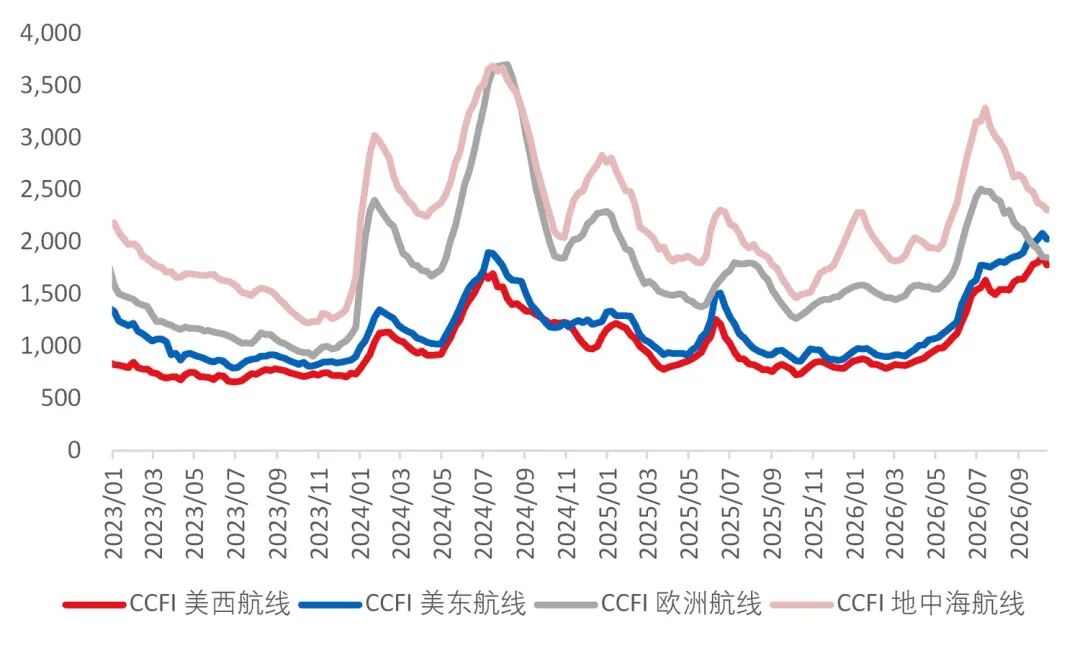
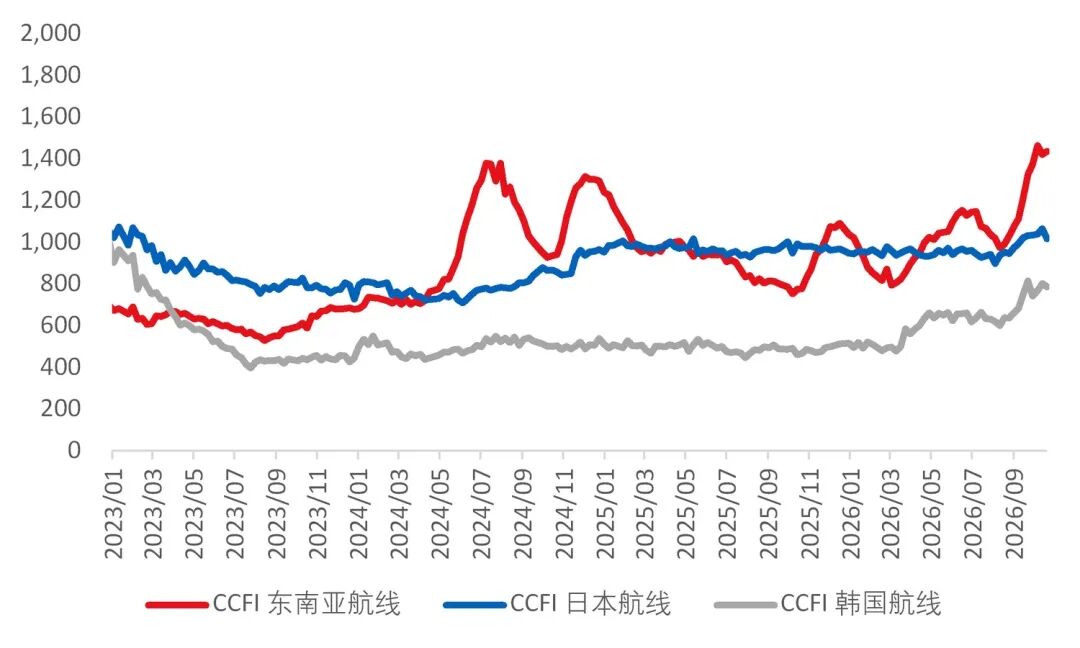
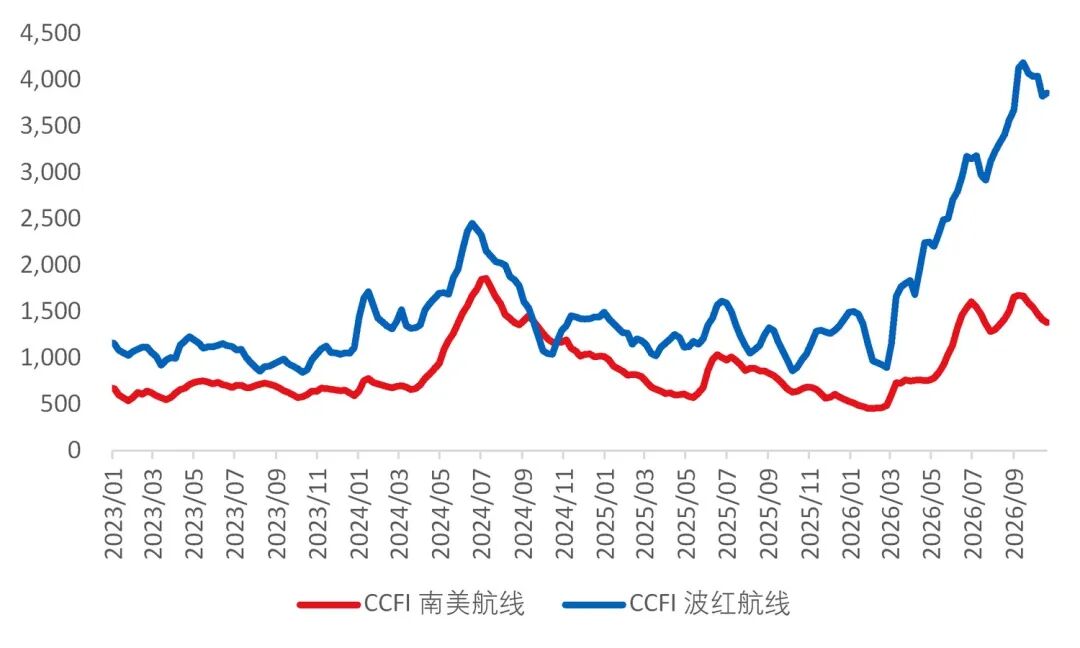
The performance of different routes is divided, 1) The main routes, 26Q3 CCFI European and ground routes +36%, +47%, +36% month-on-month, +36%, +33% month-on-month; US-West and US-East +85%, +72% month-on-month, +58%, and +60% month-on-month, that is, the performance of US routes is better than that of Europe and Europe. 2) In the regional market, the 26Q3 CCFI Southeast Asia route was +29% year-on-year and +8% month-on-month, and the performance was weaker than that of the main line. 3) In emerging markets, the 26Q3 CCFI wave red line, the South American line had the most significant geographical premium of +167%, +67%, and +62% month-on-month; therefore, its increase ranked first among all routes. The South American route was affected by Brazil's tariff adjustment expectations, early shipments by shippers, and port congestion, and freight rate increases were also quite impressive.
Chart 17 CCFI Index Performance
Source: Wind, Huachuang Securities
Chart 18 CCFI main route freight index
Source: Wind, Huachuang Securities
Chart 19 CCFI Asian Intraregional Route Price Index
Source: Wind, Huachuang Securities
Chart 20 CCFI Emerging Regional Route Tariff Index
Source: Wind, Huachuang Securities
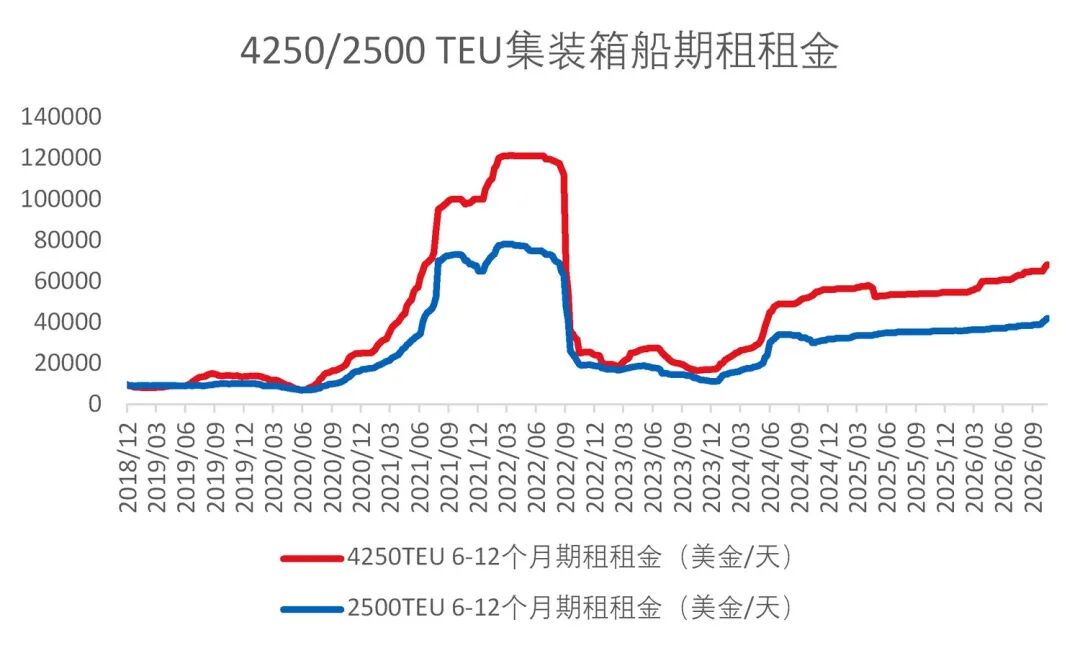
In the foreign trade rental market, branch line rental rates have been rising steadily. The 6-12 month rent for 26Q3 4250 and 2,500 TEU container ships was 630,000 US dollars/day, respectively, +18% and +8.6% compared with the same period.
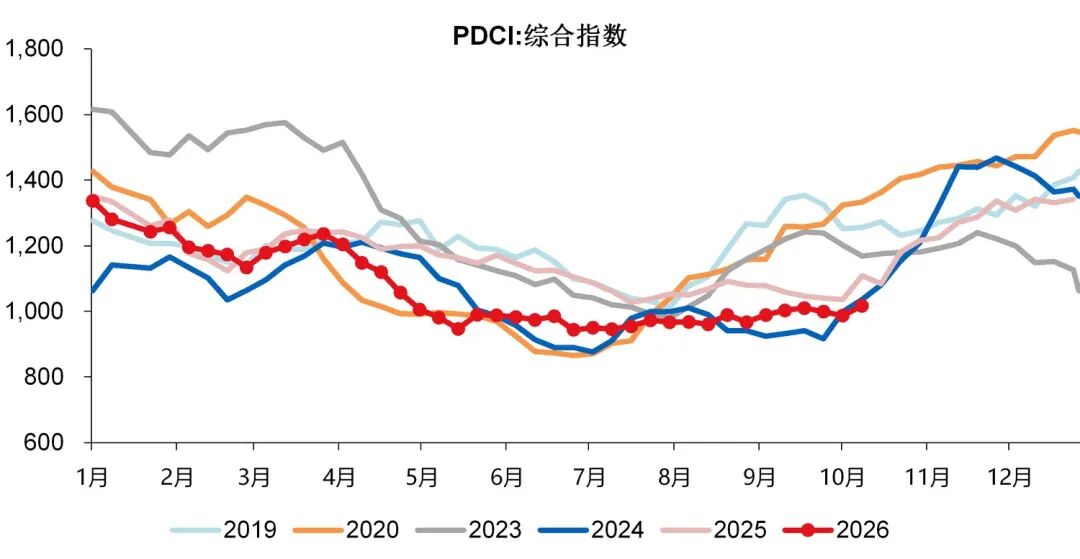
Freight rates in the domestic trade shipping market fell, with an average PDCI of 968 points in 26Q3, -9% year-on-year.
Chart 21 PDCI Index Performance
Source: Wind, Huachuang Securities
Chart 22 4250/2500TEU container ship term rent (USD/day)
Source: Wind, Huachuang Securities
Performance performance
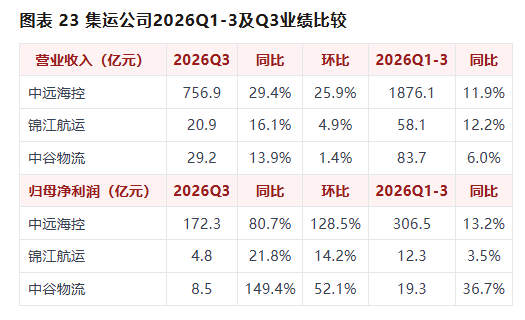
Net profit returned to mother for the first three quarters of 2026: COSCO Marine Holdings was $30.65 billion, +13.2% year over year; Jinjiang Shipping was 1.23 billion, +3.5% year over year; Zhonggu Logistics was 1.93 billion, +36.7% year over year; China Merchants Shipping and Shipping Division's net profit was 1.56 billion yuan, +50% year over year.
Net profit for 2026Q3: COSCO Marine Holdings: $17.23 billion, +80.7%, +128.5%; Jinjiang Shipping: $480 million, +21.8% YoY, +14.2%; Zhonggu Logistics: $850 million, +149% YoY, +52% month-on-month; China Merchants Shipping & Shipping Division's net profit of $980 million, +138% month-on-month.
In line with the freight rate trend, COSCO Maritime Control benefited from rising main line freight rates, and Q3 performance exceeded expectations; in the Asian market, Jinjiang Shipping's Q3 freight rate increase was weaker than that of the main routes, so its performance growth rate was weaker than that of COSCO Maritime Control; Zhonggu Logistics contributed to increased performance growth due to the layout of the Middle East/Red Sea route; and China Merchants Shipping also boosted Antong's profit in the shipping business.
Future market outlook
Clarksons expects the supply-side growth rate of 4.7% and the demand-side growth rate of 4.2% in 2026. At the same time, considering the disruptive effects of factors such as the Middle East conflict, tariff policies, and port congestion on existing route networks, we expect the overall shipping market to be in a tight balance between supply and demand this year; we expect Q4 freight rates to remain relatively high, and continue to be optimistic about the profit improvement of shipping companies in the second half of the year, and the dividend ratio is attractive.
Special Transport: Automobile wind power export boom continues, Haite Q3 profit continues to rise
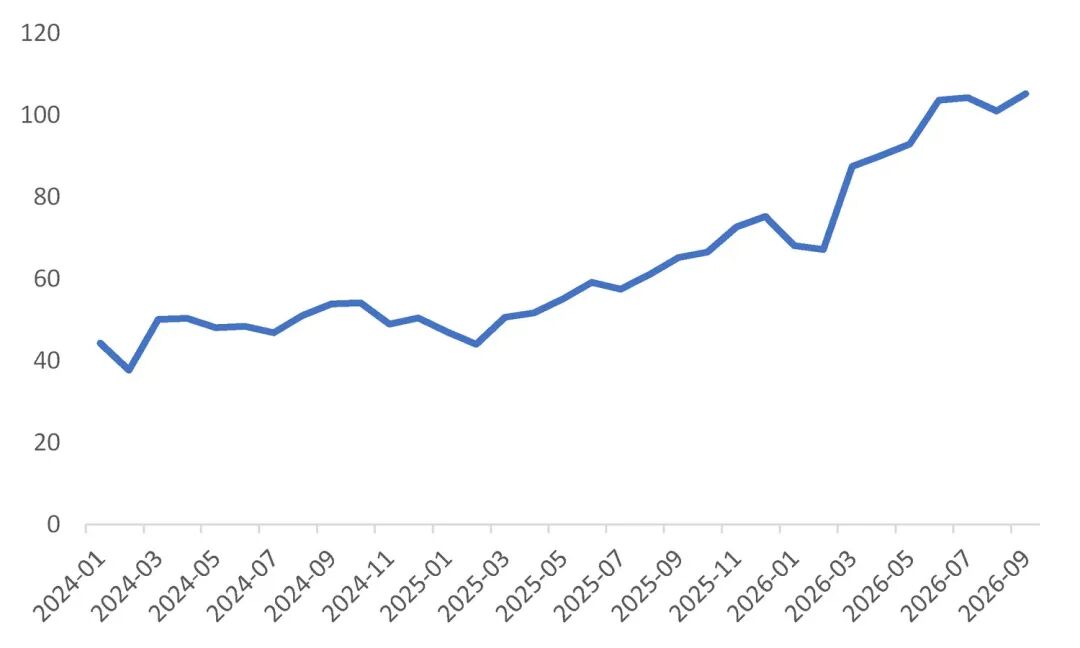
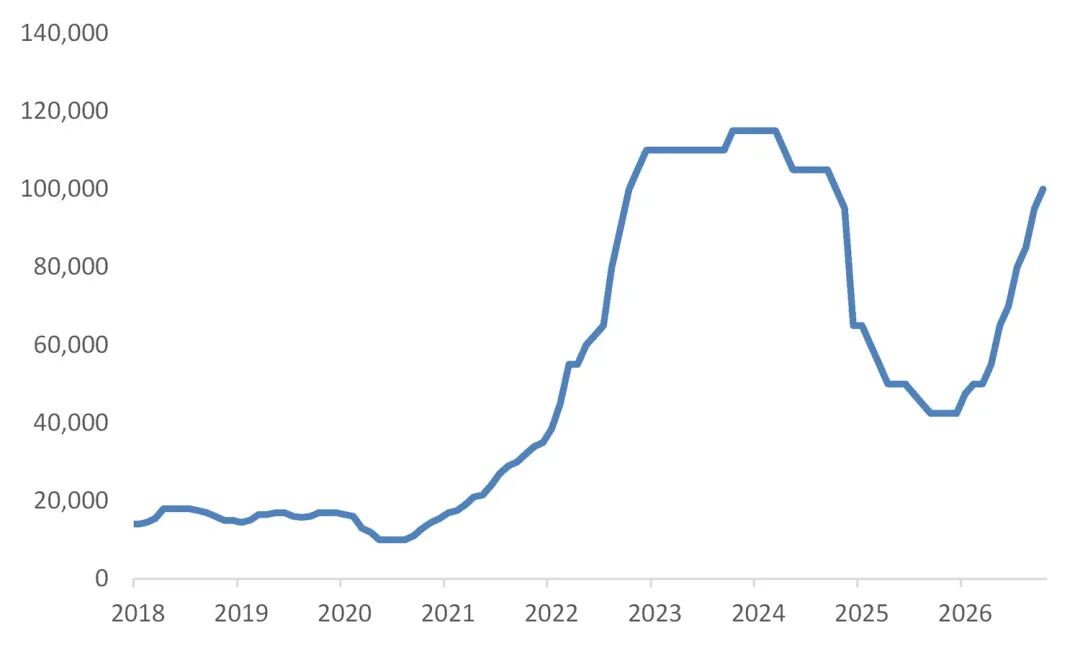
In the first three quarters, China's goods trade exports were +16% year-on-year, showing a booming situation; the equipment manufacturing industry contributed nearly 90% of export growth, and green products such as electric vehicles, lithium batteries, wind turbines and their parts grew by 72.3%, 36.4%, and 22.4%, respectively. In 2026Q3, China exported 3.11 million vehicles, +69% year over year and +8.3% month on month. Benefiting from this, the average 1-year rental price for the 2026Q3 6,500 parking lot robin was 87,000 US dollars/day, +93% year over month, and +36.8% month on month; the average freight rate for the 2026Q3 MPP market was 21,000 US dollars/day, which was basically the same from month to month.
Chart 24 China's automobile exports (10,000 units)
Source: Wind, Huachuang Securities
Chart 25 6-12 monthly rent for a 6,500-parking lot boat (USD/day)
Source: Wind, Huachuang Securities
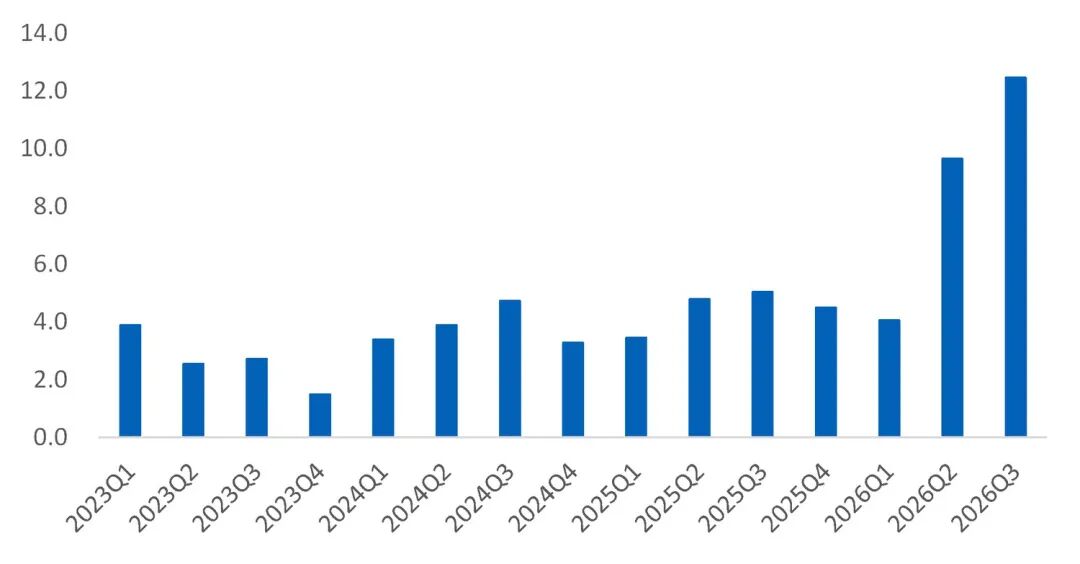
COSCO Haite's revenue for the first three quarters of 2026 was 22.6 billion yuan, +36% year over year; net profit to mother was 2.62 billion yuan, +97% year over year. 2026Q3 revenue was $8.19 billion, +40% YoY, +3.7% month-on-month; net profit to mother was $1.25 billion, +147% YoY, +29%. The company's share of automobiles, wind power, and engineering equipment increased to 21%, 9%, and 8%, totaling 38%. It is expected that it will continue to benefit from the energy transition and overseas dividends made in China.
Chart 26 COSCO Haite's quarterly profit (100 million yuan)
Source: Wind, Huachuang Securities
Investment advice: continue to be optimistic about upward opportunities for all ship types
1. Oil transportation: optimistic about the advent of a major cycle
In the short term, the core contradiction between large consumption of global oil stocks and export demand from upstream oil producers remains unchanged. Combined with high cracking price differences, refinery import demand is driven by high cracking price differences. At the same time, in the context of continuing geographical risks, dark flights and detours have caused efficiency losses. Bottlenecks in the crude oil transportation process are prominent, and there is a clear upward trend in freight rates. In the medium to long term, the shift of Iranian oil to a compliant market+expansion of imports constitutes three major demand-side increases. The elimination of old supply capacity is expected to hedge against new ship deliveries. Changjin Merchant Marine's VLCC is a pattern logic that cannot be ignored in the market. It continues to push China Merchants Shipping and COSCO Marine, and is optimistic about China Merchants South Oil.
2. Dispersion: Freight is running strongly, optimistic about upward potential
The supply growth rate is limited, with on-hand orders for bulk carriers of about 16%, which is the lowest among the three major shipping industries; demand-side Simandou put into production to lengthen transportation distances, and subsequent El Niño weather may catalyze peak season freight rates. We recommend China Merchants Shipping, Haitong Development, and Pacific Shipping.
3. Transportation: Earnings are expected to accelerate upward in the second half of the year, and dividend rates are attractive
Shipping supply and demand are expected to maintain a tight balance during the year. We expect Q4 freight rates to remain relatively high. We continue to be optimistic about shipping companies' profit growth in the second half of the year. The dividend ratio is attractive. We recommend COSCO Maritime Control, Jinjiang Shipping, and Zhonggu Logistics. We recommend focusing on Haifeng International and Dexiang Shipping.
4. Special Transportation: Optimistic about China's automobile exports and high demand for offshore wind power construction, focusing on recommending COSCO Haite
Risk Alerts
Spot freight rates fell sharply, demand fell short of expectations, and the impact of geopolitical events.