
Why PB Fintech Fell Even As Profit Rose
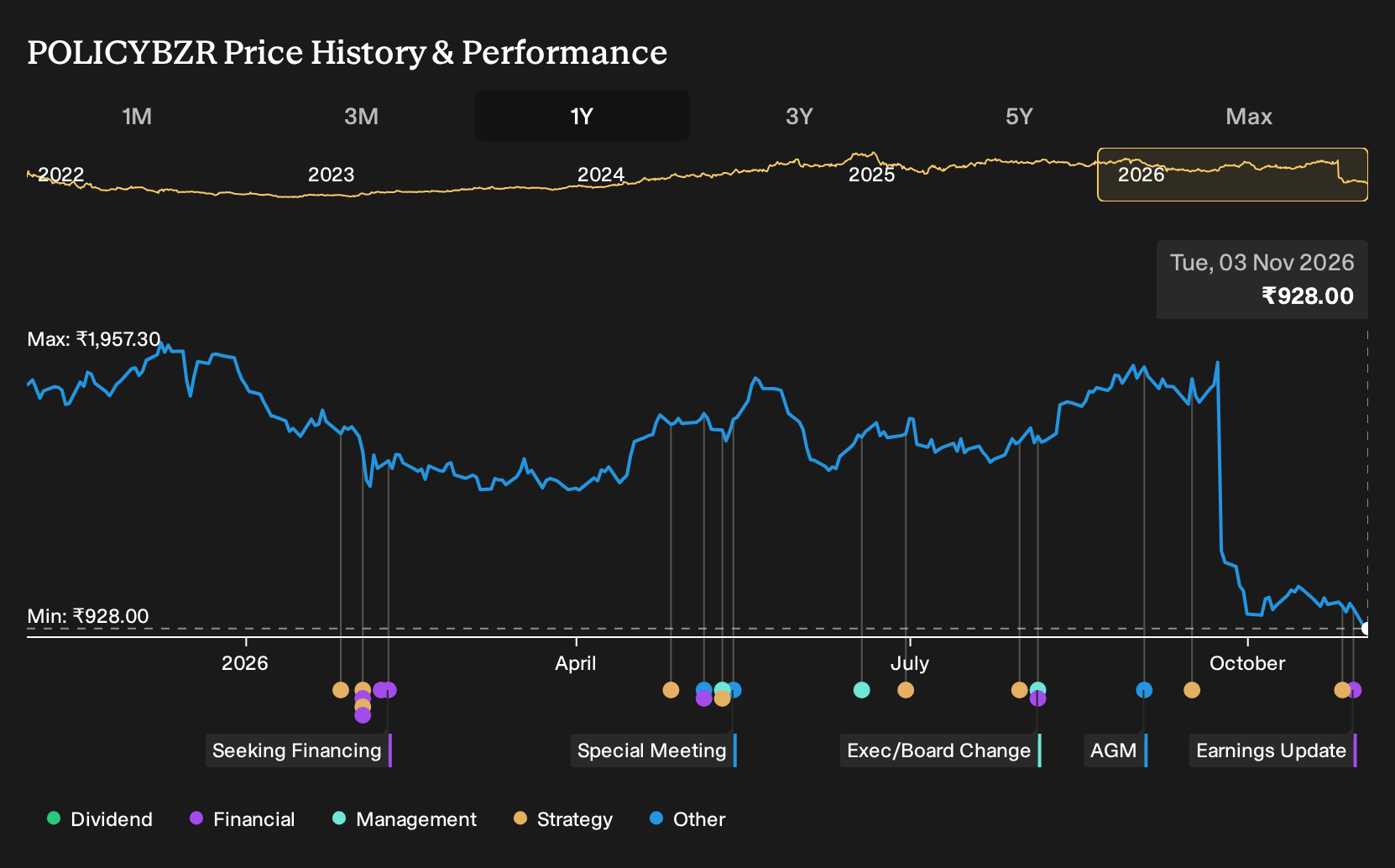
If PB Fintech looked like a textbook digital inclusion winner in late 2025, the next twelve months told a harsher story. For PB Fintech shareholders, the loss over the past year was 49.1%, including dividends. If you had put money in on 3 November 2025, that outcome would probably feel jarring after later reports showed higher revenue and net income. Which specific assumptions baked into the original growth, margin and 2028 P/E forecasts proved too optimistic, and which still look intact today?
The easy part of this move is behind PB Fintech. Zero in on 192 high quality undervalued stocks for companies trading below our estimates.
The Two PB Fintech Stories Investors Were Weighing
The shares cost ₹1,810 at the start of the period, and PB Fintech sat between two sharply different stories about its future.
On the optimistic side, the “Digital Inclusion In India Will Expand Insurance Markets” view put Fair Value at ₹1,914, a price that simply reflected its own growth math. That stance leaned on assumed 28.6% annual revenue growth and profit margins reaching 14.3% by around 2028.
The opposing “Rising Compliance Costs Will Shrink Indian Digital Insurance Space” narrative pointed to a Fair Value of ₹1,370. That cautious case focused on rising data privacy regulation and compliance costs as a direct threat to PB Fintech's data driven model.
What The Results Changed For PB Fintech
PB Fintech’s latest figures gave both stories new fuel. Revenue moved from ₹16,135.5m in Q2 2026 to ₹21,777.1m in Q2 2027, while net income rose from ₹1,348.6m to ₹1,924.5m and net margin nudged up from 8.4% to 8.8%. That pattern backed the optimistic case on scaling and profitability, yet still left the 14.3% margin target unproven.
The transferable lesson is simple. When a growth story leans on future margin expansion, treat net margin as the central claim and track the reported percentage each year against the original forecast path.
What PB Fintech's Drop Might Be Offering Today
PB Fintech now trades at ₹928, well below where it started a year ago. The selected Narrative places its Fair Value above the current price, based on a view that the renewal pool, health and term protection, and early healthcare operations could reshape earnings quality.
Rather than treating the fall as a clear warning, you would need to judge whether PB Fintech can keep compounding renewal and protection premiums while bringing newer ventures, especially Paisabazaar and international operations, closer to breakeven without eroding group profitability.
"The core renewal and trail pool reaching ₹1,003 crores over the last 12 months in Q1 FY27, up 55%, together with management’s expectation that renewal growth will stay above 50% and ahead of fresh business over at least the next year, creates scope for a richer mix of high margin recurring revenue that may support higher net margins and earnings than current models imply."
Not everyone reads the same price the same way. → See the higher figure this Narrative lands on, and how it gets there
PB Fintech And A Parallel Route
PB Fintech is trying to pull more people into formal cover online. You might also look at who is reworking traditional insurance from the inside.
One large insurer is pushing hard on digital tools and AI in routine work. That effort aims to trim costs while keeping service levels acceptable.
It is also rethinking health coverage around prevention, care delivery and digital support. The goal is to bind insurance more tightly to everyday healthcare decisions.
Retirement and savings products are being nudged toward models that use less capital. That shift could change how earnings and cash returns stack up over time.
If PB Fintech is one way into insurance change, this incumbent shows another. You decide which path, or mix of paths, fits your portfolio thinking.
That argument has a Narrative and a number behind it. → See the company one Narrative values 21% above its price
Have feedback on this article? Concerned about the content? Get in touch with us directly. Alternatively, email editorial-team@simplywallst.com