
PG&E (PCG) Pushes Wildfire Liability Cap While Warning On $2 Billion Grid Delays
- PG&E (NYSE: PCG) and Edison are lobbying California lawmakers for legislation that would cap shareholder liability for wildfire damages.
- The proposed framework would shift wildfire costs above the cap from investors to ratepayers through future electricity bills.
- Consumer advocates have condemned PG&E’s push as a bailout attempt and described its approach as “blackmail” toward legislators.
- PG&E has signaled it could delay about $2b of grid hardening and safety projects if lawmakers resist the liability cap proposal.
- The lobbying drive for wildfire liability caps and threats to slow US$2b of spending only capture part of PG&E’s story. Our analysis turns up 4 other big wins for PG&E as well.
For readers comparing PG&E’s wildfire risk moves with other grid operators, the next logical step is to scan 41 power grid technology and infrastructure stocks.
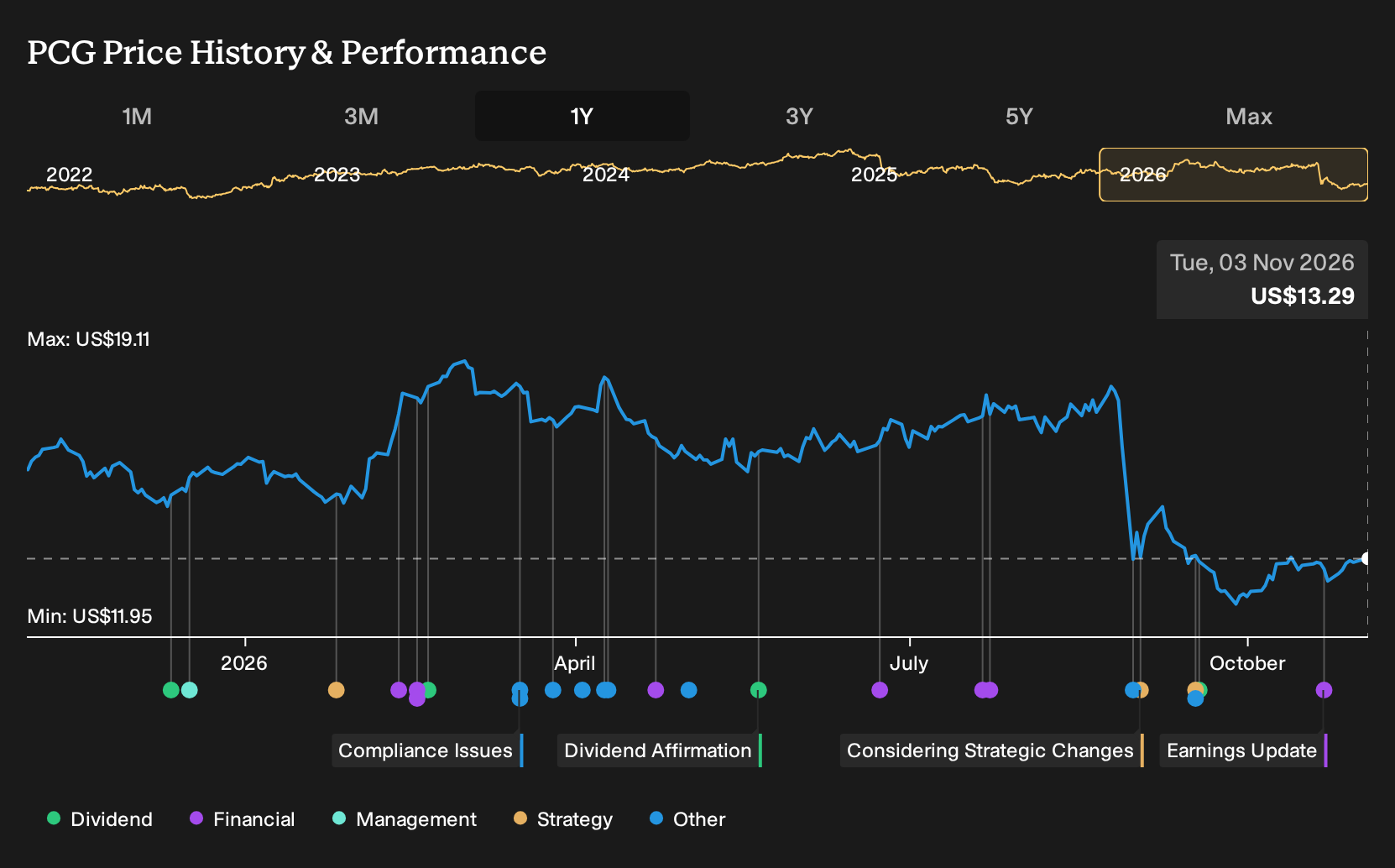
PG&E operates a large regulated utility through Pacific Gas and Electric Company, delivering electricity and natural gas across northern and central California. As a result, any change in wildfire liability directly affects how this essential grid work is financed and how risk is shared between investors and local households.
See how PG&E's balance sheet measures up.
How could a wildfire liability cap affect PG&E’s finances?
A hard cap on shareholder wildfire liability would limit how much loss sits with PG&E’s equity and balance sheet before excess costs move to customers. That could reduce the risk of very large one off charges that strain interest coverage, which is already flagged as a weak point because interest payments are not well covered by earnings. The trade off is higher bill pressure for ratepayers if severe fires occur.
What does this lobbying tell you about PG&E’s spending and earnings profile?
The threat to delay US$2b of grid work shows how tightly PG&E links safety projects, capital deployment and future earnings. It reported US$749m in Q3 2026 net income on US$6,188m of revenue and reaffirmed a US$73b grid plan with a US$2b 2027 capex cut, so lawmakers’ decisions now sit directly against that spending roadmap. Any extended pause or reshaping of projects could influence how quickly PG&E converts its capital plan into regulated returns.
Does this change the PG&E Narrative on wildfire reform risk?
The push for liability caps goes straight to the Narrative’s core risk that wildfire rules and the AB 1054 fund could keep PG&E on a weaker credit footing and lift funding costs. Success would line up with the catalyst that anticipates improved wildfire protections and lower financing spreads, while failure would reinforce the concern that persistent legislative uncertainty weighs on margins and earnings.
See how these catalysts shape PG&E's path to a $17.56 fair value.
What should PG&E investors watch next to judge the impact?
The key marker is what California lawmakers do in the special session before Thanksgiving and how any bill handles liability caps, use of the AB 1054 fund and cost sharing with customers. Pair that with rating agency commentary, since a move away from Fitch’s negative outlook or clearer language on PG&E’s credit trajectory would show whether the lobbying effort actually shifts financing risk.
Add PG&E to your Watchlist and get alerts as these catalysts play out.
Have feedback on this article? Concerned about the content? Get in touch with us directly. Alternatively, email editorial-team@simplywallst.com