
3 Defensive Dividend Stocks to Watch Before the Next Fed Rate Move
Interest rate drama is back on center stage, and the upcoming jobs report could swing the Fed’s next move, along with your income portfolio, in unexpected ways. When policy direction feels murky, investors who rely on dividends often worry about both payouts and price swings at the same time. This piece breaks down three stocks from our U.S. Rate-Sensitive Dividend and Defensive Stocks screener that appear particularly exposed to this latest Fed narrative shift.
The three stocks covered below are just a sample from this rate-sensitive dividend and defensive theme, with the full screen surfacing 15 more large caps with income profiles and risk stories that are not covered here.
To identify and analyze which of these resilient payers might best fit your own portfolio approach, head straight to the U.S. Rate-Sensitive Dividend and Defensive Stocks screener.
Healthcare Realty Trust (HR)
Healthcare Realty Trust fits this rate-sensitive, dividend-focused theme because it owns medical outpatient buildings tied to major hospital campuses. This gives investors exposure to a defensive corner of real estate where rent checks often matter more than daily market swings.
Healthcare Realty Trust is a healthcare REIT that owns and operates 579 medical outpatient properties across 28 U.S. states, generating about US$1.1b of revenue from its health care real estate portfolio and carrying a market value of roughly US$6.6b.
"Sustained sector-wide strength in outpatient medical demand, coupled with medical outpatient completions that management describes as near all time lows, continues to support high occupancy and rent growth potential for Healthcare Realty Trust, which can feed into revenue and same store NOI."
What really matters next is how one unresolved pressure shapes the path of cash flow that underpins both future distributions and rate sensitivity.
With that pressure point in mind, read the full narrative for Healthcare Realty Trust to see how Healthcare Realty Trust’s rate sensitivity, payout path and growth options could be decoupling from the broader REIT pack.

PepsiCo (PEP)
PepsiCo is in this income-focused, rate-sensitive screener because its snacks and drinks portfolio tends to see steady everyday demand. This can appeal when investors look for defensive cash flows rather than more cyclical stories tied to jobs data and Fed timing.
PepsiCo runs a global snacks and beverages franchise, from chips and cereals to sodas and ready-to-drink coffees. PepsiCo Beverages North America generates about US$29.5b of revenue, and PepsiCo Foods North America adds roughly US$27.5b, contributing to a US$194.2b market value.
"The company is pushing into functional and health-focused drinks with the acquisition of Poppi (prebiotic soda), ownership of Bubly (sparkling water), and a partnership with Celsius (including Rockstar energy drinks)."
What matters most now is how one pressure point in its profitability mix responds to that shift in what shoppers choose to put in their carts.
That pressure point is exactly what the full narrative for PepsiCo unpacks, showing where PepsiCo’s shifting mix could be masking resilience or accelerating new profit engines.

Public Storage (PSA)
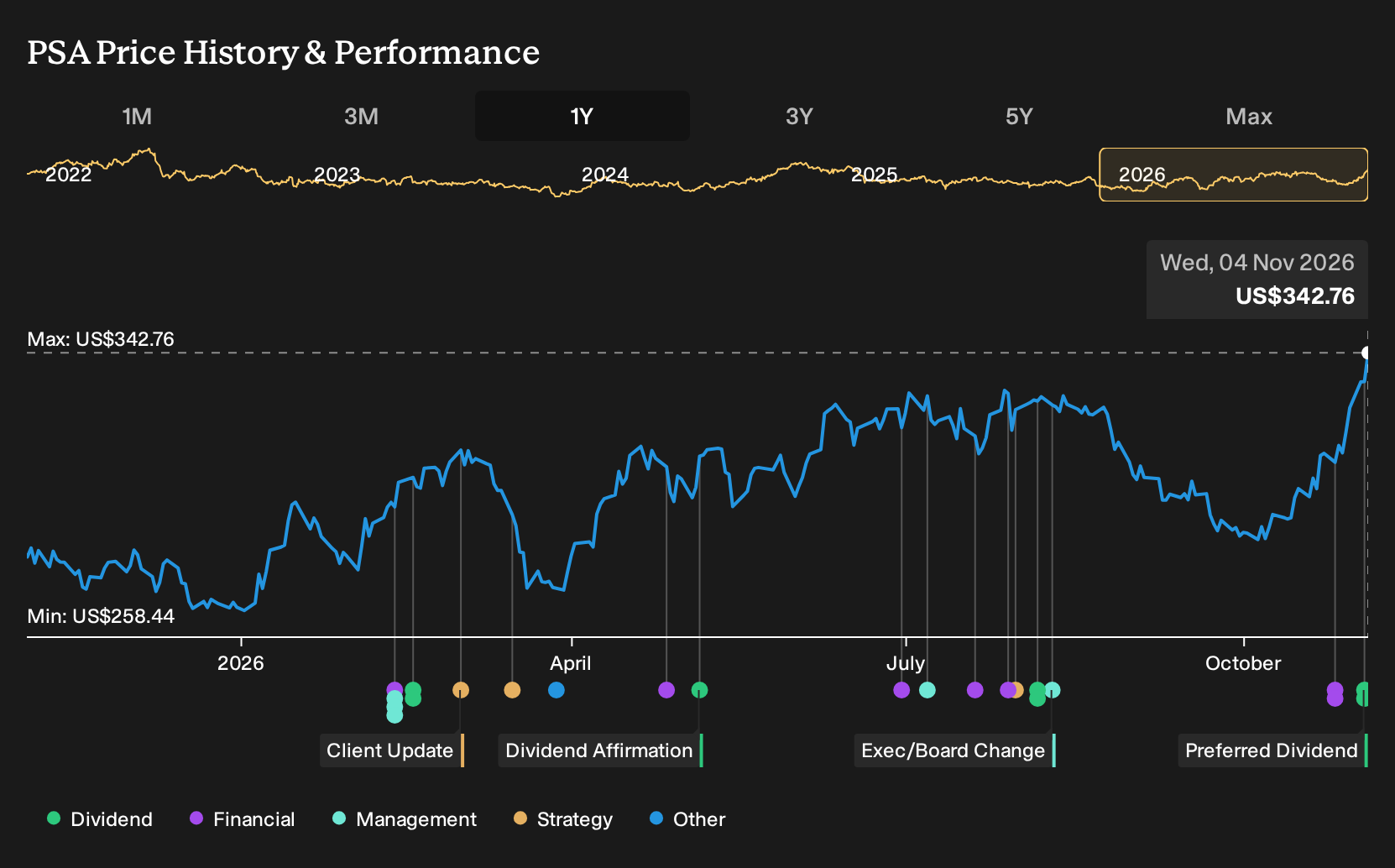
Public Storage brings the screener theme to life as a large self storage REIT built around recurring rent checks rather than cyclical sales. It owns and operates thousands of facilities that generate most of its income from storage fees, plus smaller ancillary services, and carries a market value of about US$64.7b.
Public Storage fits a rate sensitive, defensive income profile because its self storage network leans on recurring rent from households and small businesses rather than big economic swings.
"Urban densification and shrinking residential living space in major metro markets continue to support demand for self storage, which can help Public Storage sustain occupancy and support future revenue growth as constrained housing markets persist."
What happens to that income story next depends heavily on how one quiet pressure around funding costs and balance sheet flexibility unfolds.
That quiet funding pivot is exactly what the full narrative for Public Storage unpacks, revealing how Public Storage’s rate sensitivity and cash engine could be quietly decoupling from typical REIT stories.
Seeking Fresh Alternatives Before They Fly
Fresh ideas move first. By the time every headline catches on, the cleanest entry points can be gone. Scan focused lists that remain under the radar for now and consider moving early.
- Find potential income workhorses before yield hunters crowd in by scanning a curated set of high payout candidates through the 5 dividend fortresses.
- Track early momentum where AI aligns with real earnings power and avoid pure hype by zeroing in on the 41 profitable AI stocks that aren't just burning cash.
- Explore possible infrastructure-related ideas by combing through rigorously filtered utilities and grid players in the 41 power grid technology and infrastructure stocks.
Have feedback on this article? Concerned about the content? Get in touch with us directly. Alternatively, email editorial-team@simplywallst.com