
3 High Quality Dividend Stocks for Reliable Income in Rate Sensitive Markets
With markets bracing for more rate hikes on both sides of the Atlantic while inflation and growth cool more slowly than investors might like, reliable dividend payers are back under the spotlight. Income stocks exposed to this tug of war between central banks and money markets can offer both opportunity and risk if you pick the wrong kind. This article walks through three high quality dividend stocks from our screener that appear particularly interesting at the moment.
The three stocks highlighted next are only a first pass from this income screen, and the full filter surfaced another 15 large cap dividend payers with equally compelling stories that are not covered below. To see everything in one place, head straight into the High-Quality Dividend Stocks in the US and Eurozone screener to identify ideas, analyze balance sheets, and focus on the highest conviction dividend opportunities.
Alpine Income Property Trust (PINE)
Alpine Income Property Trust fits the high quality dividend theme through its focus on long term rental income and loan interest, giving income investors exposure to a REIT that is built around recurring cash flows instead of short term trading angles.
Alpine Income Property Trust is a US REIT investing in single tenant net lease properties and a complementary commercial loan portfolio, generating about US$50.7 million from income properties and US$24.7 million from loans, with a market cap near US$319 million that keeps it in smaller cap territory for this screener.
The build out of Alpine Income Property Trust's high coupon commercial loan book at about 20% of total undepreciated asset value, with US$167 million of loans at a 13.2% weighted average coupon by Q2 2026 and ongoing recycling of lower yielding payoffs into higher yielding loans, is expected to support interest income and funds from operations.
The real test for Alpine Income Property Trust is how one unresolved pressure on its funding mix and payout ambitions plays out from here.
That funding overhang is exactly why it helps to read the full narrative for Alpine Income Property Trust and see how Alpine Income Property Trust’s income engine could evolve from here.

Realty Income (O)
Realty Income fits the high quality dividend theme as a large net lease REIT built around long contracts and predictable rent. This gives income focused investors exposure to long lived cash flows rather than short term trading swings in a still hawkish global rate backdrop.
Realty Income is an S&P 500 REIT known as The Monthly Dividend Company, generating about US$6.2b from leasing properties to clients across the US and Europe, and carrying a market value near US$56.3b. This puts it firmly in large cap territory for this screener.
Given the maturity of the business, its historical data and the fact that I project a higher interest rate environment over the next couple of years, I believe the company will grow its dividends at around ~2.5%, so below the economy growth rate of ~4.95% (10-Year U.S. bond rate).
What happens if one key pressure on funding costs and capital recycling shifts faster than the current income profile assumes?
If that funding shift is what you are watching, the full narrative for Realty Income lays out how Realty Income could adapt its income playbook as conditions evolve.

NETSTREIT (NTST)
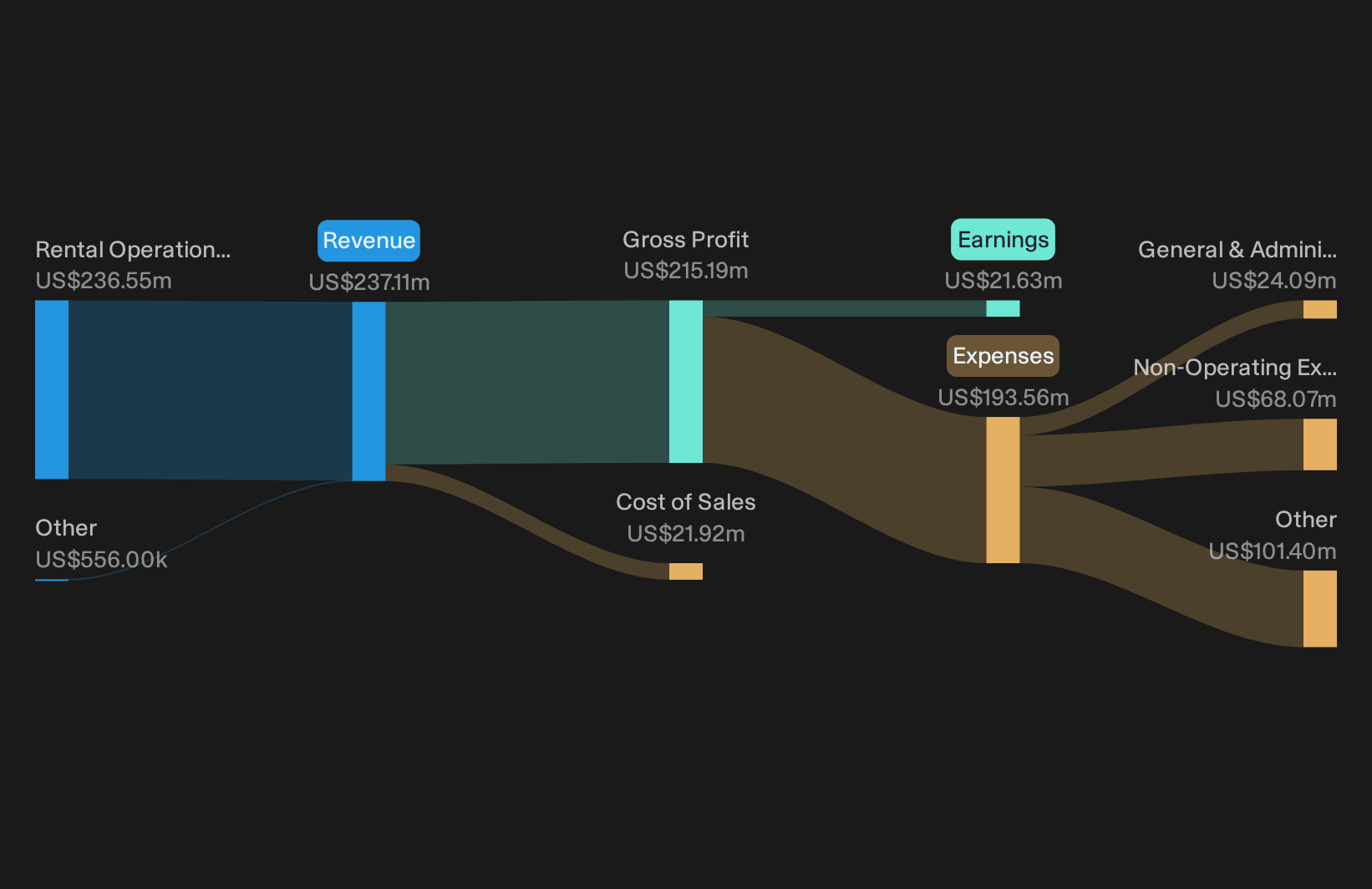
NETSTREIT fits the high quality dividend theme through its focus on single tenant net lease retail properties, using long leases and modest leverage to support steady rental income. The trust generated about US$236 million from rental operations in the US and carries a market value near US$2.4b.
For dividend focused investors who like clear, recurring cash flows, NETSTREIT offers a straightforward story built around necessity retail tenants and long leases that can help smooth out the rate noise hitting bond and equity markets.
Conservative use of NETSTREIT’s balance sheet, including adjusted net debt to annualized adjusted EBITDA of 3.2x and access to about US$1.1b of liquidity, together with raised net investment guidance of US$700 million to US$800 million for 2026, points to capacity for external acquisitions that can add to rental revenue and AFFO over time.
The real swing factor is how pressure on acquisition spreads and funding costs shapes the income stream that underpins NETSTREIT’s dividend profile.
If that income engine under pressure is what you care about, read the full narrative for NETSTREIT to see how NETSTREIT’s acquisitions, tenant mix and funding plans could be accelerating quietly in the background.
Seeking Fresh Alternatives Right Now
Fresh breakout ideas rarely stay under the radar for long. Momentum shifts, stories get crowded, and clean entry points keep dropping away. Scan these curated lists and act now.
- Spot potential trend leaders early and run a quick filter through the 19 high quality undiscovered gems before the stories start flying across every watchlist.
- Zero in on resilient balance sheets and stress test your current holdings against the list of solid balance sheet and fundamentals (25 results) while that quality gap still matters.
- Position ahead of the next infrastructure wave and sift through the 41 power grid technology and infrastructure stocks before grid upgrade spending hits more front pages.
Have feedback on this article? Concerned about the content? Get in touch with us directly. Alternatively, email editorial-team@simplywallst.com