
What Visteon Holders Got Wrong Before The Slide
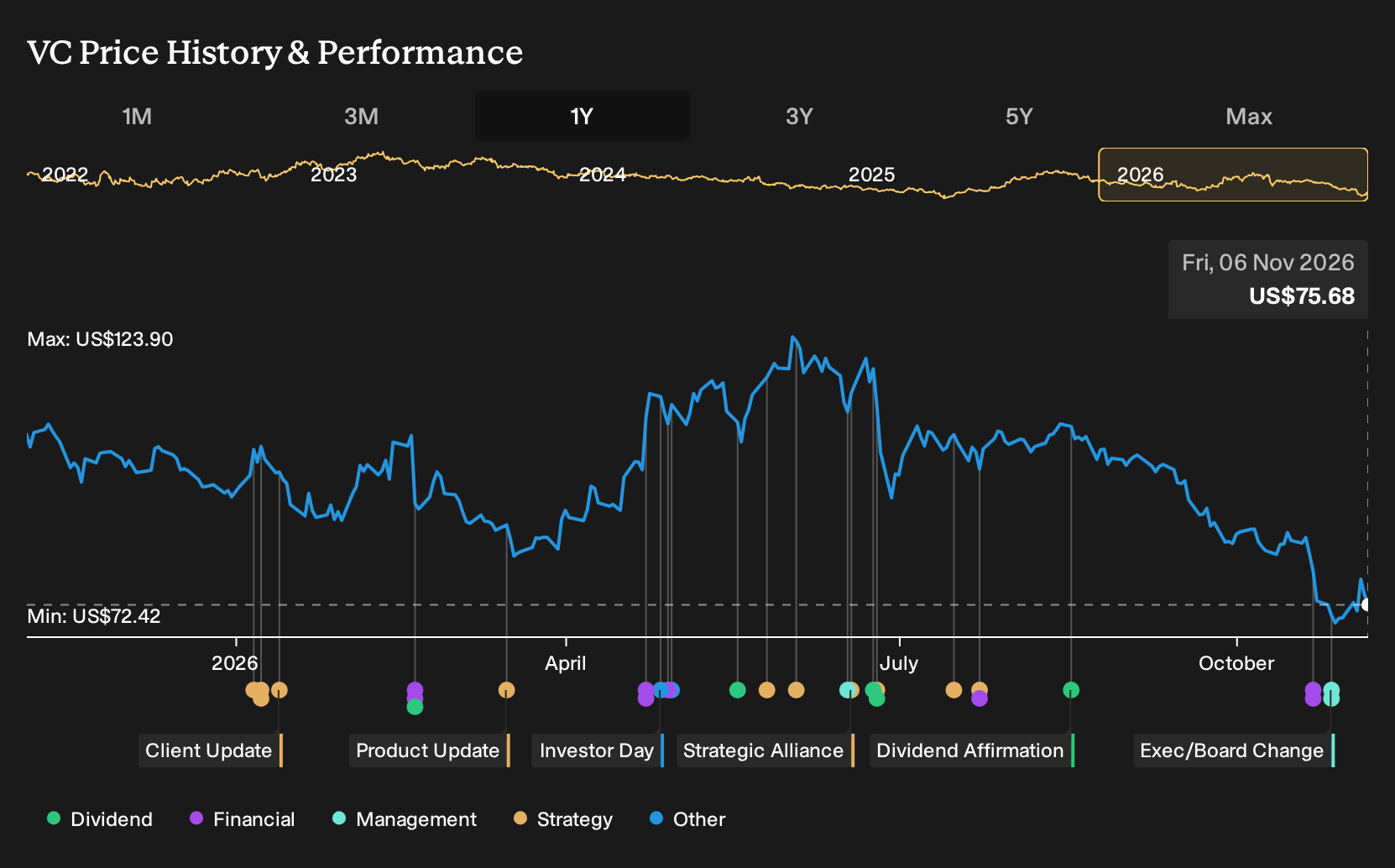
If you had bought Visteon on 6 November 2025, picking a side between bullish talk of dividend initiation and AI cockpit wins and bearish warnings about OEM insourcing and tariff risk, the outcome would have stung. Holding Visteon over the past year would have meant a 28.5% loss, including dividends. If that investment call felt grounded at the time, which assumptions about modest revenue growth, shrinking margins and a higher future P/E deserve the closest second look now?
The useful thing about a Narrative is that the reasoning is checkable: the assumptions sit beside the argument, and together they imply an estimated Fair Value you can disagree with.
Visteon has already moved. Pinpoint other ways to investigate the theme among 53 AI infrastructure stocks.
The Two Visteon Stories Investors Had To Weigh
The shares cost US$104 at the start of the period, and anyone looking at Visteon had to decide which future sounded more reasonable.
On the upbeat side, one view put Fair Value at US$127, assuming revenue growth of 3.8% a year and a future P/E of 16.0x as cockpit AI and large displays gained traction.
The more cautious script pointed to a Fair Value of US$82, based on revenue increasing by 0.3% annually and profit margins settling near 5.3% under tariff and insourcing pressure.
What The Results Changed For The Visteon Thesis
The clearest new fact was that Visteon’s Q3 2026 revenue reached US$970 million, with net income moving from a US$11 million loss to a US$5 million profit and net margin lifting from 1.2% below zero to a positive 0.5%. That modest profitability and narrow margin supported the cautious script more than the upbeat one built on healthier, sustained earnings power.
The lesson is simple. When a story leans on margin expansion, watch the reported net margin line and compare it to the thesis, not the share price, to judge progress.
What Visteon’s Lower Price Asks You To Believe Today
Visteon trades at US$75.68 today, and this Narrative’s Fair Value sits above that mark, based on a view that current pricing underplays the cockpit computing pipeline and planned cash returns.
The bearish analyst Narrative on Simply Wall St argues that for this gap to close, a buyer now would need confidence that Visteon can translate booked SmartCore and AI cockpit awards into meaningfully stronger earnings power than recent margin pressure implies.
"Although Visteon is winning software defined cockpit and high performance compute awards with about $3b of new business in the first half of 2026, persistent gross margin pressure around 12.1% and EPS that declined roughly 28.9% annually over the past two years suggest that converting booked programs into healthy earnings is proving harder than expected. This could restrain future net margins even if revenue meets current targets."
One Narrative disagrees with today's price. → See where this Narrative says Visteon should trade
Visteon And A Different AI Bet?
Visteon is one way to play software heavy cockpits. You could also look one step away, at who is reimagining mobility and labor around AI.
Instead of focusing on dashboards, this other business is building full electric vehicles and energy systems wrapped in software.
Its pitch is simple. Treat hardware as a carrier for AI services that can be updated, reconfigured and monetised over time.
The same philosophy extends to self driving tech and even humanoid robots trained for physical work.
If that model takes hold, the open question is how far AI services, not machines, might reshape where you look for value.
The case is on the record, with the assumptions it rests on. → See the Narrative that values this company 86% above its price
Have feedback on this article? Concerned about the content? Get in touch with us directly. Alternatively, email editorial-team@simplywallst.com