
The Call Stanley Black & Decker Bulls Got Right Before A 81% Rally
Tariff refund checks are usually a footnote, yet for Stanley Black & Decker a US$180.7 million refund turned into higher Q3 2026 margins, extra growth spend and a fresh US$1b buyback authorization. Holding Stanley Black & Decker over the past year would have returned 81.3%, including dividends. If you were deciding back on 9 November 2025, what would you have needed to believe about tools demand, tariffs and digital jobsite tools for that to feel reasonable?
Narratives are how investors here put a case on the record, with explicit assumptions about revenue, margins and the multiple. Those assumptions imply an estimated Fair Value.
The easy part of this move is behind Stanley Black & Decker. Zero in on 33 high quality undervalued stocks for companies trading below our estimates.
The Argument You Would Have Been Weighing On Stanley Black & Decker
The shares cost US$68.27 at the start of the period. At that price, you were choosing between two very different stories about where Stanley Black & Decker could head next.
The bullish narrative saw a Fair Value of US$86.49. It assumed global urbanization and more home improvement activity would support demand, while a supply chain overhaul and investment in digital tools such as MSUITE would help move gross margin toward 35% over time.
The bearish case put Fair Value at US$64. It focused on aging U.S. and European populations, pressure from low cost Asian rivals, and tariff driven cost inflation that could keep long run P/E around 11.5x, with assumed revenue growth of 1.8% and profit margin of 7.1%.
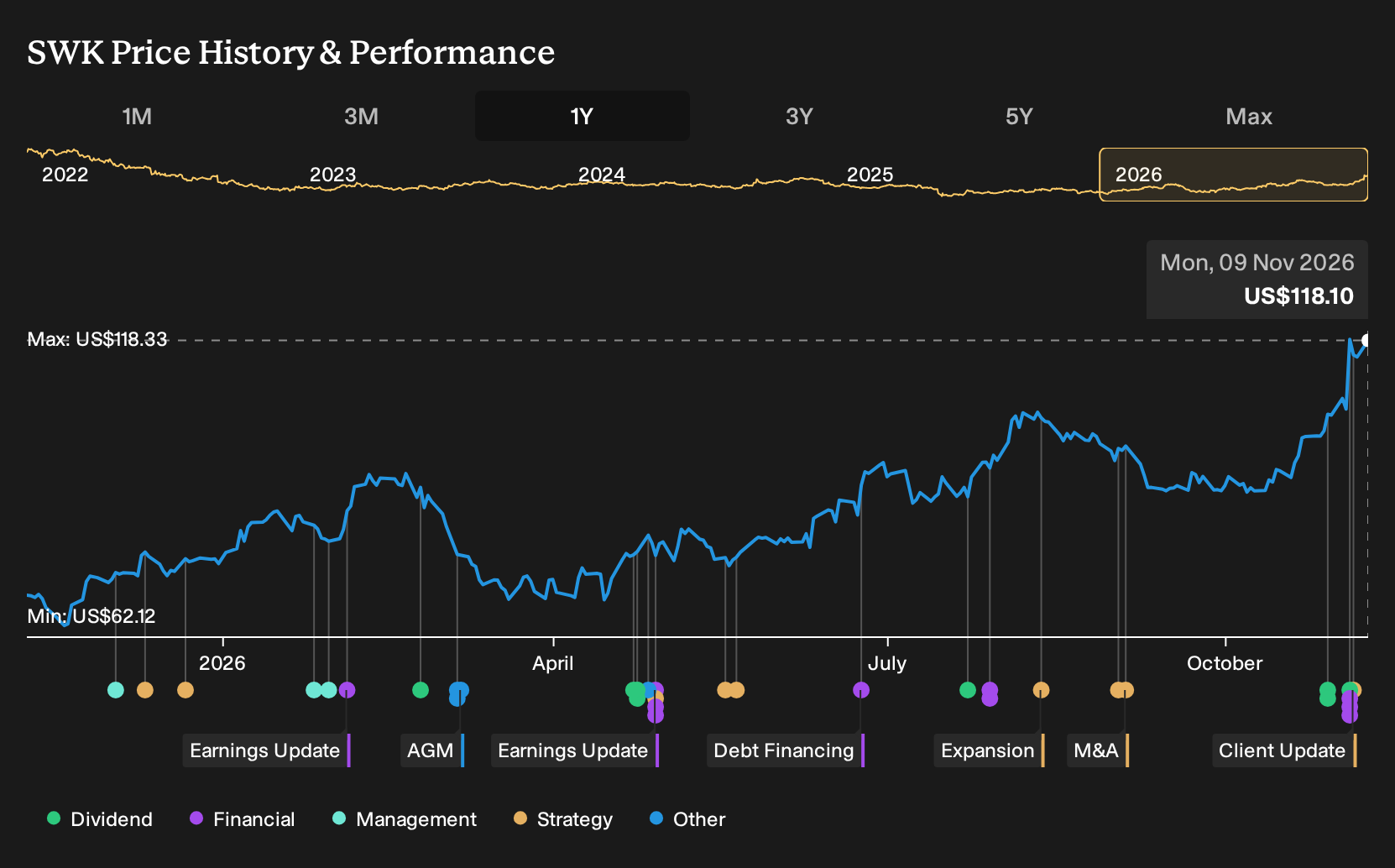
What The Results Changed For Stanley Black & Decker
Stanley Black & Decker’s Q3 2026 update gave the optimistic story more weight. Net income excluding extra items moved from US$51.4 million in Q3 2025 to US$272.1 million in Q3 2026, while net margin rose from 1.4% to 7.3%, helped by the US$180.7 million tariff refund, even as revenue slipped from US$3,756 million to US$3,731.6 million. That mix of stronger profitability on slightly lower sales meant the evidence cut both ways.
The lesson is simple. When you see a margin target such as 35% for a company like Stanley Black & Decker, track actual net margin and any one off gains separately so you can tell whether the underlying engine is improving or just getting a temporary lift.
What You Are Paying For In Stanley Black & Decker Today
Stanley Black & Decker now trades at US$118 after an 81.3% total return over the past year. The analyst consensus Narrative on Simply Wall St sees its Fair Value below that level, while highlighting progress on tools, connected platforms and the margin program.
At this price you would be asking whether margin expansion and cost productivity can keep landing as planned, because that story sits alongside footprint consolidation and legal risks that could make those gains harder to sustain.
"The main thing that has to go right is continued delivery on margin expansion and cost productivity, as the company works from about 33 to 34% adjusted gross margin toward its stated 35 to 37% target by 2028 while reshaping its manufacturing footprint and product platforms."
One Narrative disagrees with today's price. → See where this Narrative says Stanley Black & Decker should trade
Before The Next Story Makes Headlines
What if your next investment idea came before the headlines? Go straight to the companies whose prices and our estimates still disagree. Three places to start, with the names waiting behind the link.
- Company 1 - 38% below our estimate - helps clients address AI-related failures, user risks and evolving regulatory pressures.
- Company 2 - 31% below our estimate - links subscription software and AI workloads through a unified cloud and contract platform.
- Company 3 - 16% below our estimate - leans on custom security hardware refresh cycles while expanding deeper into cloud defense.
Three companies from the same screener. Open the full list of 25 financially solid companies →
Have feedback on this article? Concerned about the content? Get in touch with us directly. Alternatively, email editorial-team@simplywallst.com