
Surprised By Bata India’s Slide? What Investors Missed
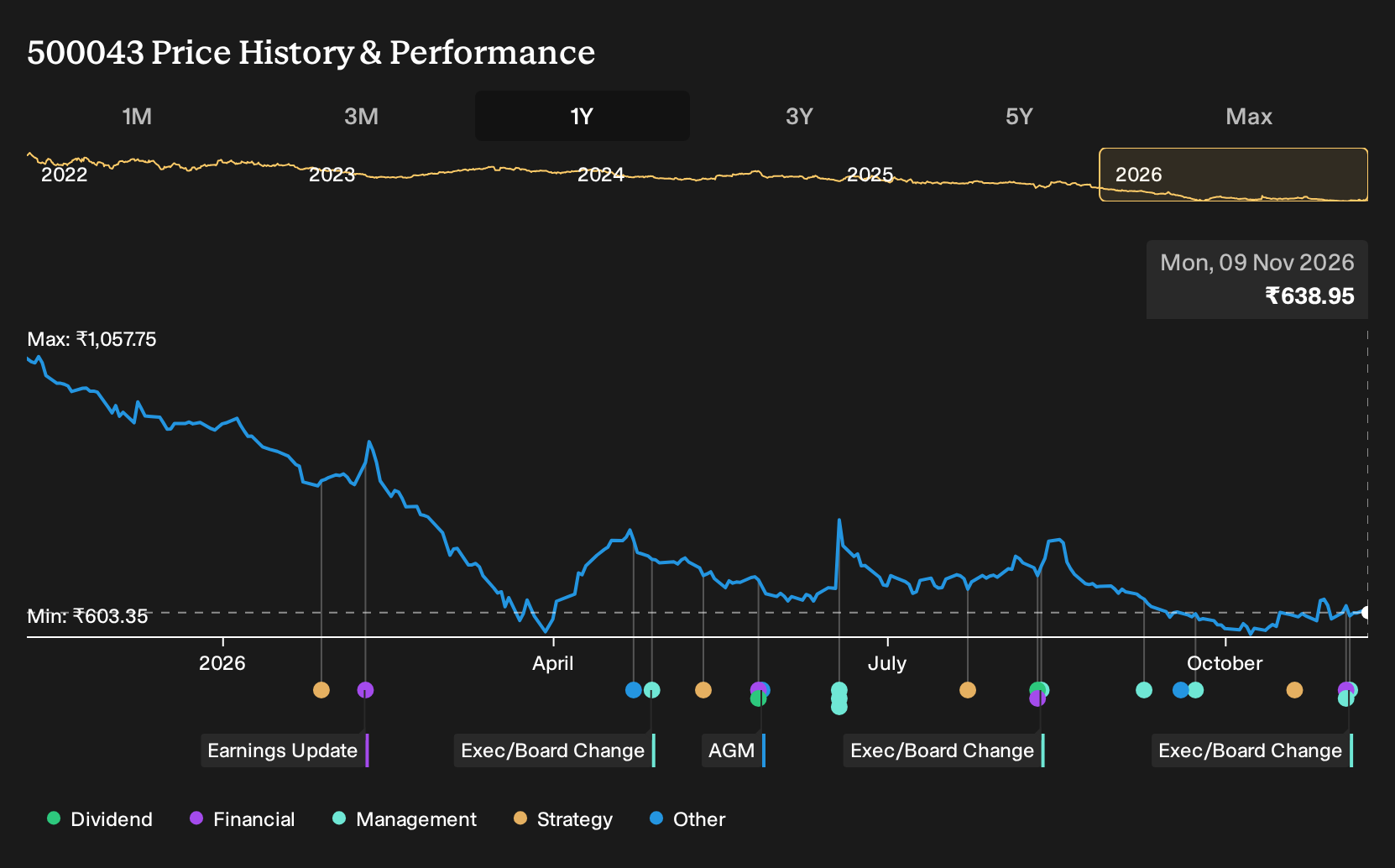
If you backed the Bata India narrative that urban growth, franchise expansion and digital rollouts would steadily lift earnings, the outcome has been painful. For Bata India shareholders, the loss over the past year was 36.1%, including dividends. If you had invested on 9 November 2025 on the assumption of 9.2% annual revenue growth, a 10.0% profit margin and a 60.0x future P/E, what exactly did that original case fail to account for?
The useful thing about a Narrative is that the reasoning is checkable: the assumptions sit beside the argument, and together they imply an estimated Fair Value you can disagree with.
The easy part of this move is behind Bata India. Zero in on 199 high quality undervalued stocks for companies trading below our estimates.
The Argument You Would Have Been Weighing Up On Bata India
The shares cost ₹1,063 at the start of the period, and anyone looking at Bata India then had to choose between two very different stories that both sounded reasonable.
The bullish narrative put Fair Value at ₹1,394. It leaned on revenue rising at 9.2% a year, with profit margins reaching 10.0% and the business one day trading on a 60.0x P/E.
The cautious narrative anchored Fair Value at ₹850. It assumed a slower 6.3% revenue growth rate, an 8.2% margin and a 48.5x future P/E because digital execution and competition were seen as real threats.
What The Results Changed For Bata India
The clearest data point came from Bata India reporting Q2 2027 revenue of ₹8,617.82m and net income of ₹181.19m, above Q2 2026 levels on both counts. Net margin moved from 1.7% to 2.1%. That was progress, yet still far from either the 10.0% bullish target or the 8.2% cautious case. The evidence cut both ways.
The hinge assumption here was profitability, not just sales. When assessing another company, track whether net margin is actually moving toward the narrative’s target level and how quickly that gap is closing in reported results.
What You Are Paying For In Bata India Today
Bata India now trades at ₹639, well below where it started a year ago. The bullish analyst Narrative on Simply Wall St places its Fair Value above that level, based on a reset story built around cost structure, channel mix and premium product mix rather than simple store expansion.
On that reading, a buyer today is effectively considering whether Bata India can convert supplier consolidation, staff cost changes and a higher share of premium brands into the stronger profitability that Narrative describes.
"Bullish analysts expect Bata India to compound the benefits of leaner merchandising, a larger franchise and omnichannel footprint, and a higher mix of premium brands into meaningfully stronger profitability over time. The main requirement is that Bata India executes on supply chain consolidation and manufacturing restructuring, including the shift to a smaller set of core suppliers and lower structural employee costs, so that the targeted margin uplift is reflected in reported earnings."
The price and this Narrative do not agree. → Uncover what this Narrative says Bata India is actually worth
Before The Next Story Makes Headlines
This company's disappointment is already part of the story. Your next idea could come from looking where the price and the possibilities still seem far apart. Here are three companies priced below our estimates.
- Company 1 - 15% below our estimate - targets expansion where tiltrotators are less common while improving operational efficiency.
- Company 2 - 21% below our estimate - advances use of antibiotic-eluting bone grafts across infection-focused surgical procedures.
- Company 3 - 41% below our estimate - uses data and AI tools to enhance underwriting decisions and manage claims exposure.
Three companies from the same screener. Open all 194 companies with the balance sheet to back it up →
Have feedback on this article? Concerned about the content? Get in touch with us directly. Alternatively, email editorial-team@simplywallst.com