
Late SEC Filing Could Be A Big Test For Hub Group Stock
- Hub Group reported on 10 November 2026 that it would not submit its upcoming 10-Q to the SEC by the required deadline, extending an already sensitive period for its financial reporting process.
- The delayed filing follows prior accounting restatements and legal actions, which sharpens investor attention on Hub Group's internal controls, financial visibility, and the potential impact on lenders and customers who rely on timely disclosures.
- This article examines how Hub Group's delayed 10-Q filing could reshape its investment narrative around governance, cash generation and risk.
Spread your risk away from single filing stories like Hub Group and review a hand picked 30 resilient stocks with low risk scores with stronger reporting reliability and balance sheet resilience.
Hub Group Investment Narrative Recap
To own Hub Group, you need to believe the freight platform can turn its intermodal capacity, logistics network and technology gains into steadier cash generation while repairing trust in its reporting. The delayed 10 Q keeps the spotlight on governance rather than operations for now. If the filing ultimately shows business trends in line with expectations, the operational thesis is largely unchanged.
The near term catalyst is clarity on volumes and pricing in intermodal and logistics, as outlined in the analyst consensus Narrative on Simply Wall St. The biggest risk is that ongoing accounting and legal noise, including late filings, chips away at lender and customer confidence. That scenario could make it harder for Hub Group to fully benefit when bid cycles and modal shift opportunities come through.
The most relevant prior development is the completion of multi year accounting restatements and the related board refresh and planned CFO transition described in the analyst consensus Narrative on Simply Wall St. Those moves were meant to clean up past issues and reset governance. The new 10 Q delay tests whether that clean up is really gaining traction or remains a work in progress.
For catalysts, the same Narrative highlights potential benefits from intermodal share wins and expanding logistics services such as Final Mile and Managed Transportation. Those opportunities need stable financial reporting to support contract bids, rail partnerships and access to capital. Until Hub Group clears its filing backlog, investors are likely to focus on execution risk around controls and the timing of any shift back to a more operations led story.
Hub Group's narrative projects US$4.2b revenue and US$136.3m earnings by 2029. This projection is based on 4.3% yearly revenue growth and about a US$31m earnings increase from current earnings of US$105.0m.
Uncover why Hub Group's fair value indicates a 52% potential upside to its current price before competing capital closes the gap.
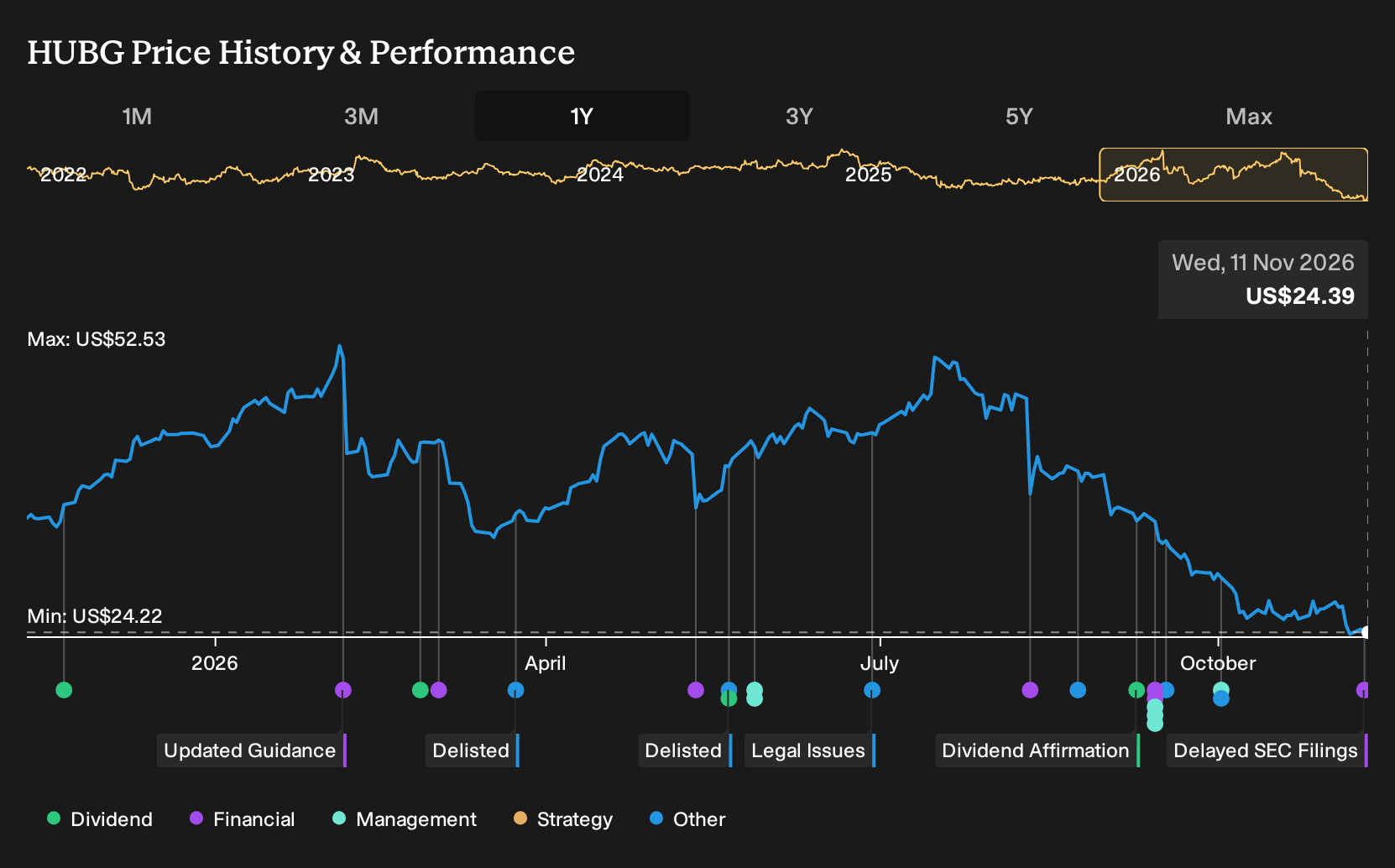
Exploring Other Perspectives
For Hub Group, the most cautious analysts focus on governance risk. You see that in their lower assumed P/E of 15.7x and a US$28.0 price target, based on revenue of about US$4.2b and earnings of US$138.5m by 2029. Those views were set before this late 10 Q, so opinions may evolve.
Explore 2 other Hub Group fair value estimates, including one that suggests it could be worth just $37.17!
Reach Your Own Conclusion
Disagree with existing narratives? Extraordinary investment returns rarely come from following the herd, so go with your instincts.
- A great starting point for your Hub Group research is our analysis highlighting 2 key rewards that could impact your investment decision.
- See our latest analysis for Hub Group. The report includes a comprehensive fundamental analysis summarized in a single visual, the Snowflake, making it easy to evaluate Hub Group's overall financial health at a glance.
Looking for more investment ideas beyond Hub Group?
If the Hub Group story has you thinking about position sizing and diversification, it can help to line it up against other opportunities with very different risk profiles and balance sheet characteristics.
- For readers who want potential mispricing combined with quality fundamentals, review a curated set of companies through the 32 high quality undervalued stocks.
- If income and resilience matter most to you, scan for payout candidates in the 6 dividend fortresses that pair higher yields with sturdier financial footing.
- For a focus on financial strength and cleaner reporting stories, broaden your watchlist with the list of solid balance sheet and fundamentals (24 results).
Have feedback on this article? Concerned about the content? Get in touch with us directly. Alternatively, email editorial-team@simplywallst.com